Get Full Government Meeting Transcripts, Videos, & Alerts Forever!
Tulsa panel links high ACE scores, trauma and addiction; nonprofits cite housing and employment as keys to reentry
Summary
Speakers at the Tulsa Women’s Commission meeting described how complex trauma and high Adverse Childhood Experience (ACE) scores correlate with substance use and criminal-justice involvement, and urged expanded trauma‑informed treatment, safe housing and second‑chance employment programs such as Take 2 Cafe and SheBrews.
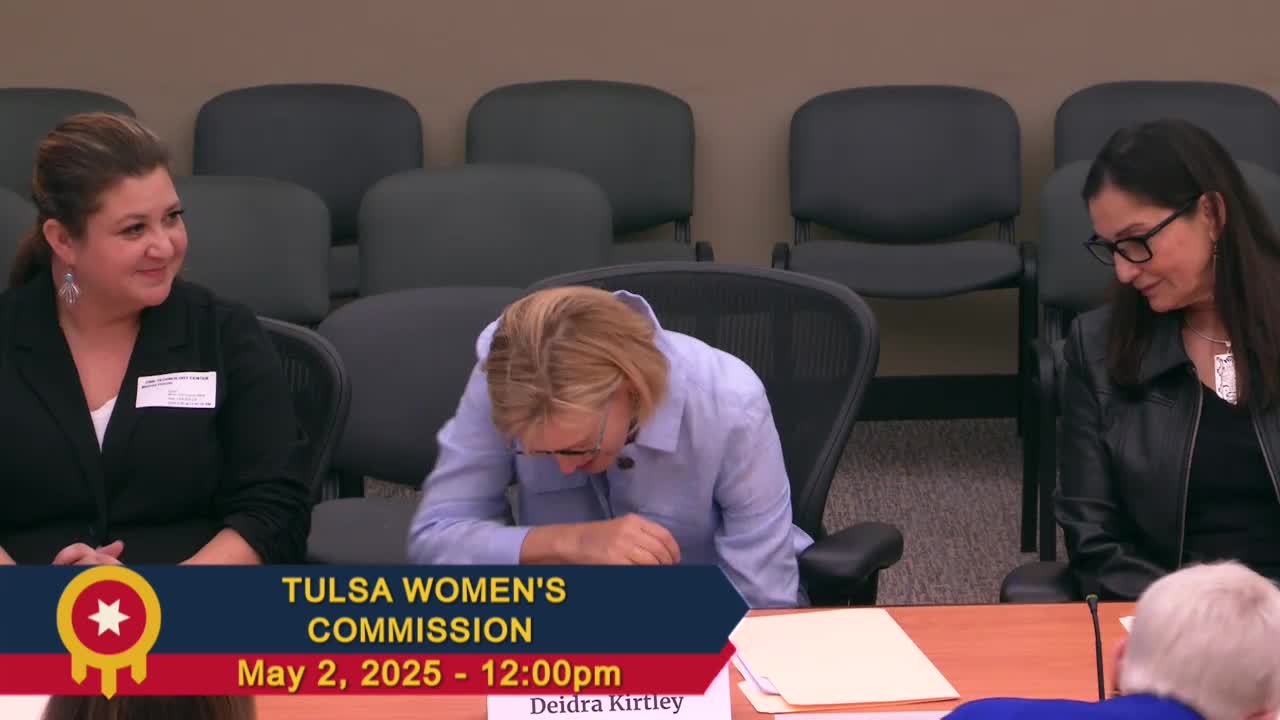
At a Tulsa Women’s Commission meeting, speakers described how complex trauma and high Adverse Childhood Experience (ACE) scores are linked to addiction and criminal‑justice involvement and urged expanded trauma‑informed treatment, safe housing and second‑chance employment.
Deidra Kirtley, former executive director of Resonance Center for Women, said the nonprofit provided year‑and‑a‑half to two‑year intensive outpatient treatment and transitional employment so women could avoid incarceration or better reintegrate after release. “You can't treat the addiction if you don't treat the trauma that these women have gone through in their life,” Kirtley said.
The panel included Melissa Hoover, a formerly incarcerated person and current case manager with the SheBrews transition program, who described her own path through addiction, homelessness and incarceration and credited therapy and supported employment with her recovery. “Safe housing and safe employment are two biggest keys, to reentry, to recovery, to being able to find your place in the world,” Hoover said.
Why it matters: Presenters argued that treating…
Already have an account? Log in
Subscribe to keep reading
Unlock the rest of this article — and every article on Citizen Portal.
- Unlimited articles
- AI-powered breakdowns of topics, speakers, decisions, and budgets
- Instant alerts when your location has a new meeting
- Follow topics and more locations
- 1,000 AI Insights / month, plus AI Chat