Get Full Government Meeting Transcripts, Videos, & Alerts Forever!
Get email alerts on the Reentry And Addiction topic
No spam. Unsubscribe anytime.
Tulsa panel links high ACE scores, trauma and addiction; nonprofits cite housing and employment as keys to reentry
Summary
Speakers at the Tulsa Women’s Commission meeting described how complex trauma and high Adverse Childhood Experience (ACE) scores correlate with substance use and criminal-justice involvement, and urged expanded trauma‑informed treatment, safe housing and second‑chance employment programs such as Take 2 Cafe and SheBrews.
At a Tulsa Women’s Commission meeting, speakers described how complex trauma and high Adverse Childhood Experience (ACE) scores are linked to addiction and criminal‑justice involvement and urged expanded trauma‑informed treatment, safe housing and second‑chance employment.
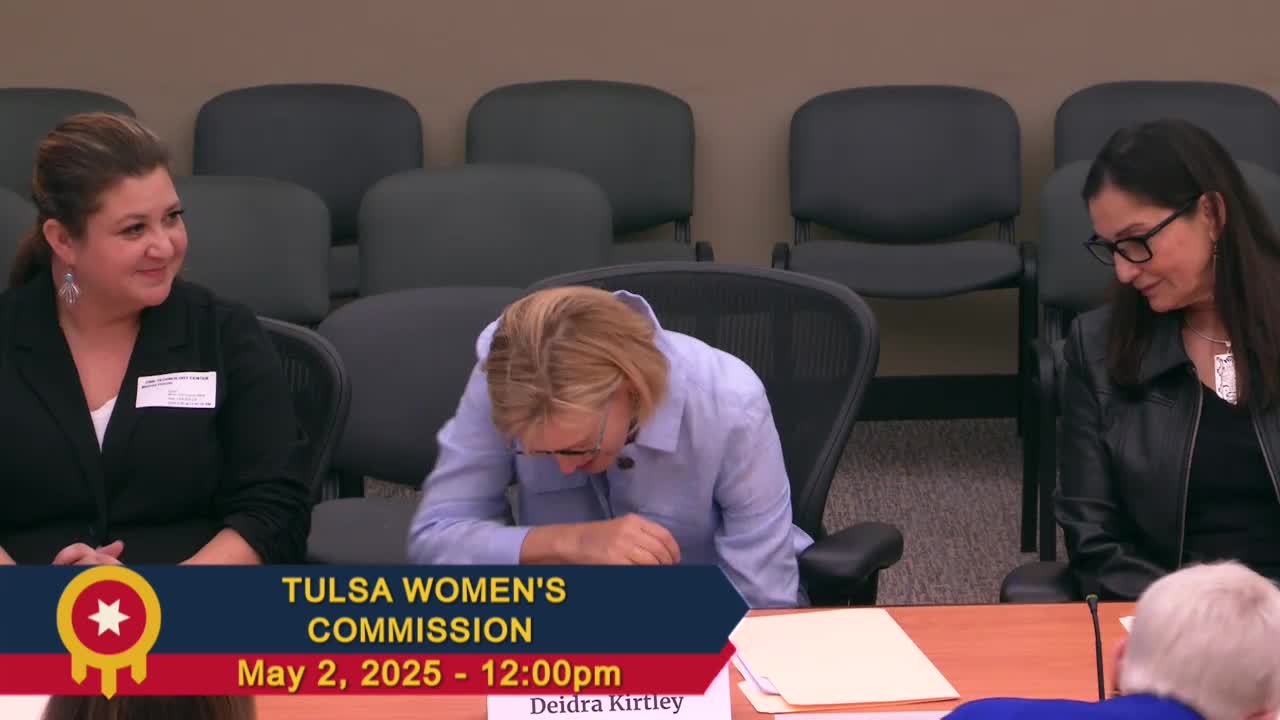
Deidra Kirtley, former executive director of Resonance Center for Women, said the nonprofit provided year‑and‑a‑half to two‑year intensive outpatient treatment and transitional employment so women could avoid incarceration or better reintegrate after release. “You can't treat the addiction if you don't treat the trauma that these women have gone through in their life,” Kirtley said.
The panel included Melissa Hoover, a formerly incarcerated person and current case manager with the SheBrews transition program, who described her own path through addiction, homelessness and incarceration and credited therapy and supported employment with her recovery. “Safe housing and safe employment are two biggest keys, to reentry, to recovery, to being able to find your place in the world,” Hoover said.
Why it matters: Presenters argued that treating trauma early and offering stable housing and work reduces recidivism, preserves family ties and can change outcomes for subsequent generations. Kirtley and Hoover both described practical program elements and barriers that affect reentry success.
Program descriptions and outcomes - Resonance Center for Women: Kirtley said Resonance provided onsite treatment inside some correctional facilities and ran Take 2 Cafe in downtown Tulsa as a short‑term employment program for program participants. The program’s treatment model emphasized trauma‑informed care, mandatory therapy and case management to reduce reoffending. - SheBrews (transition program and coffee houses): Hoover said SheBrews operates coffeehouse job‑training sites and 11 transitional homes in Tulsa and Claremore. She noted the program has served “over 315 men and women” and that more than 300 children were reunited with participating parents through program services.
Evidence and metrics discussed - ACEs and treatment planning: Panelists said most women the programs served scored five to eight on the ACE questionnaire; Kirtley said clinicians use ACE scores to tailor trauma‑informed treatment. - Program length and employment: Kirtley described treatment episodes as typically 1½ to 2 years; SheBrews places clients in paid coffee‑shop work and in leadership roles and reported a case manager caseload of about 22 clients in one staffer’s caseload. - Corrections partnerships: Kirtley said Resonance had contracts to provide treatment inside correctional facilities and that voluntary attendance inside custody produced strong engagement.
Barriers and policy issues raised - Housing and landlord practices: Hoover and Kirtley described limited rental options for people with felony records, landlords who exploit constrained choices, and registration rules for sex offender tiers that can permanently restrict housing access. - Employment obstacles: The panel recommended “Ban the Box” hiring practices and more second‑chance landlords and employers; Hoover noted that many recovery programs and peer‑support positions explicitly hire people with lived experience. - Gaps in prison mental‑health services: Panelists said states still lack consistent psychological and substance‑use programming in prison and that post‑release supports are essential to prevent rapid relapse and reoffending.
Questions and community engagement Commission members asked how community volunteers and organizations can help. Hoover and Kirtley cited financial‑mentorship programs, family mentors and public fundraising; Hoover said SheBrews posts volunteer and application information at shebrews.org and described an annual fundraiser in October.
Meeting vote The commission also approved the April meeting minutes by voice vote during the same meeting; the motion carried and the minutes were recorded as approved.
What remains unresolved Panelists and commissioners discussed program capacity, landlord practices and the need for more funding for trauma‑informed care and reentry supports. No formal policy vote or funding allocation occurred at the meeting.
Ending note Speakers and the commission emphasized incremental community interventions — from mentoring to second‑chance hiring to expanded therapeutic services — as immediate steps that can reduce recidivism and improve outcomes for women and their children.