Get Full Government Meeting Transcripts, Videos, & Alerts Forever!
Get email alerts on the Road Safety topic
No spam. Unsubscribe anytime.
City releases comprehensive road‑safety audit for US‑380 and Malone Street; short‑term fixes and longer rebuilds recommended
Summary
City staff presented a road safety and traffic operations audit for US‑380 and Malone Street, recommending immediate low‑cost fixes, near‑term ADA and signal work, and long‑term corridor rebuilds tied to TechStart and TxDOT projects.
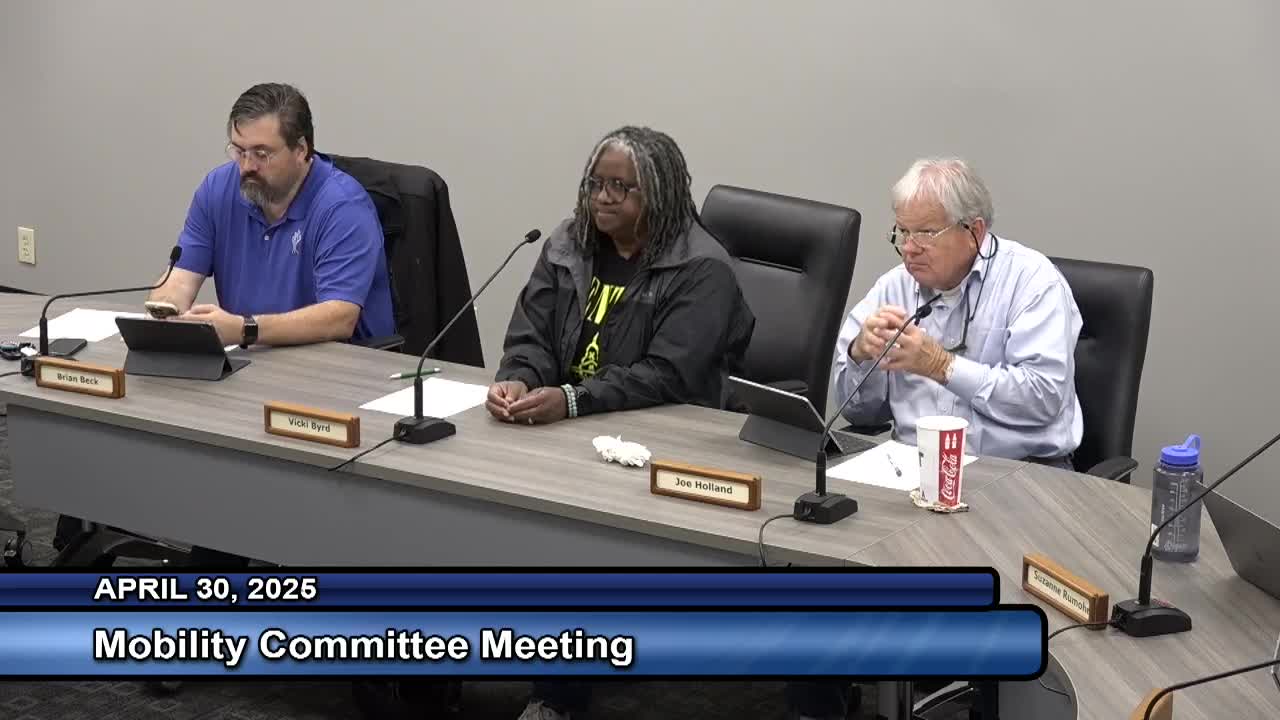
Farhan (Deputy Director, Transportation Services Division) presented a comprehensive road safety and traffic operations audit for US‑380 and Malone Street to the Denton City Mobility Committee on April 30, outlining observed hazards, crash findings and near‑, mid‑ and long‑term recommendations.
The audit team used field reviews, crash data and applicable engineering manuals to guide recommendations. Farhan said the team analyzed crash records from Texas’ CRIS database for 2022–2024 and found “34 crashes that were attributed to speeding on TxDOT’s PIS database,” but cautioned that recorded contributing factors can mask underlying causes. The study did not record fatalities or serious‑injury crashes in the CRIS 2022–2024 window for the audit area, though committee members and commenters later noted a 2019 fatality at University and Malone and a separate 2025 crash outside the analytic window.
Audit findings highlighted missing sidewalks on the north side of Malone and limited accessibility in adjacent neighborhoods. Speed data showed 80th‑percentile speeds of about 42 mph eastbound and 46 mph westbound on a posted 40 mph corridor. The audit recommended a phased approach:
- Short‑term (low‑cost): remark faded crosswalks with high‑contrast materials, relocate or clear obstructing signage and signal poles, add pedestrian speed‑tab signage and maintain markings; add high‑visibility signage and upgrade crosswalks per current guidance. City traffic engineer Chandra said the cost estimates in the packet list intersection treatments per intersection and that the $1,500 figure discussed covers an all‑four‑corner refresh in some near‑term treatments.
- Near‑term: add ADA ramps and formal crosswalks where missing, adjust signal timing to increase pedestrian crossing time (Chandra said staff could reduce the pedestrian walking speed standard to 3.0 ft/s for signal timing to better accommodate children, older adults and people with disabilities), evaluate “no right turn on red” treatments at selected approaches, and pursue neighborhood consent and engagement before implementing all‑way stops in subdivisions.
- Mid‑ and long‑term: coordinate sidewalk and multimodal connections with Parks Department projects (staff said Parks will deliver some North Lakes Park connectivity work in 2026), narrow travel lanes to 11 feet where a future rebuild allows, and consider separated bike lanes and other corridor rebuild elements when TechStart / TxDOT reconstruction occurs (a 5–15 year horizon was cited for many long‑term items).
Chandra emphasized that traffic signal timing is a “critical component” and that staff recommend modifying pedestrian timing to improve crossings for slower walkers. The audit also recommended targeted enforcement windows for law enforcement based on measured speed patterns; staff noted Texas state law requires an on‑scene officer for citations and that red‑light cameras are no longer in use in Texas (removed statewide in 2019).
The committee and residents pressed for neighborhood outreach and clearer graphics; Lauren Penn received public praise from a committee member for advocacy on the corridor. Staff said the city’s HSIP (Highway Safety Improvement Program) funding application for US‑380 was not approved in the most recent cycle but that staff will pursue other funding sources and reapply in future HSIP cycles.
No formal policy decision was made; staff will pursue near‑term low‑cost improvements, continue neighborhood engagement on contested measures and pursue funding for larger projects.