Get Full Government Meeting Transcripts, Videos, & Alerts Forever!
Get email alerts on the Human Trafficking Minors topic
No spam. Unsubscribe anytime.
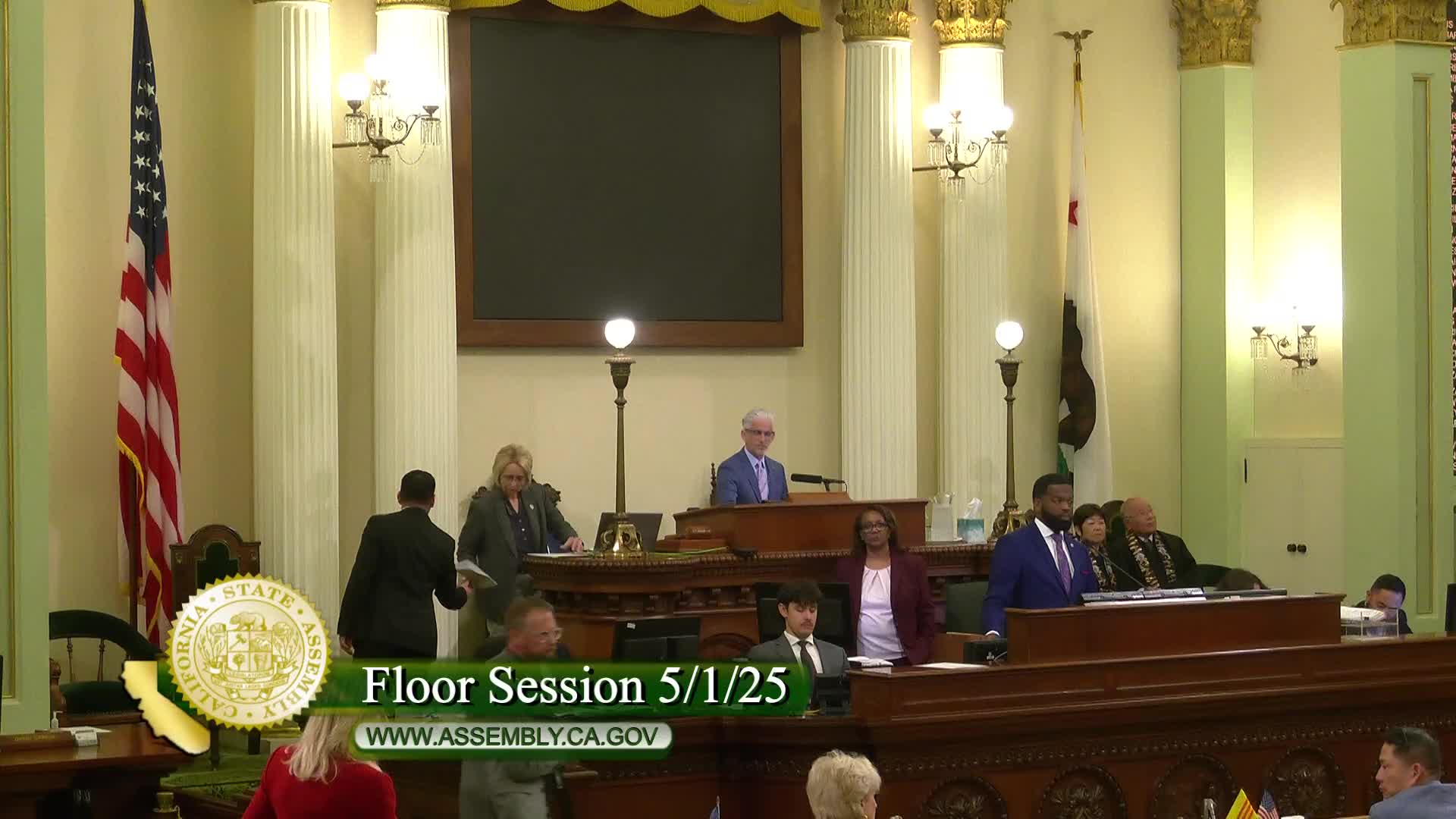
Assembly adopts floor amendments to AB 379 after debate over protections for 16- and 17-year-olds; bill sent to Appropriations
Summary
After a contentious floor debate over whether purchasers of 16- and 17-year-olds should face felony charges, the California Assembly adopted floor amendments to AB 379 by a 55–21 vote and re-referred the bill to the Appropriations Committee.
The California State Assembly on April 20, 2025, adopted floor amendments to Assembly Bill 379 after a heated floor debate over whether purchasers of 16- and 17-year-olds should be charged with felonies; the Assembly voted 55‑21 to adopt the amendments and then re‑referred the bill to the Appropriations Committee.
Supporters of the adopted amendments said the changes strike a balance between protecting minors and giving prosecutors discretion, while opponents said the amendments weaken felony protections for 16‑ and 17‑year‑olds. The debate repeatedly returned to whether the bill, as amended, would permit misdemeanor treatment or short county‑jail sentences in cases that critics said should be prosecuted as felonies.
Assemblymember De Maio opened floor debate by moving under Assembly Rule 88 to consider AB 379 without the Public Safety Committee’s amendments, saying the committee had “struck language that would make it a felony to purchase a minor age 16 or 17 years old for ***. This is outrageous…” The motion under Rule 88 would have required a two‑thirds threshold (54 votes) to take up the bill in its original form.
The majority leader offered a substitute motion to take up Assemblymember Scholz’s amendments instead; that substitute motion carried 55‑17. Following that vote, the clerk read AB 379 with floor amendments by Assemblymember Schultz and the Assembly proceeded to debate the substitute language and additional floor amendments.
Assemblymember Schultz (who presented the amendments on the floor) said the package was intended to “adopt the strongest laws to protect 16 and 17 year old victims and strengthen protections in support of survivors of human trafficking,” and urged members to support the amended text. Assemblymember Maggie Krell, who sponsored the original version debated earlier in the process, said she cared “whether California protects minors who are being sold for ***,” and urged stronger felony penalties for buyers of minors, citing federal and state trafficking law frameworks that treat minors as victims.
Opponents of the amendments included Assemblymember De Maio and several colleagues who argued the changes removed necessary felony penalties. Assemblymember Dixon singled to one provision in the amendment text, reading that the amended language treats soliciting a minor as punishable by “imprisonment in a county jail for not less than 2 days and not more than 1 year,” and said that range was inadequate for the conduct at issue.
During floor action there was a non‑debatable motion by Assemblymember Macedo, seconded by Assemblymember De Maio, to lay the floor amendments on the table (a procedural move to prevent adoption). That motion failed on a roll call, Ayes 21, Nos 53. The Assembly then voted to adopt the floor amendments (Ayes 55, Nos 21). Immediately afterward the Speaker announced that AB 379 (as amended on the floor) was being re‑referred to the Appropriations Committee.
The bill’s next legislative step is consideration by the Appropriations Committee. The Assembly’s votes on the substitute motion and on the floor amendments reflect the chamber’s split on how best to codify protections for minors who are victims of sex trafficking and on the appropriate prosecutorial tools for those cases.
Ending: AB 379 will be considered next in the Assembly Appropriations Committee; proponents and opponents signaled they expect further negotiations and additional legislative steps in the coming weeks.