Get Full Government Meeting Transcripts, Videos, & Alerts Forever!
Get email alerts on the Youth Substance Prevention topic
No spam. Unsubscribe anytime.
North Kingstown Prevention Coalition outlines school-based vaping prevention and media-literacy programs
Summary
The North Kingstown Prevention Coalition presented evidence-based programs and community resources to the Health and Wellness Subcommittee, emphasizing media literacy, parental supports and free town services to prevent youth vaping and substance misuse.
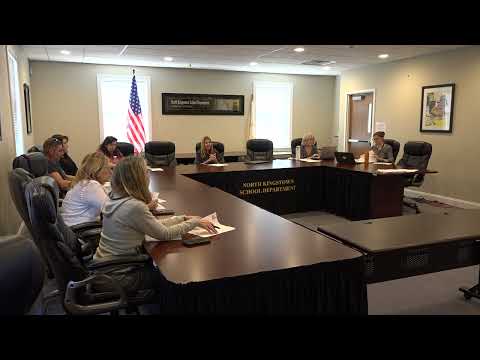
Kayla Van Gordon, leader of the North Kingstown Prevention Coalition, told the Health and Wellness Subcommittee on April 30 that the coalition is shifting from tabling at community events to delivering school-based, evidence-backed prevention programming.
The coalition’s flagship classroom programs are Media Detective (grades 3–5) and Media Ready (grades 6–8). “The whole goal is ... to analyze media messages, recognize unhealthy behavior, and prevent substance abuse through the power of media literacy education,” Van Gordon said. She described the curriculum as modular and adaptable; a full session runs about 10 hours but can be shortened or split into multiple visits to fit school schedules or after-school programs.
Van Gordon described hands-on activities used in the programs, including an exercise showing what is in a vape — with visual displays of substances such as paint thinner and insect repellent — to give students a concrete understanding of product contents. “When we did it at the Washington County Fair, we had an adult get his way through it, and we watched him walk over and throw his fake away because it was just such a moment,” she said.
The coalition receives grant funding from the Rhode Island Department of Behavioral Healthcare, Developmental Disabilities and Hospitals and can train school staff to deliver the programs. “Although I’m a trained teacher, I can’t go to every school. We would train other teachers at other schools if they wanted to get involved,” Van Gordon said. She said the coalition does not charge schools for programming or materials.
Van Gordon outlined complementary strategies: distributing posters and signs (many are free from the state health department), coordinating medication take-back events with the police department, providing free lock bags for medications, running compliance checks with local retailers, offering parent-focused programs (two evidence-based parenting groups for ages 3–5 and 6–12), and maintaining an online “parent backpack” of resources that includes crisis phone numbers and local services.
Committee members discussed ways to integrate the curriculum with district health instruction. The subcommittee’s members and district staff noted that health education now emphasizes skill standards, including identifying credible information — a natural fit for media-literacy lessons — but acknowledged limited instructional minutes in the school day. Committee members suggested after-school, summer programming or targeted lessons (for example, a fourth-grade or seventh-grade lesson) and using school events such as sports nights, open houses and family days to present assemblies and parent education.
Van Gordon offered the coalition as a school resource for assemblies and sports-night presentations, and she said the coalition has previously provided assemblies on opioid overdose and other topics. She also said the coalition will continue tabling at community events to maintain visibility.
The subcommittee did not take formal action on program adoption at the April 30 meeting; Van Gordon said she will return to the committee for further conversations about implementation and scheduling.