Get Full Government Meeting Transcripts, Videos, & Alerts Forever!
Get email alerts on the Environmental Review topic
No spam. Unsubscribe anytime.
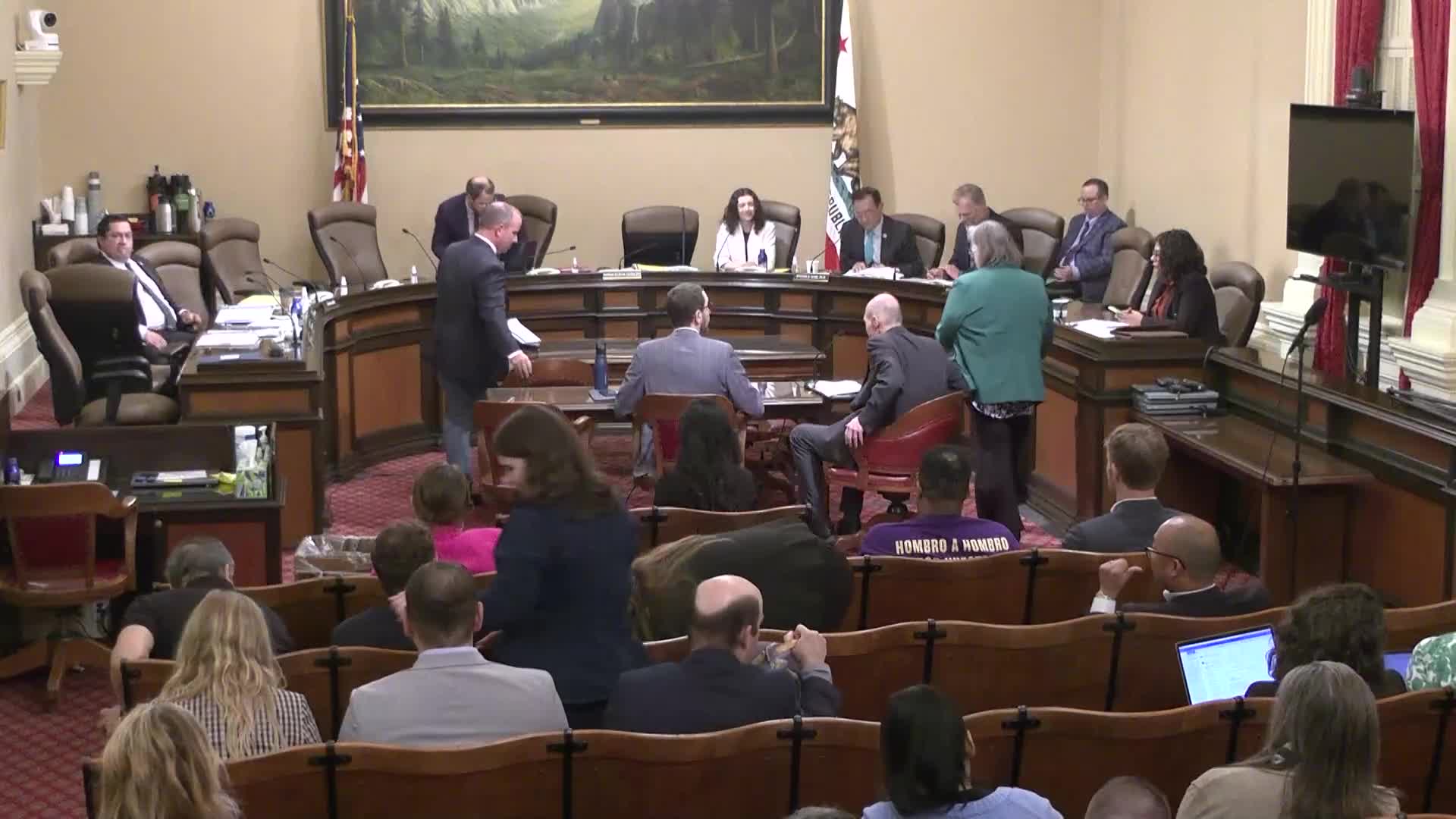
Senate committee advances SB 607 after heated debate over CEQA changes
Summary
The Senate Committee on Local Government advanced SB 607, a package of reforms the bill’s backers say will tighten CEQA’s focus and speed projects, while opponents say it weakens environmental protections for overburdened communities. The measure passed out of committee to Appropriations after partisan floor debate and sustained public testimony.
SACRAMENTO — The Senate Committee on Local Government voted to advance Senate Bill 607, a broad proposal to revise how California’s Environmental Quality Act (CEQA) is used and litigated, after a contentious hearing that split environmental groups, labor unions and housing advocates.
Supporters, including author Sen. Scott Wiener and local government and business witnesses, said the measure modernizes CEQA to prevent duplicative review and to reduce project-stalling lawsuits that they say block housing, infrastructure and clean-energy projects. John Kennedy of the Rural County Representatives of California said CEQA has become “a complex regulatory obligation with serious consequences” and that the bill “helps refocus CEQA on the overarching goals and reduces the misuse and delays for which CEQA is often criticized.”
Opponents, including representatives of the State Building and Construction Trades Council, several environmental justice organizations and the Center on Race, Poverty and the Environment, argued that the bill lowers legal standards and reduces community protections — especially in historically overburdened neighborhoods. Christina Caro of the State Building Trades warned the bill would “weaken environmental protection for a variety of highly impactful projects” and urged the committee to reject the measure.
The debate centered on three main changes in SB 607: (1) narrowing what must be included in administrative records; (2) changing how lead agencies can justify a negative declaration (a finding that a project will not have significant environmental impacts); and (3) offering targeted pathways to avoid full EIRs for projects that miss a narrow exemption by a single technicality. Supporters say those changes reduce litigation risk for routine projects and allow local governments to implement approved housing elements and infrastructure faster. Opponents say the standard changes would make it easier for agencies to bypass EIRs even when substantial evidence indicates potential harms.
Several public interest and environmental justice groups testified they use CEQA to compel mitigation for air, water and public-health impacts and that curtailing CEQA review risks greater harms for low-income and minority residents. Gracia Roscoe of the Center on Race, Poverty and the Environment told the committee, “This bill would significantly hinder the ability of environmental justice communities to improve local air and water quality at a time where we need strong state protections the most.”
Sen. Wiener framed the bill as a targeted reform, not a repeal of CEQA protections. “This bill actually takes that step and makes several really good government reforms to CEQA,” he said, listing administrative-record focus, tailored follow-up analysis for narrowly-missed exemptions, and harmonizing judicial standards for review.
The committee voted to send SB 607 to the Senate Appropriations Committee. The motion passed as amended (final committee tally: 5–1). Supporters pledged to continue negotiations with opponents before the bill proceeds further.
Votes at a glance - SB 607 (Wiener) — Passed out of committee as amended to Appropriations (vote: 5–1).