Get Full Government Meeting Transcripts, Videos, & Alerts Forever!
Get email alerts on the Student Phones And School Policy topic
No spam. Unsubscribe anytime.
Clayton school officials cite inconsistent enforcement as phone policy meetings continue
Summary
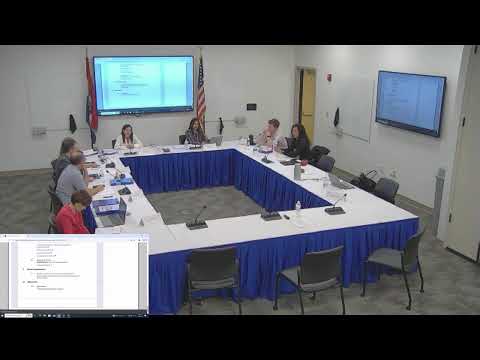
At a Clayton Board of Education meeting, parents, students, teachers and administrators spent the bulk of public comment and the board’s staff presentation debating personal electronic device rules and how consistently they are enforced in district schools.
At a Clayton Board of Education meeting, parents, students, teachers and administrators spent the bulk of public comment and the board’s staff presentation debating personal electronic device rules and how consistently they are enforced in district schools.
Parents who led the Phone Free Clayton group urged the district to adopt a stricter, bell-to-bell ban and to consider a locking-pouch system. Susan Brockhouse, a parent of children at Wyedown Middle School and Merrimack and Captain elementaries, told the board the group had collected nearly 1,000 signatures and that district follow-up since last year’s request was “incremental” rather than comprehensive. Betsy Malan Smith, another parent, urged the board to “rethink the approach” at the high school and to treat enforcement as a districtwide priority, not a teacher-level responsibility.
District presenters described data and implementation steps. Superintendent Doug Patel summarized survey results and said district figures showed enforcement gaps at the high school: about 36% of high school staff reported that enforcement of the device policy was not consistently applied. District staff said Wyedown (the middle school) recorded roughly 170 cellphone confiscations this school year and Clayton High School recorded about 42 confiscations; administrators said a minority of students accounted for repeated confiscations.
School leaders and staff described how the policy is being implemented and the next steps they plan. Presenters said the district has installed shoe-holder organizers in classrooms to give teachers a place to store phones during instructional time, added phone-violation notes to teacher observations so the issue can be raised in post-observation conferences, and will offer more targeted teacher support (including possible documentation in evaluations for repeated non-enforcement). Administrators also described plans for parent education events, technical supports (discussion of parental phone-control apps and school Wi‑Fi settings), wellness-center partnerships and targeted walk-throughs or “sweeps” in classrooms to back up teachers.
Students and teachers who spoke at the meeting gave mixed perspectives. Student representative Lucia told the board she had seen “a big improvement” in phone use from last year to this year in many classrooms. She and multiple presenters said device use still varies widely by department and teacher. Science and some STEM teachers reported legitimate instructional uses — videoing labs, measuring motion, photographing whiteboard notes and using QR-coded stations — and the board heard those instructional exceptions are one reason teachers sometimes leave phones available for brief, task-specific uses.
Board members pressed staff on enforcement and equity: several trustees said enforcement that depends on individual teachers produces inconsistent student experiences. Trustees suggested clearer, districtwide defaults (for example, requiring phones to be deposited in classroom pouches at the start of each period) and emphasized the need to reduce the enforcement burden on teachers. Parents and trustees also raised safety and logistics questions about whether and how phones could be leveraged for after‑school emergency messages while remaining restricted during instructional time.
Administrators asked for time to continue implementation work and said they would return with metrics. They described the effort as a multi-year culture change and asked the board to weigh uniformity of enforcement, teacher supports, parent engagement and technological fixes when considering next steps.
The board did not take a formal vote on changes to the device policy at the meeting. Trustees and staff agreed to continue the conversation, monitor enforcement metrics and pursue the steps described during the presentations.
Community members seeking details of the district’s phone-policy materials, survey instruments or counts of confiscations were told those items are part of district reporting and will be used in follow-ups with the board.