Get Full Government Meeting Transcripts, Videos, & Alerts Forever!
Get email alerts on the Dnr Budget Fy2026 topic
No spam. Unsubscribe anytime.
Michigan DNR urges new revenue options to address deferred maintenance, dam repairs and park backlogs
Summary
The Michigan Department of Natural Resources told a House appropriations subcommittee its fiscal 2026 request includes changes to the recreation passport, hunting and fishing license updates, watercraft registration increases and a $15 million one-time request for dam work to address extensive deferred maintenance and infrastructure failures.
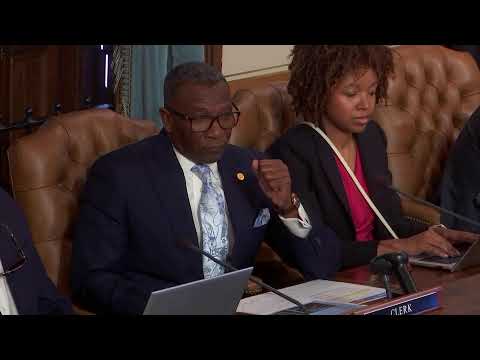
The Department of Natural Resources told the Michigan House Appropriations Subcommittee on Agriculture and Rural Development and Natural Resources on an abbreviated session that it needs new and sustained revenue to address deferred maintenance, aging infrastructure and rising costs, and outlined several proposals for fiscal year 2026. Director Scott Bowen and finance chief Dan Lord presented the department's funding pressures and specific budget proposals while lawmakers pressed for clarification on funding details and next steps.
The DNR framed its budget request around rising costs and declining fee-based revenue. Bowen said the department has not increased license fees since 2014 while some input costs have risen dramatically, citing fish feed up 71% and negotiated salary costs up 34% since 2014. He told the subcommittee the department now receives about 14% of its budget from the general fund and that park funding from the general fund has dropped from 68% in 1970 to about 3% today.
The DNR said restricted revenues (from licenses, camping, recreation passport sales, timber and mineral leases) make up about 68% of its budget and are deposited in more than 40 restricted funds that statute limits to specific purposes. Dan Lord said the department received $273 million in one-time ARPA appropriations that helped address a capital backlog, but current identified park and trail capital needs still exceed $250 million.
Key proposals presented
- Recreation passport opt-out and resident military exemption: The DNR estimated that moving from the current opt-in model toward an opt-out model with a 60% participation rate could generate an estimated $21.3 million in additional annual revenue, while partially offset by an estimated $4.1 million annual loss if resident veterans were exempted. The department said statutory formulas would govern distribution and that Recreation Passport Grant Program awards to local communities could nearly double from current levels under the higher participation scenario.
- Hunting and fishing license updates: The department proposed updating hunting and fishing license fees, last adjusted in 2014, to account for inflation and rising operational costs that affect fish and wildlife management, law enforcement, and non-game programs. Dan Lord said federal excise taxes on equipment require a state match tied to license revenue, meaning lower license revenue constrains federal funds the state can draw down.
- Watercraft registration adjustments: Watercraft registration fees have not been adjusted since 1993. The DNR estimated that a registration increase could generate about $3.5 million more for the waterways fund, with roughly $2.5 million directed to parks and recreation division operations and $1.0 million to the waterways grant program; it also estimated about $3.4 million would go to the marine safety fund used by DNR law enforcement and that county sheriff grant funding could double.
- One-time general fund for dams: The department requested a $15 million one-time general fund investment for dams. The DNR manages more than 200 state-owned dams with an average age of 62 years and said a subset require "comprehensive and immediate action." The presentation used Black River Dam, which experienced stop-log failure in 2024, as an example; the department estimated renovation and restoration at that site at about $3.0 million and wetland mitigation at about $2.8 million.
Infrastructure, deferred maintenance and examples
The DNR provided examples of deferred maintenance and failures that underscore the budget request: fisheries assets alone exceed $350 million in value; deferred projects in wildlife and fisheries were estimated at about $140 million (excluding dams); a 50-year-old generator at Wolf Lake State Fish Hatchery failed and the department is paying about $85,000 to run a temporary generator while awaiting a replacement with a 52-week lead time; bids were not received on a 2023 package for Black River Dam permitting and stop-log replacement; four of six hatcheries have similarly aged generators; and vacant positions and reduced seasonal hires have decreased monitoring, creel clerk surveys and other operations.
Supplemental requests and other needs
The DNR also noted supplemental requests and authorities it is seeking: support for House Bill 4392 (introduced earlier that day) and $41.8 million in grants funded by the Michigan Natural Resources Trust Fund; a $6.5 million supplemental using one-time investment returns in the Game and Fish Protection Trust Fund; additional federal spending authority to support culvert removal and stream connectivity work tied to Arctic grayling reintroduction; authority connected to high-speed internet infrastructure easement activities; and general fund support for the remaining portion of a commercial fishing license buyout stemming from the Great Lakes fishing decree.
Lawmakers' questions and committee follow-up
Members asked about the legal and administrative limits on restricted funds, the source and stability of federal high-speed internet funding, and the risk of raising fees reducing participation. Representative Green pressed about removal of boilerplate Section 207 (employee protections) from executive budgets, calling it a transparency and whistleblower concern; Jason Crandall, the DNR budget officer, said that change followed an Office of the Governor decision and that employees can still approach legislators but he could not speak to broader state policy. Several members, including Representative McKinney and Representative O'Neil, expressed support for considering long-term stewardship funding and bipartisan conversations on license updates.
The committee chair said the DNR director agreed to return for a longer session to allow more detailed questions. The subcommittee approved the minutes from the April 23, 2025 meeting by unanimous consent earlier in the session.
Why this matters
The DNR presented revenue changes that would shift how state parks, fisheries, wildlife and waterways are funded and would enable access to some federal matching funds. Lawmakers signaled interest in follow-up briefings and further detail on statutory distribution formulas, the interaction of fee changes with participation rates, and employee whistleblower protections raised during the hearing.