Get Full Government Meeting Transcripts, Videos, & Alerts Forever!
Get email alerts on the Prison Healthcare Contracts topic
No spam. Unsubscribe anytime.
Local EMS and hospitals press Michigan lawmakers to address unpaid bills after Wellpath contract failures
Summary
EMS agencies, hospitals and MDOC/DTMB witnesses told the House Appropriations Committee that subcontractors and local providers remain unpaid for millions of dollars of care tied to the former Wellpath/Grand Prairie contract; providers urged legislative action while state agencies pointed to litigation and procurement limits.
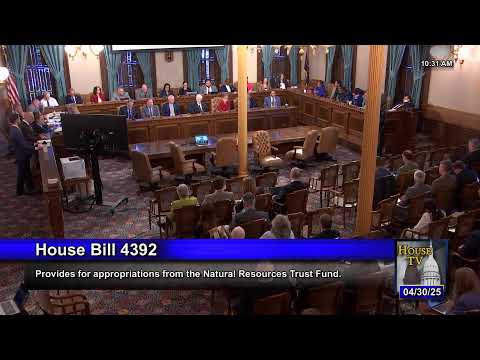
Lansing — Local emergency medical services agencies and hospitals urged the Michigan House Appropriations Committee on Feb. 20, 2025, to take immediate action to cover unpaid bills tied to the state's former prison-health contractor, saying unpaid invoices threaten rural EMS and hospital operations.
The committee heard testimony from the Michigan Department of Corrections (MDOC) and the Department of Technology, Management and Budget (DTMB) about the procurement and oversight of the prison health contract, followed by accounts from EMS and hospital leaders who said they are owed millions for emergency and hospital care provided to inmates.
Jared Ambrosier, chief procurement officer for DTMB, described the state's procurement framework under the Management and Budget Act (Public Act 431) and the use of best-value evaluations for complex contracts. He explained procurement methods used by the state and the role of DTMB in structuring solicitations and evaluation teams.
Kyle Kaminski of the MDOC summarized the agency’s history with the contract: an RFP issued in 2020 led to Grand Prairie Health Services (operating as Wellpath in testimony) taking over services in September 2021. MDOC said it later levied about $1,500,000 in service-level agreement credits and issued 15 corrective action plans for performance shortfalls; MDOC reported the state made contractual payments totaling about $365,000,000 to Grand Prairie during the contractor's tenure. MDOC said it transitioned the contract to VitalCore in early 2024 and has engaged a consultant to review future contracting options.
MDOC staff described the mechanics of remedies under the contract: credits reduce what the state pays the prime contractor, but the state said it lacks contractual authority to pay subcontractors directly; providers therefore remain unsecured creditors in subsequent bankruptcy or litigation.
Emergency medical services and hospital representatives described practical impacts. Jeff White, legislative chair of the Michigan Association of Ambulance Services and chief of emergency services for Richmond and Lenox Township, said his association represents nearly 100 EMS agencies and that unpaid prison-related bills have forced staffing cuts and deferred equipment purchases. White said, “we're just looking to get paid for services that we've provided in good faith.”
Ron Slagle of Emergent Health Partners reported specific unpaid claims to his network (examples: $430,000 owed to one operation, $630,000 to another, $193,000 to a third). Russ Adams, director of Lapeer County EMS, said his agency is owed $137,785 — roughly 6% of that agency’s annual revenue — and warned that unpaid invoices translate into reduced municipal services. Hospitals told the committee that Michigan hospitals are collectively owed about $35,000,000 for care they provided to inmates while the contractor failed to reimburse them; Helen Johnson, CEO of Helen Newberry Joy Hospital, said her small critical-access hospital is owed roughly $800,000, which she equated to wages for approximately 10 nurses and several years of operating margin.
Several providers asked the legislature to consider direct state payment or a legislative remedy rather than requiring providers to wait for prolonged bankruptcy and litigation. Witnesses said the state had fulfilled its contractual payments to the prime contractor, but that prime did not pass payments to subcontractors.
MDOC counsel and procurement staff said the state has filed litigation against Grand Prairie and that bankruptcy proceedings remain ongoing; they urged careful steps and noted the department has limited tools to force prime contractors to fully satisfy subcontractor claims beyond contract remedies and litigation.
Why it matters: Providers said unpaid invoices are already forcing service reductions and could affect emergency response and access to care in rural communities. Testimony highlighted the limits of state procurement remedies where a prime contractor becomes insolvent and the potential need for legislative or budgetary remedies to resolve provider claims quickly.
What’s next: Committee members said the matter requires further oversight and that the Appropriations Committee will continue to review options. No formal appropriation or emergency payment was adopted at the hearing.