Get Full Government Meeting Transcripts, Videos, & Alerts Forever!
Get email alerts on the Residential Housing And Providers topic
No spam. Unsubscribe anytime.
Families, providers urge action at Ottawa County CMH meeting after deaths and placement strains; board approves new lease with community recovery center and rat
Summary
Parents, providers and community recovery programs told the Ottawa County Community Mental Health board Friday they are facing a housing and staffing crisis for adults with developmental disabilities and mental‑health needs; the board approved a new lease to colocate substance‑use services with a community recovery center and targeted contract amendments to keep residential placements operational.
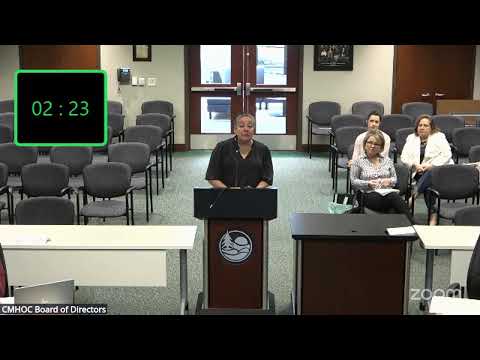
Family members and local residential providers pressed the Ottawa County Community Mental Health board on Friday for faster action to expand affordable, accessible housing and bolster specialized residential care after recent deaths and staffing shortages.
During public comment, parents described the weight of caregiving and the difficulty of finding local placements for adults with intellectual and developmental disabilities. “Griffin is 29 years old…he lives with Down syndrome, a seizure disorder and many other medical conditions,” said Leanne Sotak of Park Township, describing the anxiety parents feel about future care needs. “Our county has a responsibility to ensure that every resident, regardless of ability, has access to a safe and supportive place to live.”
Denise Newhouse, whose daughter Mikaela died shortly before the meeting, delivered an emotional appeal asking the board to do more on activity, oversight and staffing in group homes. “There has to be more helping our residents,” Newhouse said. Several other speakers, including providers and leaders of community programs, described long wait lists, difficulty accessing supports such as gym memberships or recreation programming, and challenges recruiting and retaining direct care workers.
Board members and staff said they share the concerns. Dr. Michael Brashears outlined the agency’s obligations after an unexpected death: CMH conducts a root‑cause analysis, involves the medical director and provider, and considers changes that may be required to improve safety and care. He said the agency will report more routinely on unexpected deaths and how they are investigated, protecting personal health information as required.
The board approved a new service contract and lease that staff said would colocate CMH substance‑use services with Solbar Community Recovery Center in a former church building at approximately 3347 Hoover Blvd. Joel Ebers, director of substance‑use services, described the planned space: Solbar will use the former sanctuary for peer and mutual‑aid meetings; CMH will occupy a north wing with roughly 1,400 square feet for clinical staff and 1,800 square feet for DDR/CIT teams. The center already reports roughly 900–1,000 monthly “check‑ins,” Ebers said, and offers childcare during meetings and a methamphetamine‑specific meeting.
Ebers said the move is intended to “meet people where they are” and to provide immediate linkage from community recovery resources to CMH clinical help. The board approved the contract and lease by roll call.
On provider finances, the board approved three contract amendments to raise rates for specific residential placements and increased the hourly rate for a wraparound case‑management service from $85 to $91 per unit in one contract. Those amendments were presented as case‑by‑case adjustments tied to individual residents’ levels of need; board members asked for clearer guidance on when staff should bring case‑level rate changes to the full board versus handling them through administrative authority.
Several board members urged caution about broad rate increases while statewide Medicaid funding is uncertain, worried that raising local rates without sustained revenue could create larger deficits. Dr. Brashears said staff are working to align rates across providers over time and that limited use of local millage to stabilize residential providers had already been used earlier in the fiscal year. He said staff will present more detailed, phased rate proposals for next fiscal year.
Providers and advocates also asked the board to support nonclinical measures — recreation, transportation, and local partnerships — that can improve health outcomes and reduce risk. Several speakers offered to collaborate with the agency on housing and employment solutions.
The board voted to approve the new lease and service contract with the recovery center and the contract amendments during the meeting.