Get Full Government Meeting Transcripts, Videos, & Alerts Forever!
Get email alerts on the Child Welfare System Failures topic
No spam. Unsubscribe anytime.
State lawmakers hear testimony alleging repeated failures in Michigan child welfare system after multiple child deaths
Summary
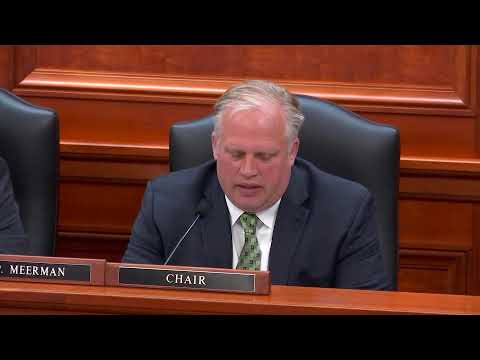
LANSING — Members of the Michigan House Oversight Subcommittee on Child Welfare heard emotional testimony on systemic failures in the state’s child welfare system during a hearing that focused on cases in which prosecutors, advocates and local officials say Child Protective Services (CPS) and the Michigan Department of Health and Human Services (MDHHS) failed to act in time.
LANSING — Members of the Michigan House Oversight Subcommittee on Child Welfare heard emotional testimony on systemic failures in the state’s child welfare system during a hearing that focused on cases in which prosecutors, advocates and local officials say Child Protective Services (CPS) and the Michigan Department of Health and Human Services (MDHHS) failed to act in time.
Attorney Jonathan Marco testified that several child deaths and severe injuries were foreseeable and preventable, citing the 2022 death of 3‑year‑old Chase Allen as a central example. “His decaying corpse was found in the basement freezer of his mother’s home,” Marco told the panel, adding that an autopsy found a fractured femur, skull fracture, brain bleeds and other injuries. Marco said CPS had been aware of injuries and signs of abuse months earlier, including a hospital report recommending a child‑abuse investigation; the file, he said, was closed the day after Chase was discharged from the hospital.
Why it matters: the committee heard that the failures are not isolated, and that state audits have also identified shortfalls in oversight. The Office of the Auditor General and the subcommittee are examining how MDHHS and its Office of Family Advocate investigate child deaths and whether follow‑up and accountability are adequate.
Marco described additional cases he represents to demonstrate patterns he says are systemic: a 9‑year‑old named Omarion Humphrey who drowned after private placement workers and MDHHS allegedly failed to respond to repeated pleas for help; a 16‑year‑old, Cornelius Fredericks, whom Marco said died after staff at a private facility repeatedly restrained him — cases in which he said contract oversight by MDHHS was inadequate; and a 15‑year‑old, Juan Quintana, who Marco said died by suicide after staff allegedly falsified supervisory logs and ignored repeated warnings from the youth.
“The system needs to be fixed,” Marco said. “When the CPS system experiences a failure, it's a child's safety that is at risk.” He told the panel that in several of these matters state or federal court records show questions about whether the agencies were deliberately indifferent; in other cases, he said, contract oversight of private placement providers was inadequate or missing.
Monroe County Sheriff Troy Goodenough told the committee that his office has repeatedly encountered situations in which state protective services closed complaints or took no action on repeated referrals from local law enforcement. He described two local cases: a family found repeatedly living in a tent and later a car with children not attending school, and an 82‑year‑old man, Ronald Montgomery, living in a home with no running water and severe animal and structural hazards.
“We called AP, Child Protective Services. Nothing,” Goodenough said of the tent family, describing multiple reports between Nov. 30, 2023, and April 16, 2025. He said his office arranged motel lodging, clothing and food through local partners after repeated nonresponsiveness from APS/CPS and later assisted in petitioning for a guardian and conservatorship for Montgomery. “These services are services to be delivered by the state of Michigan, not local government,” Goodenough told the panel.
Goodenough said local deputies frequently receive Law Enforcement Notification System (LENS) alerts from central intake and that many referrals are marked “closed” by state central intake without what he described as adequate follow‑up. He urged stronger local‑state coordination and for MDHHS to increase field follow‑up and accountability.
The committee also discussed findings from an audit of the Office of Family Advocate. Representative Mary Regas read audit findings, saying the office excluded about 150 MDHHS child‑death notifications from its evaluation process and did not complete reviews for 135 child deaths that met the audit’s criteria.
What the committee did: Representative Regas moved to approve the minutes from the committee’s April meeting; with no objections the minutes were approved by unanimous consent. Representative McDonnell moved to excuse absent members later in the session; that motion also passed by unanimous consent. The subcommittee chair said the panel planned further follow‑up and would invite MDHHS leadership to respond at a later date.
The hearing included several exchanges in which members pressed Marco and Sheriff Goodenough for supporting documents and asked whether department officials had been asked to appear; panel members said they intend to summon MDHHS officials for questioning in future sessions.
The committee adjourned after hearing public comment from Jim Casha, who said he has followed child welfare issues for decades and urged stronger prevention efforts to address prenatal and developmental risk factors.
The subcommittee did not adopt new policy during the session; members said they would pursue additional inquiries and request documents and testimony from MDHHS, the Office of Family Advocate and the Office of the Auditor General.