Get Full Government Meeting Transcripts, Videos, & Alerts Forever!
Get email alerts on the Elections Voter Integrity topic
No spam. Unsubscribe anytime.
Utah majority whip urges special session, outlines draft to verify citizenship on voter rolls
Summary
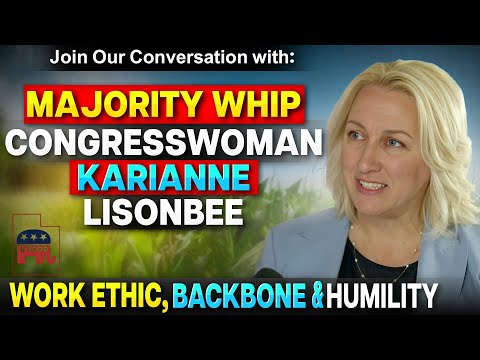
Utah House Majority Whip Carrie Ann Lisenby said she is pushing for a May special session to add code language to require clerks to verify citizenship for registrants and to adopt a two-list system for federal vs. state-only voters, citing gaps she says the National Voter Registration Act and current practice leave open.
Carrie Ann Lisenby, majority whip of the Utah House of Representatives, said she is urging state leaders to call a special legislative session in May to change how county clerks verify voter eligibility and to prevent noncitizens from casting ballots in Utah elections.
Lisenby said draft language she placed in a bill file — described in the interview as ‘‘HB332 language’’ — would require clerks to verify citizenship documents for registrants and create separated lists so that people without proof of citizenship could be limited to federal-only ballots until documentation is produced. "So I'm currently actually pushing to try to get that on special session agenda for May to get that fixed now," she said on the God and Country podcast.
Why it matters: Lisenby and several county clerks discussed what she described as blind spots in the voter-verification process. She said clerks often treat the signed attestation on a registration form as proof of citizenship rather than requiring documentary proof, and that the state's electronic checks against driver's-license databases can return an empty result rather than a noncitizen flag when registrants lack a driver's-privilege card or a populated citizenship field. "We should be verifying citizenship documents," she said.
Details from the interview: - Lisenby described a situation in which a person with a driver's-privilege card had been voting in Utah for four years and should not have been allowed to register or vote. She said staff later confirmed the status and that clerks had treated the signed registration attestation as adequate proof. - She said about 30% of noncitizens obtain a driver's-privilege card; the remaining roughly 70% would not trigger a citizenship check in the driver's-license database, producing an empty result when clerks ping that system. - Lisenby cited the National Voter Registration Act (NVRA) as the federal overlay that limits how states handle registrations for federal elections. She described the Arizona approach of maintaining two distinct voter lists — a federal-only list and a state-eligible list — and said Utah could adopt a similar structure so that people without verified citizenship would be restricted to federal-only access until documentation is provided. - She said Judicial Watch and other outside parties have signaled potential litigation over Utah’s permissive registration code, and that fixing code language now could avoid taxpayer expense defending lawsuits.
Process and next steps: Lisenby described the interim and special-session process: the Speaker of the House and the President of the Senate assign interim topics to committees, but legislators can add items at the first interim meeting. She said the HB332-style language is already drafted and that she is prepared to discuss and amend it based on county clerks’ input.
Context and limits: Lisenby emphasized she does not assert that any single official or office is solely to blame and noted the interplay between state law and federal NVRA requirements. She said the proposed change would allow removal of a registrant if the state obtains proof that the person is not a citizen — a step she said Arizona already takes under its procedures.
Ending: Lisenby told the hosts she has been in contact with the governor and county clerks about getting the language onto a May special-session agenda, but she cautioned that a call for a special session is not finalized. "I don't think that's something we have the luxury of waiting to act on, personally," she said about the voter-verification fixes.