Get Full Government Meeting Transcripts, Videos, & Alerts Forever!
Get email alerts on the Indigenous Rights topic
No spam. Unsubscribe anytime.
Speakers urge UNDRIP as a 'living framework,' call for indigenous jurisdiction over lands
Summary
Three meeting participants said the United Nations Declaration on the Rights of Indigenous Peoples should guide governance and investment, and called for indigenous jurisdiction over lands and resources; one speaker cited Rapa Nui heritage administration and networking needs.
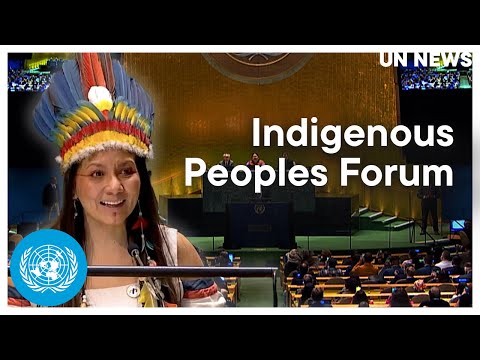
Speakers at a meeting urged that the United Nations Declaration on the Rights of Indigenous Peoples (UNDRIP) be treated as a "living framework" that should guide governance, investment and treatment of land, and they called for indigenous jurisdiction over lands and resources.
Commenter 1, a meeting participant, said, "There is basically no negotiation that is not relevant for indigenous peoples. UNDRIP is not a document to be celebrated once a year. It is a living framework that must guide how we govern, how we invest, and how we treat 1 another on the shared mother earth." Commenter 2, a meeting participant, added, "We wanna move forward to be able to have jurisdiction on our own lands, on our own resources." Commenter 3, a meeting participant, said, "In Rapa Nui, we have, our own administration of our heritage, and now we want to do some networking to make it stronger." Later, Commenter 2 affirmed, "The individual and collective rights of indigenous peoples are nonnegotiable. Now and forever, we stand with you all in making those rights a reality for indigenous peoples everywhere."
The speakers framed UNDRIP as a guiding principle for policy and investment rather than an annual commemoration. They emphasized two recurring themes: seeking legal or practical jurisdiction over indigenous lands and resources, and strengthening local heritage administration through networking, citing Rapa Nui as an example. The transcript does not record any formal motions, votes, or directives from the meeting's governing body related to these remarks, and it does not specify which official or agency, if any, will act on the statements.
No funding amounts, timelines, or specific legal mechanisms were specified in the recorded remarks. The comments assert a broad claim that indigenous individual and collective rights are "nonnegotiable," but the transcript does not document any concrete proposals, proposed ordinances, or requests for specific staff follow-up. The meeting record excerpt supplied contains brief spoken remarks only and does not identify additional agenda context or subsequent actions.