Get Full Government Meeting Transcripts, Videos, & Alerts Forever!
Get email alerts on the Childcare Rate Reform topic
No spam. Unsubscribe anytime.
Assembly hearing presses CDSS on alternative rate methodology; providers press for enrollment‑based pay and delinking from private rates
Summary
Department of Social Services and stakeholders described the alternative methodology cost model and upcoming Rate and Quality Advisory Panel meetings. Providers and advocates urged a transition to enrollment‑based rates, a bridge year, delinking subsidy reimbursements from private pay and protections for small providers.
At a joint Assembly oversight hearing on the Master Plan for Early Learning and Care, Department of Social Services staff and stakeholder groups discussed the department’s work on an "alternative methodology" — a replacement for the long‑used regional market rate survey to set childcare reimbursement rates.
Jackie Barrosio of the Department of Social Services said the Rate and Quality Advisory Panel (RQAP) has been the primary public vehicle to vet the cost model. CDSS held a special RQAP meeting the week before the hearing and released center‑based selection points and per‑child cost outputs. Barrosio said a second RQAP session is scheduled for May 9 to present family childcare selection points and follow‑up items.
Why it matters: rate methodology determines provider reimbursement and therefore affects provider solvency, wages and availability of care. The transition from a market‑based survey to a cost‑of‑care approach would be a structural change with budget, bargaining and technical implications.
Panelists and public commenters asked for clarity and several transitional protections. Multiple provider speakers urged that reimbursement be based on enrollment (not daily attendance), that subsidy rates be delinked from the lower private‑pay rates many providers charge, and that the Legislature provide a bridge year or "held harmless" protections while the state transitions to a new model. Several providers and nonprofit groups said current provider payments fall far short of the true cost of care and cited distressing personal and business impacts.
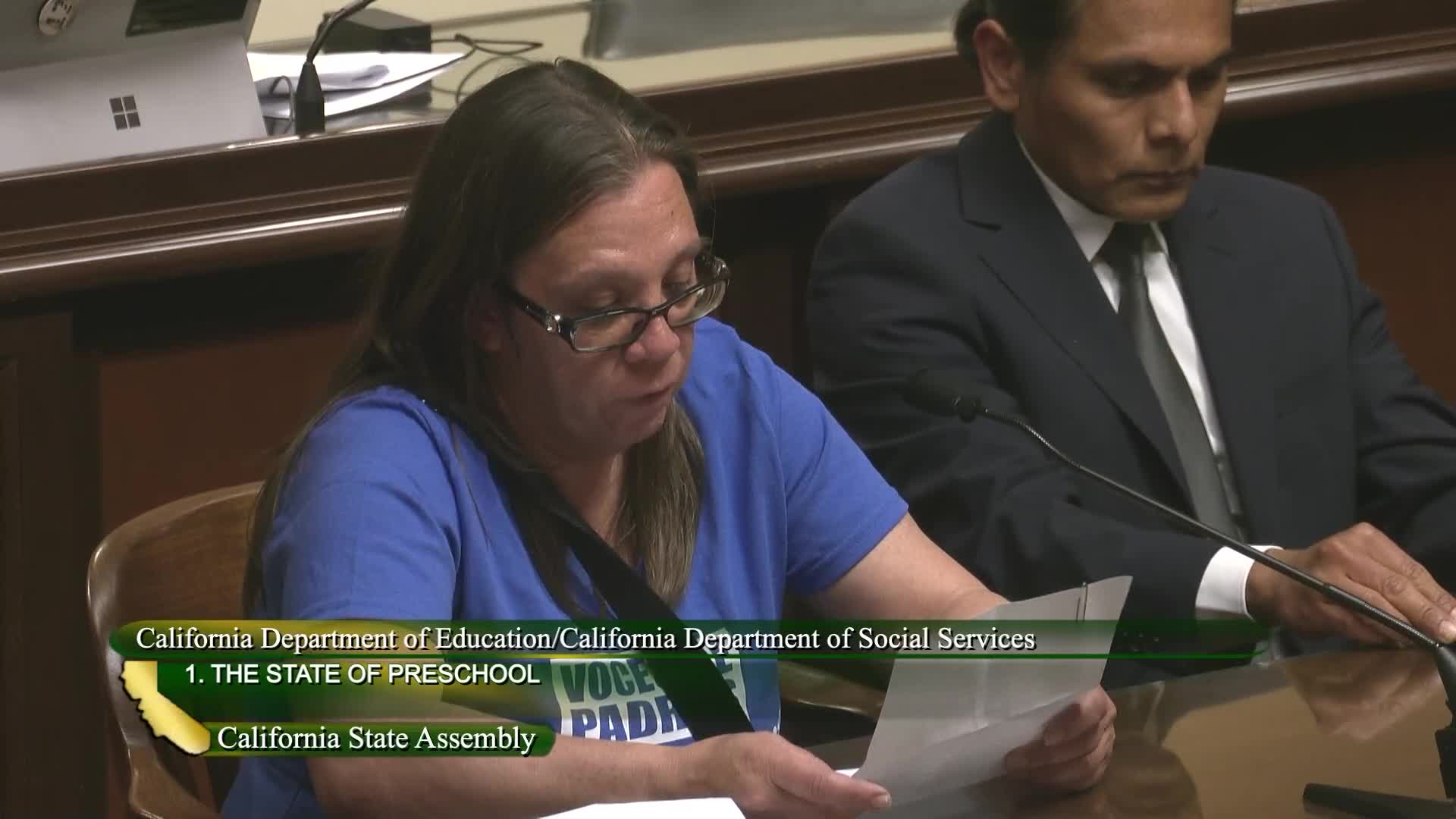
Family child care provider Terry Rivers told the committee, "Right now, we're being paid, like, $7.56" (describing a reimbursement level that she said breaks down to a few dollars per hour for some shifts). Other commenters asked the Legislature to preserve the recently negotiated child care health plan and retirement fund benefits and to ensure that any new rate structure covers evening, overnight and weekend care that many families rely on.
Department officials emphasized that the final timetable and budget implications depend on collective bargaining outcomes and the May budget revision. CDE and CDSS staff said they were preparing data‑system changes and estimated an initial CDE request of about $3.5 million and 24 positions to begin technical work for rate reform implementation; that estimate could change as bargaining concludes.
What the record shows: public presenters and agency staff repeatedly tied next steps to bargaining outcomes and the May revision. CDSS and CDE framed the RQAP public meetings and the forthcoming detailed methodology documentation (to the Administration for Children and Families) as the principal opportunities for public review before changes are adopted.
Ending: Providers and advocates urged the Legislature to adopt statutory guardrails (enrollment‑based reimbursement, prospective payments, delinking from private rates) and transitional funding to avoid lost capacity during the implementation of a new rate model.