Get Full Government Meeting Transcripts, Videos, & Alerts Forever!
Get email alerts on the Commercial Insurance Moratorium topic
No spam. Unsubscribe anytime.
Committee moves to extend residential post-disaster moratorium protections to commercial properties
Summary
SB 547 would extend the one-year post-disaster moratorium on cancellations and nonrenewals (currently applying to residential properties in affected ZIP codes) to certain commercial properties, including small businesses and nonprofits, to give communities time to recover after declared emergencies.
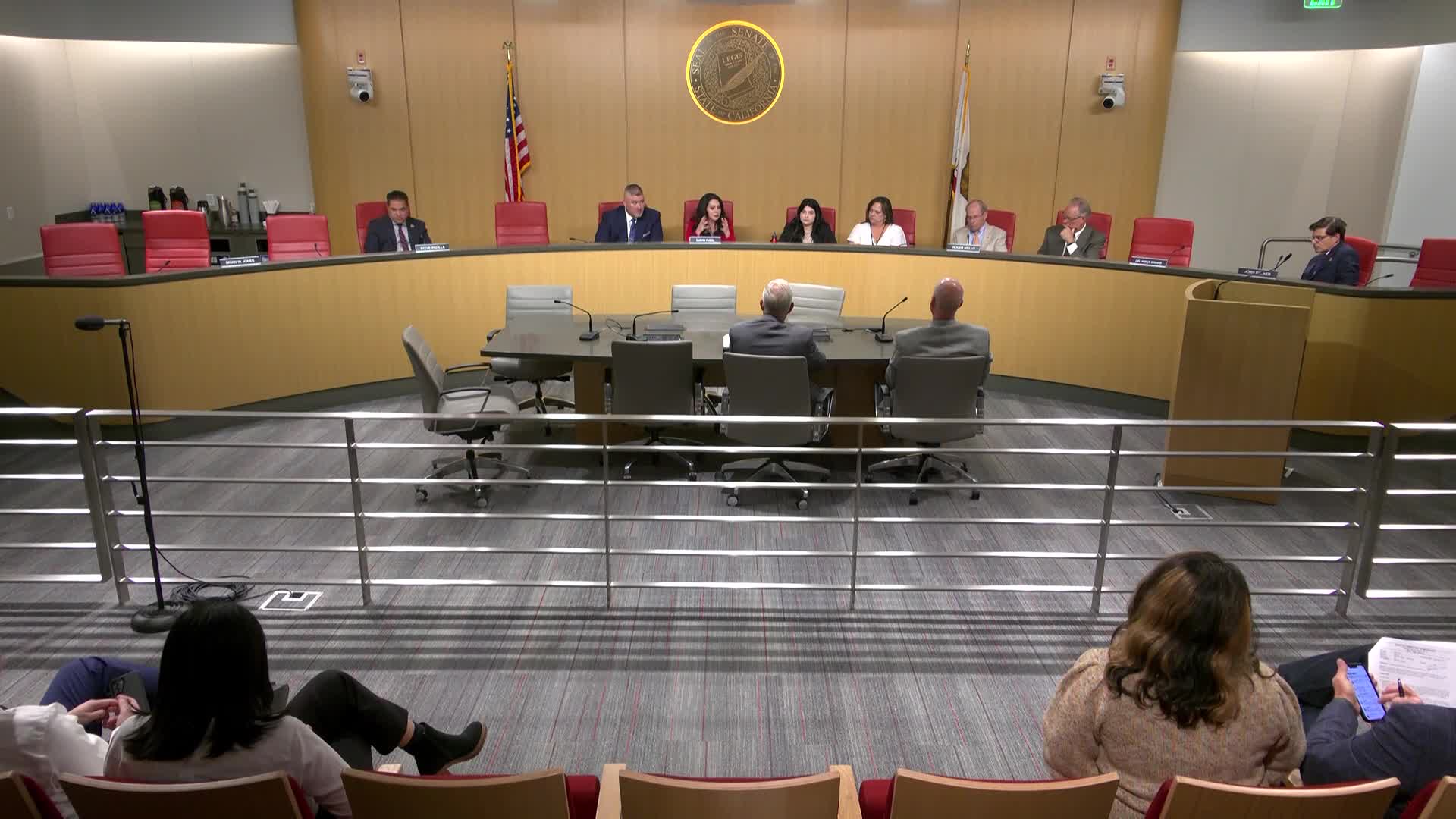
Sen. Lena Gonzalez Perez’s SB 547, part of the Senate majority’s wildfire legislative package, received committee approval to move to the Appropriations Committee after testimony about commercial impacts from recent wildfires.
The bill would expand the existing residential moratorium that prevents insurers from canceling or refusing to renew residential property insurance in a ZIP code within or adjacent to a fire perimeter for one year after a state of emergency is declared. SB 547 would extend those protections to commercial properties that include small businesses, nonprofits, homeowners associations, condominiums, affordable housing units and other commercial habitational risks so those entities have a year to recover without losing coverage.
Sen. Perez said the January wildfires destroyed more than 18,000 homes and structures and nearly 5,000 commercial buildings; she cited an estimate that 1,863 businesses employing about 9,610 workers with $1.4 billion in annual sales were affected, with a possible five-year economic impact of up to $10 billion in the seven-county Southern California region. Supporters included chambers of commerce and local governments, which testified that protection for commercial policyholders is critical to preserve local economic activity and enable rebuilding.
Industry witnesses, including representatives of APCIA and the Pacific Association of Domestic Insurance Companies, urged narrowing the bill. They said commercial risks are more complex than residential risks and vary by use, inventory, liability exposure and other factors; insurers asked for clear language allowing carriers to cancel or nonrenew where there has been a material change in risk (for example a business changing operations) and to consider narrowing the bill to habitational commercial properties.
Perez and the commissioner said they were engaging with stakeholders and would continue to refine the bill’s scope. The committee recorded a favorable roll call to send SB 547 to Appropriations.