
House narrows principal mentoring stipend after federal definition change
Get AI-powered insights, summaries, and transcripts
Sign Up Free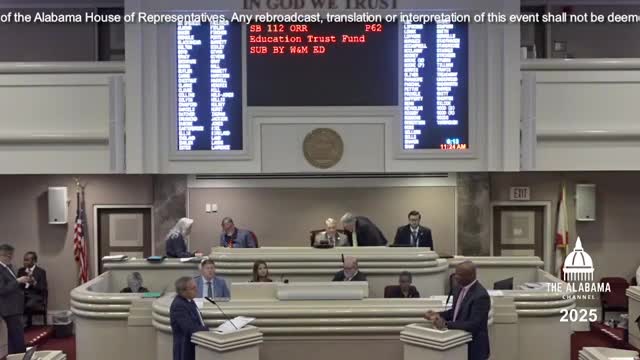
Summary
Lawmakers amended the Principal Leadership and Mentoring Act to limit an extra stipend to hard‑to‑staff schools after a federal definition change briefly expanded eligibility to about 80% of schools.
The Alabama House on April 22 approved changes to the Principal Leadership and Mentoring Act that lawmakers said restore the program’s original intent after a federal eligibility definition unexpectedly widened the pool of stipend recipients.
Under the mentoring law, principals who complete a certified mentoring program are eligible for a $10,000 stipend and assistant principals receive $5,000. The statute also included an additional stipend for principals and assistant principals serving in schools the state identifies as hard to staff. House leaders said a change in a federal “community eligible” definition caused roughly 80% of Alabama schools to qualify for that extra stipend this year. That dramatically increased the state’s fiscal obligation and, lawmakers said, exceeded the program’s original design.
Chairman Jeremy Garrett explained the technical fix on the House floor: the bill decouples the extra stipend from the federal community‑eligible definition and narrows it to a state‑defined set of schools — about 359 schools on the list Garrett cited — that are described in committee materials as low‑performing or high‑poverty and “hard to staff.” Garrett said the Legislature funded the one‑time payments for the cohort that already completed the mentoring program this year, adding $10 million in the supplemental to make those payments, and that going forward the stipend would apply only to the more limited group of schools.
Several members pressed for clarity on who would retain the larger stipend for this year and who would receive only the base mentoring award in future years. Representative Bracey and others described calls from principals who were concerned the change would reduce pay they expected; Garrett and supporters said the supplemental appropriation covers this initial round so no one who completed the program will lose the one‑time payment for the current cycle, and the statute change restores the program to its intended, targeted purpose.
Supporters framed the change as protecting the program’s sustainability and focusing incentives on leadership positions in schools where recruitment and retention are most difficult. Opponents or concerned members asked for lists of affected schools and more outreach to principals so local administrators could understand the transition. Garrett said the State Department of Education had produced a list and that committee staff would make school‑level information available to members.
The House adopted the substitute and amendments and passed the bill on a recorded vote.