Get Full Government Meeting Transcripts, Videos, & Alerts Forever!
Get email alerts on the Equity Vision Rollout topic
No spam. Unsubscribe anytime.
DEI committee weighs wording, video and rollout for district equity vision
Summary
The committee discussed the district’s equity vision statement rollout — including a proposed video, student involvement, an approximate $3,000 budget authorization for promotional materials, and debate over phrasing such as “I belong” versus “We all belong” or a CARES acronym.
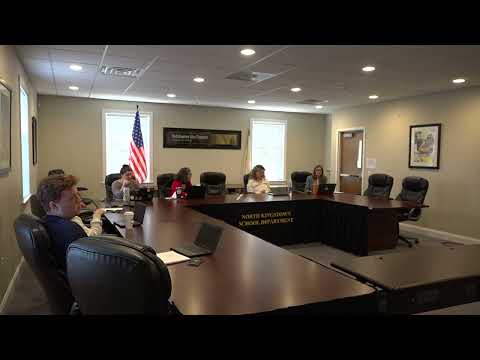
At the April 23 meeting, the North Kingstown DEI Advisory Committee discussed plans to publicize the district’s equity vision statement to staff, students and the broader community and reviewed options for wording, a promotional video, and visible materials in schools.
Sally Davidson said the equity vision statement was shared with staff before the March PD and posted on the district website. "The first line in the North Kingstown schools, we envision, a place where all belong," she said when describing the draft language and plans to gather student reactions and video footage at Quinesset. Davidson said she is planning a short promotional video and is coordinating with building allies and school staff to collect student voice and footage.
Committee members discussed alternatives to the phrasing, including the student-centered "I belong," the district-framed phrasing "We/All belong," and a proposed acronym such as CARES to place focus on district actions (for example, "creating an equitable, responsive school"). Students on the committee and adult members weighed the trade-offs: some supported "I belong" as empowering to students; others said an institutional pledge emphasizing the district's responsibility — "We all belong" or an action-based acronym — might avoid implying that belonging is solely the student’s responsibility.
Committee members suggested a mixed rollout strategy: student assemblies or short in-school activities, placement on digital boards and the district homepage, stickers or other visible materials in cafeterias and hallways, a social-media component, and an art contest to engage students across grades. Davidson said the School Committee had authorized about $3,000 for promotional items and that administration would manage procurement and campus-level placement; she asked building leaders to advise what could be provided for free by schools and what would require funds.
Davidson said a concrete near-term goal would be simple awareness: she suggested that if roughly half the community recognizes the statement by the end of June, that would represent early success, with higher recognition targeted for the following year.
The committee also discussed accessibility of materials (translations, ASL or nonverbal communication options) and cautioned that visuals should reflect the district’s diversity. A request was made to bring the item to the next CELAC meeting on April 30 for additional community feedback.
No formal vote on the statement text occurred at the DEI advisory meeting; members asked staff to refine plans, finalize the video timeline and consult building administrators and students before broader public rollout.