Get Full Government Meeting Transcripts, Videos, & Alerts Forever!
Get email alerts on the Mn State Budget Deficit 2025 topic
No spam. Unsubscribe anytime.
Minnesota House Republicans say cuts, fraud oversight must lead budget talks after Walz state of the state
Summary
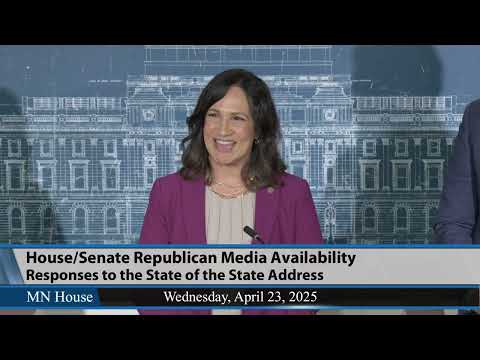
Republican legislative leaders responded to Gov. Tim Walz's state of the state by calling for spending cuts, citing alleged fraud and warning against passing costs to schools, seniors or new taxes as they prepare negotiating positions for a projected $6 billion deficit.
Republican leaders in Minnesota’s Legislature urged immediate budget reductions and stronger fraud oversight after Gov. Tim Walz delivered his state of the state address, saying the state faces a roughly $6 billion shortfall and must avoid saddling students, seniors and local governments with cuts.
The Republican leaders — speaking at a press event in St. Paul — said the state’s recent spending increases and tax and fee rises created an unsustainable trajectory and that their priorities for negotiations include rooting out “waste, fraud and abuse” and protecting K‑12 and senior services from cuts. Leader Johnson said Minnesota is “one of the highest tax states in the nation.”
Why it matters: The comments frame the House Republican negotiating stance weeks before the Legislature must agree on a two‑year budget. With leaders publicly disputing the causes of the deficit and emphasizing oversight, Minnesota’s budget talks are likely to focus on identifying reductions and on how any potential savings would be distributed among state programs, counties and taxpayers.
At the press event, the Republican speaker said the state spent an $18 billion surplus over the past two years and raised another $10 billion through taxes and fees. “I was very, very pleased to hear … the governor has realized that we are heading toward a deficit and he wants to make cuts,” the speaker said, adding that cuts “on the backs of our students or our seniors … are really off the table.”
Leader Johnson, another Republican leader at the event, said the deficit is about $6 billion and criticized recent Democratic majorities for spending increases. “We went from a $52 billion state budget up to a $72 billion state budget in two years,” Johnson said, calling that growth “pretty disingenuous” for officials who now deny responsibility.
Leader Niska echoed the call for bi‑partisan work but said the governor’s speech included too much national political rhetoric to move lawmakers closer together. “We have to work across party lines,” Niska said, but added that much of the address focused on national politics rather than state policy.
Republicans highlighted a newly created fraud prevention and agency oversight committee that, they said, will be chaired by Republican Kristin Robbins and carry a Republican majority for the next two years. “That was encouraging to hear that the governor is also starting to recognize that and wanting to do things,” the speaker said of the governor’s mention of fraud.
On taxes and cuts, the leaders repeatedly said they would not support new tax increases. “No new tax increases. That is a nonstarter for House Republicans at this point,” the speaker said. They also said they oppose shifting more than $500 million in costs to counties, a change they attributed to the governor’s proposals.
Reporters at the event pressed leaders on specifics for finding cuts while protecting schools, health care and long‑term care. The leaders said legislative committees have been working on budget drafts and that the House will release its first budget bills on the floor soon; they did not provide a complete list of specific reductions at the press conference.
The leaders repeatedly framed the negotiation timeline as compressed after the House opened 23 days later than typical this session; they said they still expect to meet statutory deadlines. Several Republicans said they remain willing to negotiate but emphasized that choices must prioritize Minnesota residents and public services.
The comments follow the governor’s speech and an afternoon meeting between the four legislative leaders and the governor, according to leaders at the event. Republicans said the speech did not meaningfully change their negotiating posture and that the next several weeks will show whether agreement is possible.
Less critical details: Speakers named the state, counties, school systems and senior services as priority protections; they highlighted the size of recent budget growth and repeated that implementation details and exact cut lists were still being developed in committee work.