Get Full Government Meeting Transcripts, Videos, & Alerts Forever!
Get email alerts on the Comprehensive Plan topic
No spam. Unsubscribe anytime.
Universal City hosts second comprehensive-plan workshop; consultants outline three land‑use alternatives and summarize public input
Summary
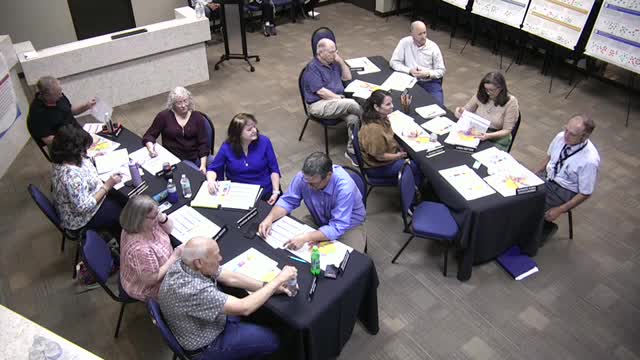
Universal City held a two‑hour joint workshop of the Planning & Zoning commission and City Council at which Matrix consultants presented a draft vision, three future‑land‑use alternatives, and draft goals and policies while summarizing community outreach results and stressing the need to coordinate ETJ decisions with Randolph Air Force Base.
Universal City held a two‑hour joint workshop of the Planning & Zoning commission and City Council at which Matrix consultants presented a draft vision for the city, three future‑land‑use alternatives, and draft goals and policies and summarized community engagement to date.
Consultant Celeste Warner told elected officials and residents that the plan team has gathered input from an online questionnaire, an outreach booth at SnowFest and two community meetings, and is assembling that feedback into a draft comprehensive‑plan update. Warner said the draft vision frames Universal City in 2035 as “a versatile, leading‑edge and forward‑looking community that honors its military heritage while embracing innovation, revitalization and sustainable growth,” and described the plan’s three main components: the vision statement, a future land‑use plan and goals and policies.
The consultants reported participation numbers and survey results: more than 320 people completed the online questionnaire, consultants said they contacted about 105 people at SnowFest, and the second community meeting drew “over 35” attendees. In the questionnaire and meeting exercises, respondents most commonly rated safety and security, infrastructure maintenance and a sense of community as top priorities. Specific tallies cited during the presentation included 73% identifying safety/security as a priority, 67% calling for infrastructure improvements, 62% supporting local‑business expansion, 70% favoring roadway improvements and 60% backing expanded sidewalks and pedestrian facilities. The consultants said the city’s current population is about 20,000 and presented alternative build‑out population estimates ranging from roughly 29,000 (zoning build‑out without ETJ) to higher totals if the ETJ is included, while noting those figures assume aggressive, efficient development and should be treated as illustrative.
Warner and colleague Ed White walked the group through three land‑use alternatives. All three keep most existing residential character—consultants noted 92% of the city is already built—and differ primarily in selected redevelopment nodes, mixed‑use areas and one alternative’s proposal to show an “estate residential” designation in a portion of the ETJ. The consultants said the estate‑residential option would be very low density (0–2 dwelling units per acre) and was included in one alternative to give the council a policy choice for parts of the ETJ that sit inside Accident Potential Zone 2 (APZ‑2) relative to Randolph Air Force Base.
The Randolph AFB compatibility issue was raised repeatedly. Consultants said Air Force guidance for APZs recommends limiting residential density in APZ‑2 (they described a compatible density of no more than two dwelling units per acre) and emphasized the importance of coordinating with Joint Base San Antonio/ Randolph on any annexation or land‑use changes in the ETJ. Consultants also noted a state statutory point discussed during the meeting: by Texas law the county itself cannot zone, and when an ETJ parcel is annexed it initially defaults to the city’s R‑1 (large‑lot residential) zoning unless changed through a local rezoning process. Warner and staff recommended including policy language instructing coordination with Randolph on clustering and compatibility should the city pursue annexation of ETJ parcels.
Attendees asked detailed questions about specific corridors and nodes. Pat Booker Road, Kitty Hawk and the Aviation District were repeatedly identified as priority areas for focused investment and master planning. Consultants said mixed‑use designations on the land‑use plan would generally require a subsequent master‑plan or Planned Unit Development (PUD) process before regulatory zoning or development approvals, and they emphasized that master plans can include design guidelines, street and streetscape standards, parking strategies and phased capital investments.
On transportation, consultants recommended a pavement‑management program, regional coordination with the metropolitan planning organization and TxDOT for signal timing and corridor improvements, and targeted traffic studies at major intersections. On multimodal access, they reported community feedback split by age: many respondents favored sidewalks and safer pedestrian crossings, while some meeting attendees—many older residents at the community meeting—expressed concern about bike lanes and how they would be separated from cars. Consultants recommended studying context‑sensitive bike and pedestrian designs and prioritizing ADA accessibility near schools and civic facilities.
Parks, open space and community facilities drew strong public interest, the consultants said. Participants suggested upgrades to playgrounds, restrooms and athletic fields, expanded programming for youth and seniors, and exploring a signature civic plaza or festival space in the Aviation District or along Pat Booker to support events such as SnowFest. Consultants acknowledged parking and access would need to be addressed for any plaza or festival site, and they suggested pairing such amenities with development that provides parking or supports transit.
Draft goals and policies discussed at the workshop included: preserving neighborhood character; studying accessory dwelling units and other targeted housing tools; encouraging mixed‑use and master‑planned nodes; protecting military compatibility around Randolph; establishing multimodal and ADA‑compliant pedestrian and bicycle networks; and developing prioritized capital‑improvement criteria that consider safety, equity and economic development. Consultants repeatedly urged that many of the draft policies are implementation tools—master plans, code updates, capital‑improvement plans and economic analyses—that would follow the adoption of a final comprehensive plan.
Next steps presented to the group: consultants said they will incorporate workshop feedback and existing outreach into a draft future‑land‑use plan for public review, aiming for a public release of a draft in mid‑summer (consultants said July during the workshop) with a final plan later in the calendar year. Staff requested written comments to be sent to the city’s planning contact (Michael) for incorporation. The consultants also said they will provide more detailed economic and fiscal analyses at the draft stage to test whether proposed land‑use mixes are supported by market conditions.
Formal action at the start of the workshop: the council and commissioners approved, by voice vote, ratification of the previous joint‑workshop minutes. The transcript records the voice vote and a voiced “aye” but does not give a roll‑call tally or mover/second.
The consultants and staff emphasized that the draft plan and the underlying policies are flexible and amendable: they recommended adopting broad guidance now and refining implementation tools—zoning changes, master plans and coordinated annexation policy—through subsequent steps and intergovernmental coordination with Randolph and Guadalupe County.
What this means for residents: the workshop consolidated public outreach findings and gave the council several policy choices about where to encourage redevelopment, how to respond to Randolph’s APZ guidance for ETJ lands, and how to prioritize transportation, parks and capital projects. The consultants asked council, commissioners and residents to submit written comments before the draft public release so the next version more fully reflects community preferences.