Get Full Government Meeting Transcripts, Videos, & Alerts Forever!
Get email alerts on the School Safety topic
No spam. Unsubscribe anytime.
Police chief outlines proposed single SRO for high school; board hears presentation, takes no vote
Summary
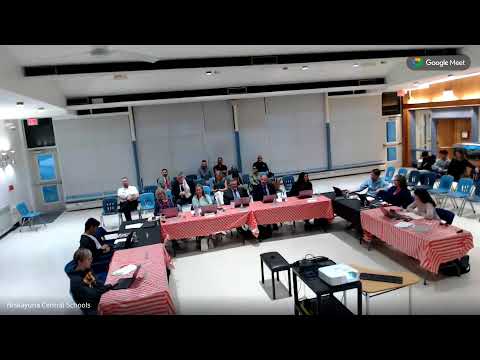
The Niskayuna Central School District Board of Education on April 23 heard a presentation from the town’s chief of police on a proposed School Resource Officer (SRO) program that would place one full‑time sworn officer primarily at Niskayuna High School; the board did not vote on the proposal.
The Niskayuna Central School District Board of Education on April 23 heard a presentation from the town’s chief of police on a proposed School Resource Officer (SRO) program that would place one full‑time sworn officer primarily at Niskayuna High School; the board did not vote on the proposal.
The chief told the board the program would follow a nationally recognized SRO framework and focus on mentorship, education and crisis management as well as school safety. “Youth‑centered, education focused, and relationship driven,” the chief said, adding that building trust and sustained contact with students would be the program’s priority.
Board members asked detailed questions about enforcement limits, training, juvenile arrests and transparency. Superintendent Carl emphasized that the district’s intent is not to criminalize school disciplinary issues: schools must remain “safe places where children can make mistakes, learn from their mistakes, and grow,” he said, and the district expects accountability without routine criminalization of student conduct.
Key program features described by the chief included: one sworn police officer assigned full time to the high school but available districtwide for programming; an emphasis on formal and informal mentorship; classroom‑based education and prevention programming; crisis management and coordination with outside resources; and collaboration with principals, counselors and the district safety team. The chief said the SRO would report through the police department chain of command to the chief.
On enforcement and juvenile cases, the chief said the primary function of an SRO is not to investigate or create criminal cases out of school discipline. He said arrests or custody of a juvenile would generally be handled with parents involved and would occur only when circumstances — for example an imminent threat — required law enforcement action. “Unless there were circumstances that dictated there may be potential for some sort of a threat,” the chief said, the police would not enter schools to arrest students on outstanding warrants as a routine practice.
Board members pressed for specifics on training and accountability. The chief said the department follows a policy of using body‑worn cameras and described department‑level training in crisis response, de‑escalation and instruction techniques; he also proposed additional, district‑customized SRO training that would be coordinated with the district’s threat assessment, special‑education and trauma‑informed resources. The chief said the SRO candidate would be expected to complete an instructor development course so the officer can present curriculum and co‑teach when appropriate.
Several board members raised resource and staffing limits as a constraint. The chief said the police department’s minimum staffing can vary and that dedicated SRO availability would improve programming and follow‑up for students, but that placing an officer in every building would require substantial additional resources.
On the program’s scope, the chief and district leaders repeatedly said the SRO would not perform school discipline, act as an intimidator, or supplant school administrators. “We are a piece of a puzzle,” the chief said, describing the SRO role as an added layer focused on prevention, relationships and access to community resources, including local mobile crisis teams.
No formal motion or vote on adopting an SRO program or on a memorandum of understanding with the town occurred during the meeting; the item was presented for board consideration and discussion. Board members directed further work on training, role definitions, and measures the district and police department would use to protect student privacy and preserve school‑based accountability.
Next steps identified in the meeting included additional drafting of program details, joint training plans between the district and police department, and further conversation about reporting, oversight and any memorandum of understanding the board might later consider.