Get Full Government Meeting Transcripts, Videos, & Alerts Forever!
Get email alerts on the Energy Transmission topic
No spam. Unsubscribe anytime.
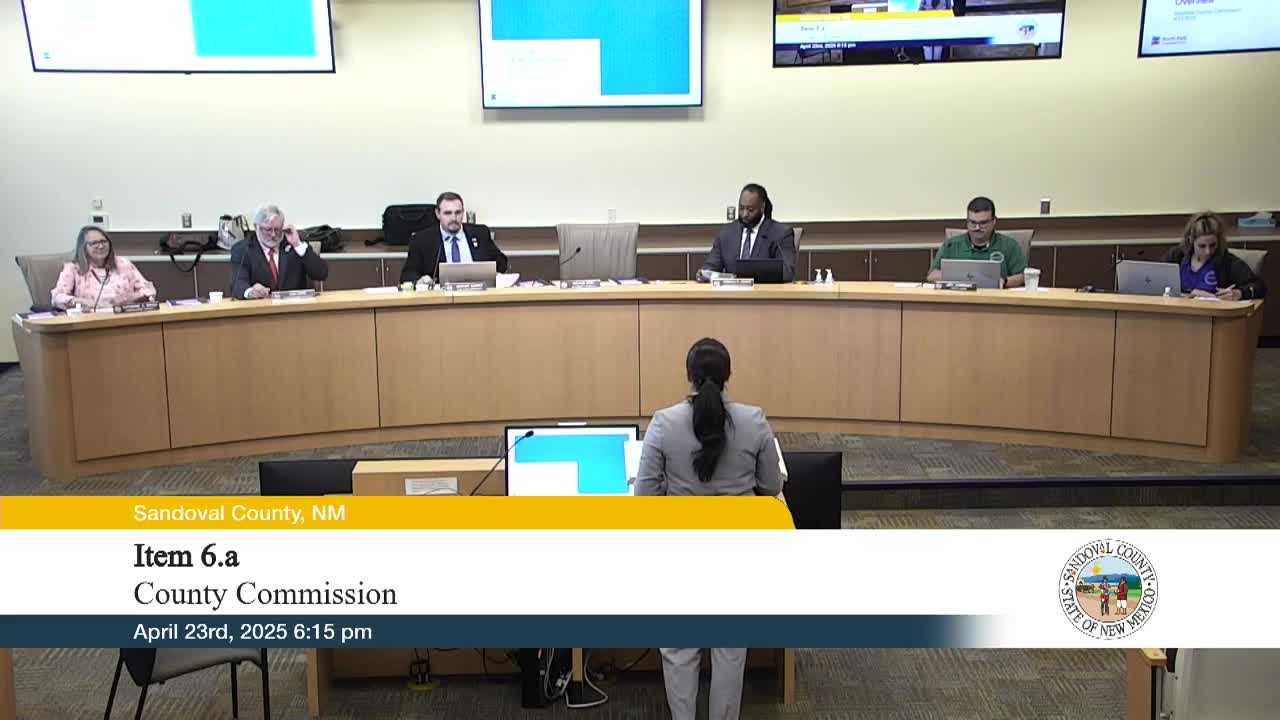
Developer presents North Path transmission plan to Sandoval County; highlights HVDC technology, voluntary easements and economic promises
Summary
An Invenergy representative briefed the Sandoval County commission on the proposed North Path transmission project, describing a roughly 400‑mile high-voltage direct current line, voluntary landowner easements, early investments in tribal and local initiatives and a long multi‑phase timeline.
Invenergy introduced the North Path transmission project to the Sandoval County Board of County Commissioners, describing a high‑voltage direct current (HVDC) transmission line intended to move electricity from Union County to the Four Corners region and to support new generation and load growth in northern New Mexico.
Why it matters: The developer said North Path would expand transmission capacity, relieve congestion, enable renewable-resource development in rural areas, and support expected load growth from data centers and manufacturers. The project, as described to the commission, would traverse hundreds of miles and require easements from private landowners and agreements with tribal governments and state land managers.
What the developer said: Jamie Aranda, described in the presentation as director of local and community affairs for Invenergy, said the project is still in early development and has been the subject of feasibility and routing studies since 2021. Key points presented to the commission included:
- Technology and route: North Path would use HVDC technology, which the presenter said requires a narrower right‑of‑way (approximately 200 feet) and fewer structures (typically three to four structures per mile, about 135 feet tall on average). Aranda said the line’s overall length is “about 400 miles.”
- Property rights and tribal engagement: Aranda said right‑of‑way acquisition is voluntary with landowners; the project team is conducting one‑on‑one negotiations with landowners and is “following the lead” of tribes and pueblos on tribal lands. State land leases would be sought when applicable.
- Timeline and investment: The project team described North Path as a long development program that can span 10–20 years from planning to construction. Aranda said Invenergy and partners have invested more than $200,000 in local and tribal initiatives along the route to date and characterized North Path as a multi‑billion‑dollar transmission investment.
- Economic and reliability claims: Company materials presented to the board claimed the project would provide economic benefits (landowner payments, labor income from operations and maintenance roles) and improve grid reliability and capacity.
Commissioner questions and responses: Commissioners asked about the project’s stage in the county briefing schedule, revenue and tax splits for local governments, right‑of‑way acquisition strategy, and tribal community outreach. Aranda said an economic impact study is in progress and that the team would return to present refined numbers; she confirmed there are no existing easements being repurposed and that the team is seeking voluntary easements and parallel routing where feasible.
What the transcript records: The presentation and Q&A constituted an informational briefing; no decision or formal action was taken by the commission. The developer agreed to follow up with more detailed economic numbers and to coordinate further outreach with county and tribal officials.
Next steps: Staff and the developer indicated they will continue local outreach; the developer offered to brief county affiliates and the New Mexico Counties affiliate group if requested.
Quote: "North Path is focused on finalizing the route through meaningful collaboration with landowners, tribes and other right‑of‑way partners," Jamie Aranda said during the presentation.