Get Full Government Meeting Transcripts, Videos, & Alerts Forever!
Get email alerts on the Opioid Settlement Funds topic
No spam. Unsubscribe anytime.
Bangor council creates advisory committee to guide opioid settlement spending
Summary
The Bangor City Council voted to create an advisory committee to recommend how roughly $3.45 million in opioid settlement funds will be allocated over a 16-year period. The committee will be advisory; proposals will return to the council for final approval.
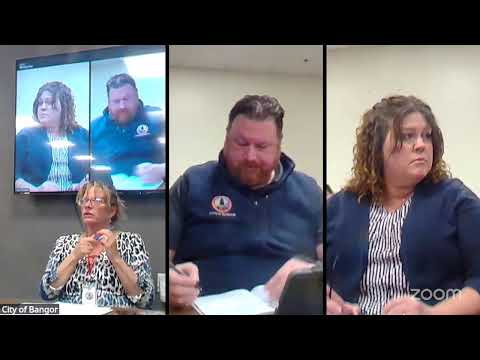
Bangor City Council voted Wednesday to create an advisory committee to recommend how the city should allocate opioid settlement funds, approving the measure on a recorded roll call after debate about community input and rollout.
City Manager Deb Lohrey told the council the city is scheduled to receive roughly $3,450,000 from national opioid settlements over a 16-year period beginning in 2022 and running through 2038. She said the city has spent only a small amount to date — roughly $19,326 — on syringe pickup and has executed a memorandum of understanding with Wabanaki for needle-waste disposal and related wraparound services. Lohrey said the city currently has about $1,053,000 available from the settlement receipts on hand.
The council and public-health staff framed the committee as a way to include people with lived experience of substance use, subject-matter experts and community stakeholders in deciding how the local share of settlement funds should be used. Director of Public Health Jen Gunterman described a prevention-focused proposal the department has been developing, using a working title of Project Thrive. “Project Thrive is not school-based drug education,” Gunterman said. “It is an early-intervention, wraparound model that links children and families to supports, mentoring and peer services to reduce risk and improve family stability.”
Councilors also discussed the local syringe-service landscape after the longtime provider closed and HEAL declined to continue broad services. Councilors and staff described Wabanaki stepping in to fill a gap while noting the organization has said it does not want to be the permanent, primary syringe-service provider. Staff said the role for the city could include continuing syringe-waste pickup contracts and assisting Wabanaki with wraparound or co-located services while the committee considers long-term allocations.
Councilors said they had consulted state and regional partners: Lohrey noted the city has looked at the work of the Maine Recovery Council — which has awarded about $13 million in grants statewide — and has received technical assistance from the Moss Center at the University of Southern Maine. Councilors also discussed the option of hiring an outside facilitator for community listening sessions; one councilor recommended engaging an experienced facilitator named in an email to councilors.
The council’s motion to create the advisory committee was moved and seconded during the workshop. The council then took a roll-call vote: Councilor Leonard — yes; Councilor Beck — yes; Councilor Mallard — yes; Councilor Haas — yes; Councilor Fisch — yes; Councilor Fournier — yes; Councilor Schumpfel — no; Councilor Dean — yes. The motion carried, with seven votes in favor and one against. Council members and staff described the body as an advisory committee; any funding recommendations it makes will return to the council for final approval.
Staff said the committee will review proposals beyond those commitments the city has already made (for example, syringe-waste disposal) and can recommend grant programs or specific awards. The council asked staff to draft an order for the next council meeting with the committee’s charge and membership, and staff said they would also propose potential nominees to the council.
Background and next steps: Lohrey said the city’s settlement receipts are being received in installments; some municipalities received payments upfront while others are tiered over time. The council asked that the committee’s scope and membership be clarified in the council order that will appear at the next business meeting. Staff reported ongoing conversations with health partners about related public-health priorities, including recent discussions about supporting state legislation and funding requests for HIV/PrEP testing and sustained outreach, though no formal action on those items occurred at the workshop.