Get Full Government Meeting Transcripts, Videos, & Alerts Forever!
Get email alerts on the Airport Funding topic
No spam. Unsubscribe anytime.
Committee advances bill to dedicate aviation fuel tax revenue to regional airport projects
Summary
SB 661 would redirect aviation fuel sales tax revenue to a new distribution mechanism to invest in regional airports, air service expansion and workforce development; airports and airlines supported the proposal but said formula and allocation details must be negotiated.
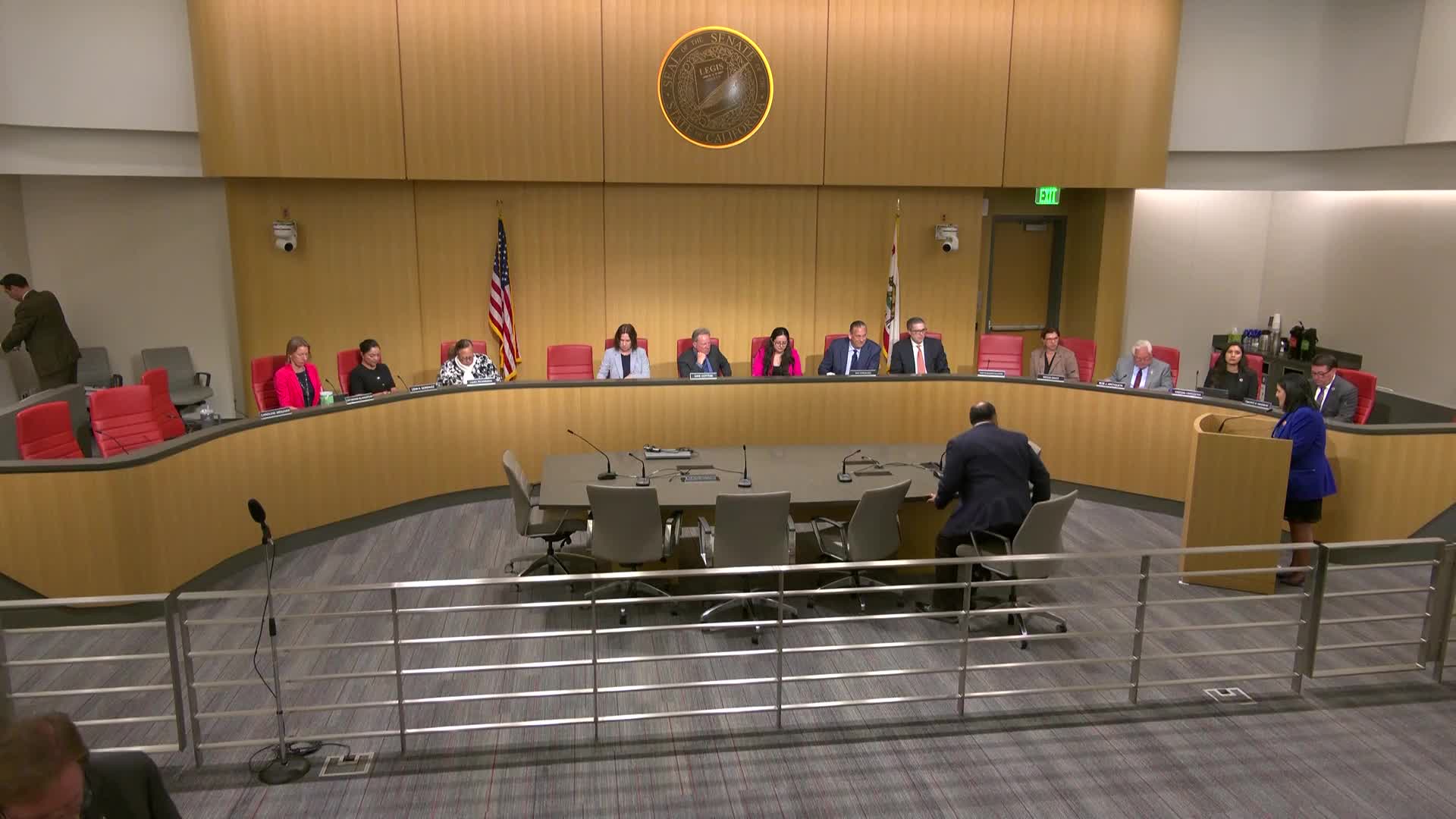
The Senate Transportation Committee advanced SB 661, a bill that would dedicate a portion of aviation fuel sales tax revenue to support airport infrastructure, air service expansion and aviation workforce development for small and regional airports.
Sen. Hurtado, who introduced SB 661, said the measure is aimed at giving regional airports a reliable funding stream so they can attract commercial service, improve terminals and grow workforce pipelines. Jim Lights of the California Airports Council told the committee the bill would move the state into compliance with a Federal Aviation Administration revenue‑use rule and called the measure “very important” for 31 commercial airports the council represents.
Supporters included Kern County supervisors, multiple cities and United Airlines (which said it supported Section 3 of the bill but continued to seek negotiations on allocation formulas). Witnesses emphasized the local economic role of airports and said an allocation formula must be equitable to markets that generate the revenues as well as to airports that currently lack service.
Committee action: The bill was moved forward to the Senate Committee on Revenue and Taxation; the committee record shows a roll call at the hearing with a recorded tally of 9 yes and 0 no. The author agreed to continue work with airports, airlines and other stakeholders to refine the allocation formula by a target timeline (stakeholders discussed completing negotiations by mid‑year/July timelines referenced in testimony).
Next steps: The bill will go to the Revenue & Taxation Committee; the author committed to convene stakeholders to develop an allocation formula intended to be completed in the months ahead.