Get Full Government Meeting Transcripts, Videos, & Alerts Forever!
Get email alerts on the Fleet Electrification Exemptions topic
No spam. Unsubscribe anytime.
Panel advances bill expanding emergency vehicle exemptions, creates advisory process for fleet waivers
Summary
SB 496 would set an advisory appeals process and broaden which vehicles qualify as emergency‑use exempt under California Air Resources Board fleet electrification rules; local fleet managers said the changes are needed to maintain emergency response capability.
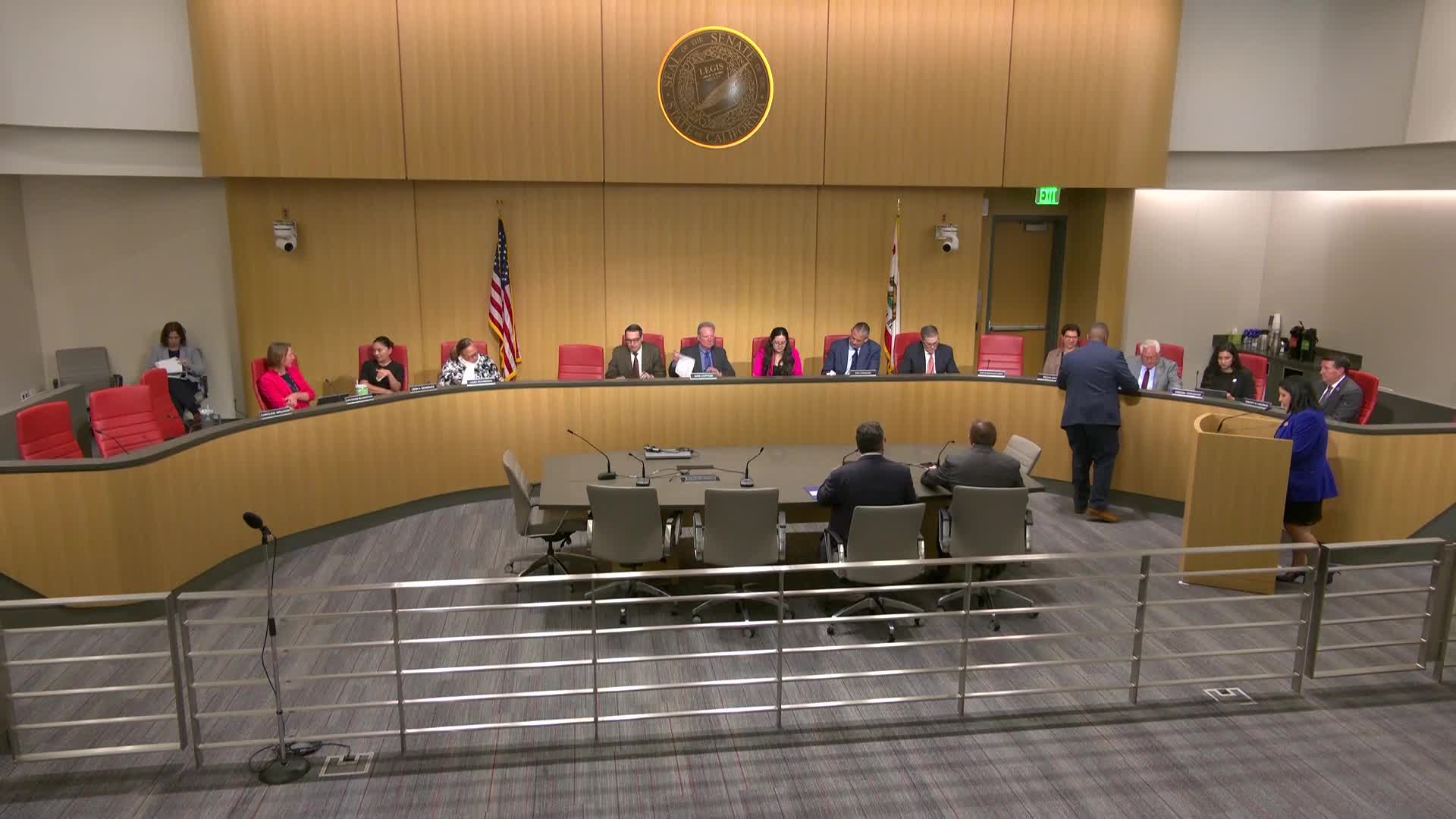
The Senate Transportation Committee advanced SB 496, which would establish an advisory appeals committee to review denied exemption or extension requests under the California Air Resources Board's Advanced Clean Fleets (ACF) regulation and would broaden the emergency‑vehicle exemption to include vehicles “reasonably anticipated to be used in a disaster.”
Author Sen. Melissa Hurtado told the committee the bill aims to ensure frontline responders and essential utility and water districts retain access to vehicles capable of performing in emergencies while still supporting the state's emissions goals. David Worthington, fleet manager for Santa Clara County, said “every vehicle is an emergency response vehicle 24/7” during wildfires and other regional emergencies and argued current zero‑emission vehicle options do not yet meet many duty cycles, towing and auxiliary‑power needs.
Supporters included numerous water districts, county supervisors, the League of California Cities and the California State Association of Counties. Testimony stressed real‑world incidents—wildfires, power shutoffs and flood responses—where fleets required heavy equipment or prolonged auxiliary power that current battery technology and charging infrastructure cannot reliably support.
Opponents included the Union of Concerned Scientists, which said ACF already contains multiple exemptions and that the bill's phrasing—particularly the undefined phrase "reasonably anticipated to be used in a disaster"—could unintentionally delay fleet electrification and reduce the regulation’s emissions benefits.
Committee action: The committee voted to refer SB 496 to the Senate Committee on Appropriations with a recorded roll call showing the bill moved forward (9 yes, 0 no at the time of record). The author and supporters said they will work with CARB and other stakeholders to refine the committee composition, standards of review and definitions for disaster‑use determination.
Next steps: The measure moves to Appropriations for fiscal review. The author and witnesses requested ongoing engagement with CARB to ensure the appeals committee remains advisory and to craft precise eligibility criteria that avoid unintended broad exemptions.