Get Full Government Meeting Transcripts, Videos, & Alerts Forever!
Get email alerts on the Ev Battery Recycling topic
No spam. Unsubscribe anytime.
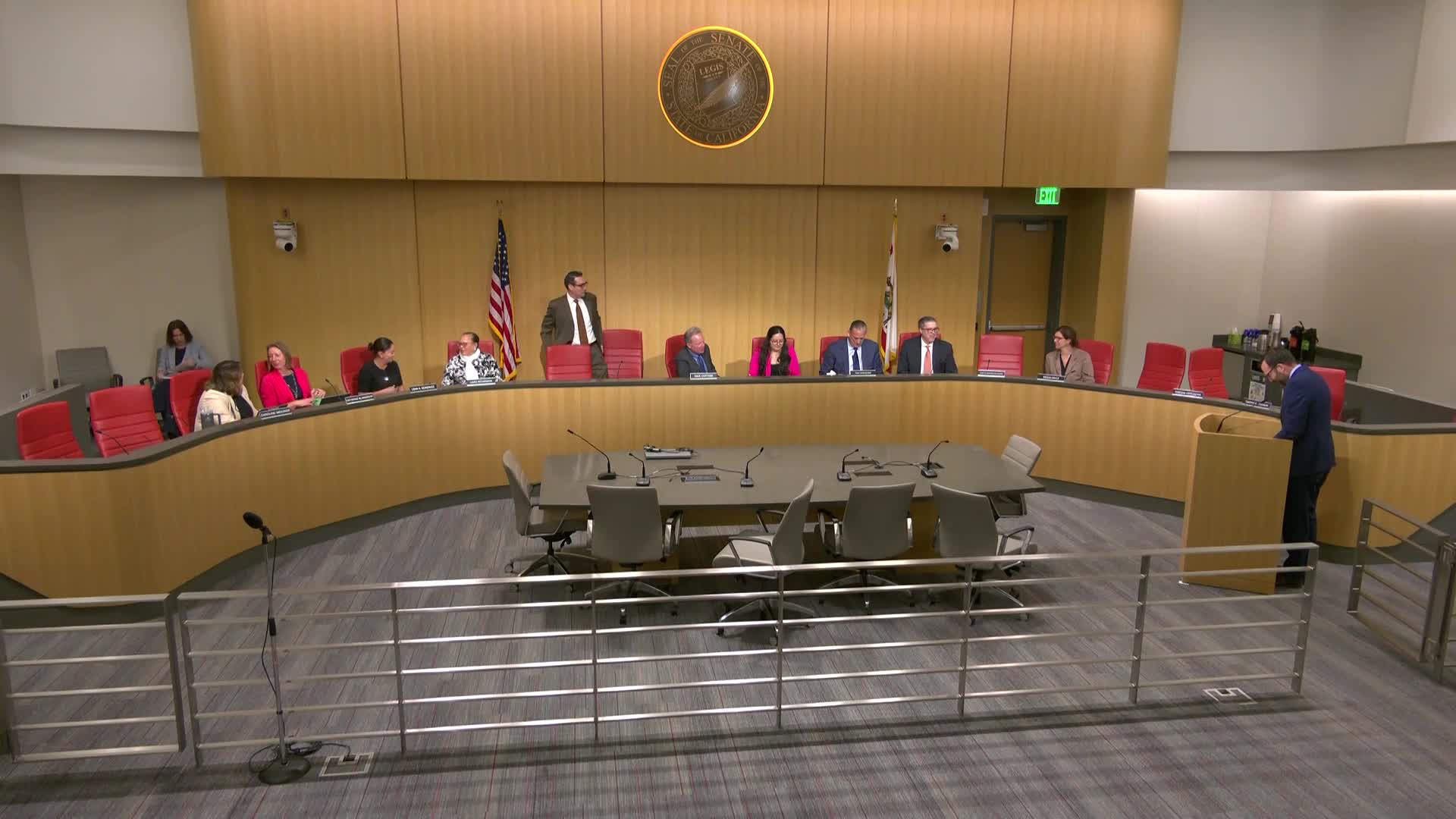
Senate committee OKs producer‑responsibility bill for EV batteries after mixed testimony
Summary
SB 615 would require producers, recyclers and other handlers to track and responsibly manage end‑of‑life EV batteries; automakers and environmental groups supported the concept while some manufacturers and industry groups urged amendments on safety and cost.
The Senate Transportation Committee advanced SB 615, which would create a producer‑responsibility framework for end‑of‑life lithium‑ion EV batteries, require certified recycling facilities and mandate tracking and reporting to a state system.
Sen. Allen, the bill's author, said the measure seeks to avoid hazardous‑waste outcomes, recover valuable minerals and encourage reuse and repurposing where feasible. The bill would make battery suppliers responsible for collection costs and require facilities that handle these batteries to be certified by the Department of Toxic Substances Control (DTSC).
Supporters included the Union of Concerned Scientists and Ford Motor Company. Michelle Canales of UCS said projected EV battery retirements will increase by 450% over the next decade and that producer responsibility and tracking are essential to prevent batteries from ‘‘slipping through the cracks’’ into landfills. Alyssa Lehi of Ford said the company moved from opposition to support after negotiations and would continue working with the author and stakeholders.
Opposition or concern came from some EV manufacturers and industry groups. Tesla and Rivian expressed safety and cost concerns; the Motorcycle Industry Council sought explicit exclusions for certain motorcycles; the California Chamber of Commerce and manufacturers also asked for amendments.
Committee action: Committee members voted to advance SB 615 to the Senate Committee on Appropriations; the record shows the motion carried on a roll call recorded in committee with a 6‑1 tally at the time of the hearing. The author and supporters said they would continue stakeholder work to refine safety standards, certification details and cost allocation.
Implementation notes: The bill requires DTSC to develop standards for facilities that process batteries, reporting requirements for recovery rates of critical minerals, and a system to track battery flows from vehicles to reuse or recycling. Supporters emphasized the flexibility in the bill to allow repurposing for energy storage where appropriate.