Get Full Government Meeting Transcripts, Videos, & Alerts Forever!
Get email alerts on the Auto Sales Fees topic
No spam. Unsubscribe anytime.
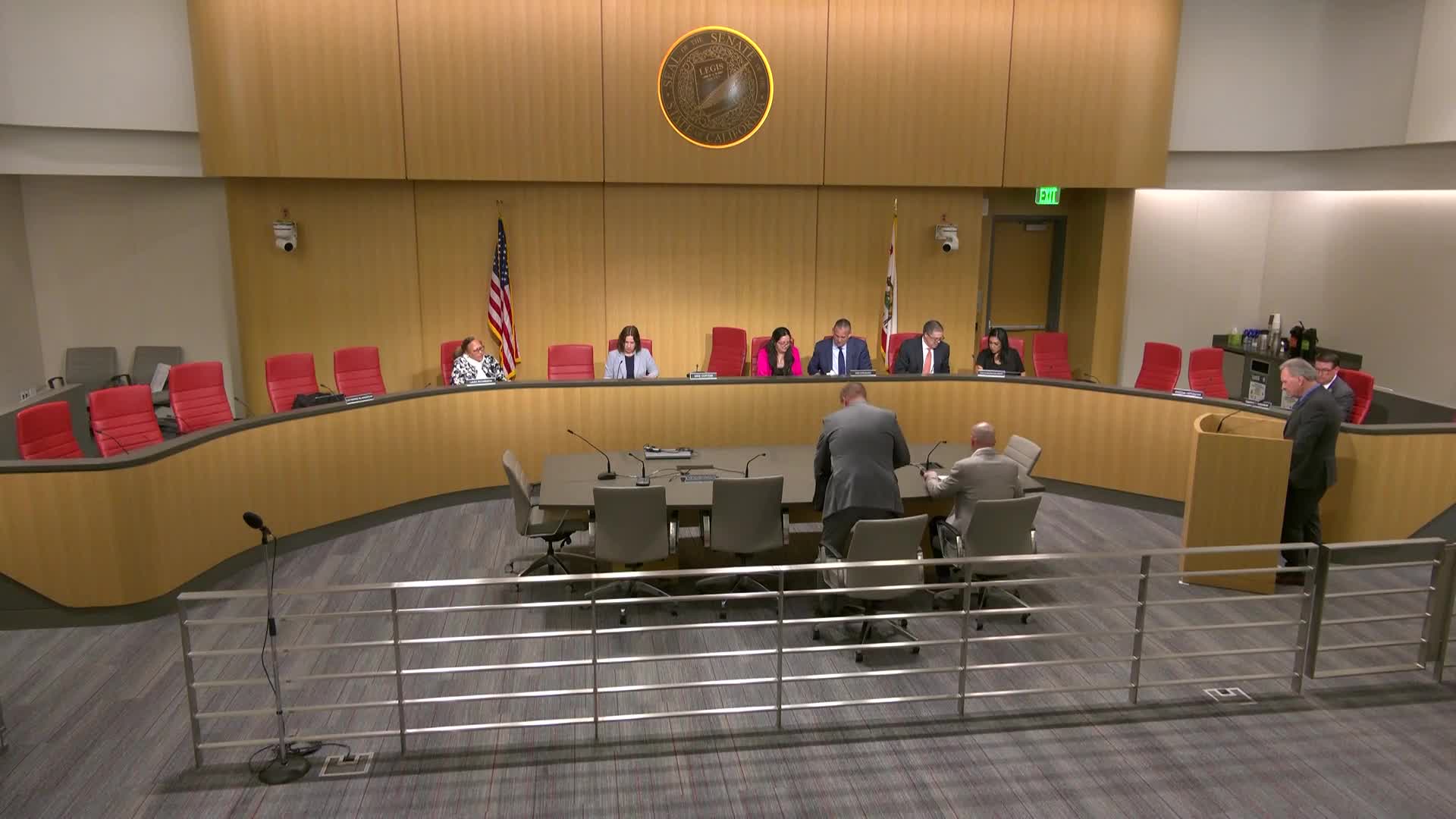
Committee advances bill to raise and modernize vehicle document processing fee
Summary
Senators advanced SB 791 to replace California's flat document processing cap with a percentage‑based cap; dealers and rental sellers supported the change while consumer advocates and some senators raised affordability and ‘junk fee’ concerns.
The Senate Transportation Committee advanced SB 791, which would replace California's long‑standing flat document processing charge (DPC) cap with a percentage‑based structure tied to vehicle price. The author said the measure would modernize an 85‑dollar cap that has not kept pace with the real costs dealers incur to complete vehicle sales and leases.
Dealers, rental‑to‑sales operations and dealer trade groups told the committee the current cap is well below the industry cost of performing document processing tasks such as DMV registration, loan paperwork and contract disclosures. Anthony Sampson of Sampson Advisors, representing the California New Car Dealers Association, said a 2019 J.D. Power study put dealer costs at about $447 per transaction and argued the DPC should be a transparent way to recover those costs.
Consumer groups opposed the measure. Rosemary Shahan, president of Consumers for Auto Reliability and Safety, called the DPC a “junk fee” when increased because the charge is typically nonnegotiable and shown late in the sales process. A committee member voiced concerns about passing additional costs to already strained consumers and about the potential for “double‑dipping” if dealers incorporate the charge in other pricing mechanisms.
Committee action: Committee members moved to refer SB 791 for further fiscal review; the committee recorded a referral to rules/appropriations with an initial roll call showing the measure advanced on a recorded tally of 6 yes to 1 no. The bill remains subject to amendments and further committee review.
Points of contention: Several senators praised the author for addressing an outdated cap; others pressed for safeguards against double recovery by dealers and for protections that preserve consumer affordability. The author and trade witnesses said they were open to negotiating guardrails and limiting double‑dipping in subsequent amendments.
Next steps: With committee referral complete, sponsors and opponents said they will continue negotiations on amendments and potential consumer protections as SB 791 moves toward further fiscal and policy review in the Legislature.