Get Full Government Meeting Transcripts, Videos, & Alerts Forever!
Get email alerts on the Conservation District Funding topic
No spam. Unsubscribe anytime.
Michigan conservation districts ask legislature for $10 million in recurring operations funding
Summary
Representatives of the Michigan Association of Conservation Districts told a House appropriations subcommittee the state's current $3 million annual operations grant is insufficient, asking lawmakers to add $10 million to stabilize local district staffing and expand technical assistance.
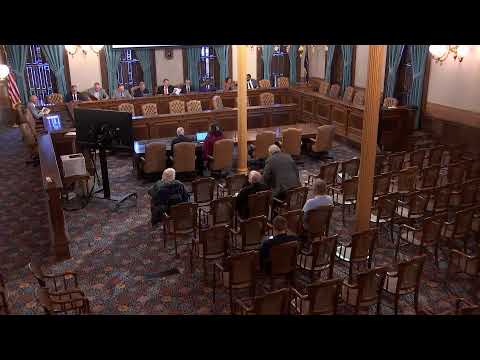
The House Appropriations Subcommittee on Agriculture, Rural Development and the Department of Natural Resources heard testimony calling for a multiyear increase in state operational funding for Michigan's conservation districts.
Rivka Hodgkinson, executive director of the Michigan Association of Conservation Districts, and Jerry Miller, the association's president, told the panel the state currently provides $3 million a year in MDARD operational grants ' roughly $40,000 per district ' and that the association is seeking an additional $10 million to expand staffing and technical services statewide. "That $40,000 has already meant a lot to districts," Hodgkinson said.
The request matters because Michigan's 75 conservation districts cover all 83 counties and deliver nonregulatory natural-resource assistance to private landowners, farmers and local communities. The association argued that operational funding helps districts leverage federal and local grants, increases participation in federal programs and reduces downstream cleanup costs. Hodgkinson cited MDARD estimates that every $1 in state operational funding leverages $5.10 from other sources and said combined state and federal leverage can reach as high as $43 for every $1 invested.
Conservation districts provide locally led technical assistance and run programs including the Conservation Stewardship Program (CSP), the Environmental Quality Incentives Program (EQIP), the produce-safety program, forestry assistance, invasive-species management and youth education such as Michigan Envirothon. The association described districts as the primary delivery system for conservation on private land, noting that about 72% of Michigan land is privately owned.
Hodgkinson and Miller said the requested additional $10 million would allow most districts to hire at least one full-time district manager and a conservation planner, increase equity of services in under-resourced areas such as Wayne and Macomb counties, and improve capacity to write and administer grants. "When you have a district manager and other foundational staff ... they're able to grow exponentially," Miller said, describing a case in Ottawa County where initial local investments helped the district expand to an annual budget of more than $2 million and roughly 16 technical staff over a decade.
Committee members pressed presenters on where the additional funding might come from. Representative Green asked, "Where would the 300% increase come from?" Hodgkinson said funding sources are chiefly a legislative decision but offered examples used in other states: acreage fees for land taken out of production, earmarked fees tied to existing charges, renewals or increases to environmental fees and partial reallocation of fees already collected by state programs. She also urged pursuing diversified funding so districts could withstand changes in federal support.
The witnesses also urged renewal and possible expansion of the Freshwater Protection Fund, which supports programs including MDARD's produce-safety work and other conservation initiatives. They said the fund's fee revenues currently support multiple programs and department staff who assist conservation districts.
Several committee members expressed support for increasing operational funding. Representative O'Neil, who said he had experience as a county commissioner, told the presenters he would support committee efforts to find additional state support. Representative McKinney, who represents Wayne and Macomb counties, noted those districts lack full-time staff and said additional operational funds would likely increase grant success and local capacity.
No formal appropriation or committee vote on the funding request occurred during the hearing. The subcommittee approved the meeting minutes from April 16 without objection earlier in the session and adjourned after questions.
The presenters left detailed materials with the committee and said they were available to answer follow-up questions as lawmakers consider options for increasing state support for local conservation delivery.