Get Full Government Meeting Transcripts, Videos, & Alerts Forever!
Get email alerts on the Education District Intervention topic
No spam. Unsubscribe anytime.
Tennessee Senate approves intervention plan for chronically low‑performing Shelby County schools
Summary
The Senate passed legislation that creates a cascading intervention framework for school districts meeting specified underperformance and poverty metrics; the measure drew extended debate over local control, vouchers and the role of appointed oversight.
The Tennessee Senate on final consideration approved a bill creating a statutory intervention framework for school districts the measure defines as “challenged,” a designation that can trigger removal or replacement of local school leaders and expand school choice and charter options.
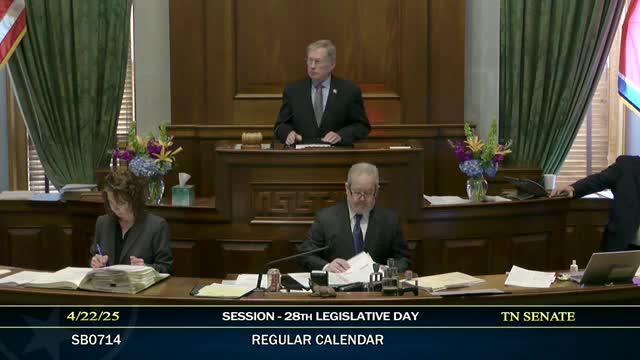
The bill, introduced on the floor by Senator Taylor, won final passage 26–6 after several hours of debate. It defines a challenged district as one that meets multiple criteria, including a high share of economically disadvantaged students, repeated failures on state math and reading expectations and the presence of at least one school on the state priority list in five of the last five lists. Once a district meets the threshold, the commissioner of education may recommend removal of a superintendent or elected board members and the statute authorizes a locally appointed oversight board with the power to produce needs assessments and transformation plans.
Supporters said the law creates a structured alternative to past interventions that failed to produce improvement. “We have to do something,” Senator Taylor said on the floor, arguing Shelby County’s results and facility needs demanded new tools. He described the measure as a set of incremental, cascading interventions designed to preserve local appointments while giving the state and local governments a formal mechanism to require and monitor changes.
Opponents said the bill undermines local democracy and will not address root causes such as poverty, housing and workforce pay. Senator Lamar, a Memphis native and a product of the city’s schools, warned the measure would shift power away from voters and saddle county governments with new costs for an appointed advisory board. “If you got a problem with [the school board], you better go to the polls,” Lamar said, adding that the state has a poor record when it comes to running school systems.
Senator Yarbrough and other critics raised constitutional and equity concerns and questioned whether the changes would disproportionately affect districts with high poverty. Yarbrough said the bill effectively privileged one county and risked creating inconsistent voucher and scholarship outcomes across the state.
The bill also removes the income cap for Eligibility Scholarship Accounts (ESA) for students zoned to a designated challenged district, expands and expedites charter options the commissioner may recommend, and creates a local oversight board whose members would serve multi‑year terms and be compensated at the same rate as the elected board members. The oversight board is required to review school board agendas and to have staff paid for by the county commission, according to the bill’s text as presented on the floor.
Senators debated whether the state’s constitutional authority and an attorney‑general opinion would permit removal of elected board members; Senator Taylor cited an attorney‑general opinion he said dated to 1995 to support the change. Several members asked for more time and caution; others said the long record of underperformance and deferred maintenance in the district required action now.
After the vote, Senator Taylor renewed his motion and supporters said the measure was intended as a tool to help, not replace, local officials. Opponents said they would continue to press concerns about process, cost and the effect on community control.
The final passage was recorded on the Senate floor, and the bill will move to the usual enrollment and transmission steps before becoming law or being enrolled for the governor’s signature.