Get Full Government Meeting Transcripts, Videos, & Alerts Forever!
Get email alerts on the School Budget topic
No spam. Unsubscribe anytime.
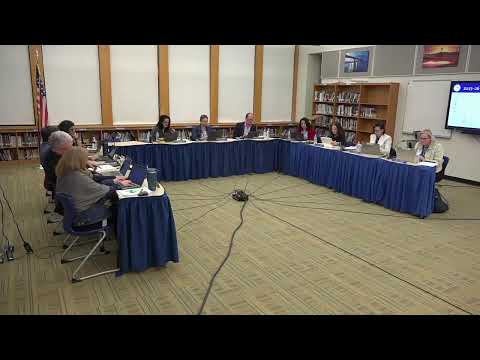
Pelham Board adopts $96 million tentative 2025-26 budget, adds clerical post for digital registration
Summary
The Pelham Union Free School District Board of Education on April 22 voted to adopt the district's proposed 2025-26 budget and to file the required property tax report card with the New York State Education Department.
The Pelham Union Free School District Board of Education on April 22 voted to adopt the district's proposed 2025-26 budget and to file the required property tax report card with the New York State Education Department.
The superintendent said, "If approved, this becomes the Board of Education's official budget to present to voters on May 20." The board then moved and adopted the budget in a roll-call procedure; when asked, the board chair called the motion passed.
Why it matters: The budget funds the district's operations, staff and programs for the coming school year and will appear on the May 20 ballot for voter approval. Administrators described the spending plan as focused on maintaining program quality while managing long-term sustainability amid rising costs.
Key numbers and structure: District staff presented the budget as a roughly $96,000,000 plan (presented as the total budget figure in the budget overview). Instruction and employee benefits together account for the largest share of expenditures. Administrators said state aid represents just over 14% of projected revenues, with roughly 77% coming from local property taxes; officials also identified modest use of appropriated fund balance and miscellaneous receipts. The administration described expected budget drivers as contractual salary and benefit increases, higher health insurance and liability costs, and rising transportation and BOCES-related expenses.
Tax levy and cap: Administrators said the presented documents show an "adjusted tax cap" and discussed a 3.48% figure for the allowable tax-cap calculation. At one point in the discussion staff described a proposed tax increase figure as 2.48% and later noted both allowable and proposed figures of 3.48% in related slides. The board did not alter the budget document on that point during the meeting; the board adopted the budget as presented. The property tax report card accompanying the budget must be submitted to the New York State Education Department within 24 hours, the business office advised.
Program and staffing changes: The administration told the board it expects a net reduction of about 4.61 full-time equivalent positions budget to budget, largely achieved through retirements (13 teacher retirements plus one teaching assistant) and scheduling or program adjustments. The budget provides for expansion in some areas: adding an AP Seminar course, expanding full-time special-education staffing at the secondary level, maintaining ICT at Hutchinson, and creating a new kindergarten special-education class. The administration said it plans to preserve class-size guidelines and use attrition and scheduling efficiencies to limit layoffs.
Digital registration and the new clerical position: Administrators proposed adding a part-time clerical position (about a 15-hour workweek) to accelerate conversion to electronic student registration. Juliana DePaolo, the school's registrar, tracked time spent on transfers and kindergarten registrations this year and presented that digitizing certain transfer workflows can be time-consuming and variable by family responsiveness. District staff recommended the part-time role as a measured investment to re-register two grade levels in the first year and expand thereafter.
Facilities and near-term projects: Facilities staff reported installation of window air-conditioning units on upper floors of several elementary schools (Siwanoy, Colonial and Prospect Hill) and planned high-school work to be completed by September. Administrators said there are no large-scale capital projects scheduled this summer, though HVAC work is anticipated at the middle school in August. The board noted a scheduled drop-off in state building aid related to prior capital projects.
Board discussion and disposition: Several trustees expressed support for the budget and praised the administration for restraint and creativity in preserving programming while addressing rising costs. A trustee read a letter from Trustee Natalie (absent), who wrote she supported the budget as lean but sufficient to maintain programming. The board voted to adopt the budget and approved the property tax report card and a consent agenda of routine items, with a few personnel tuition-reimbursement items tabled for follow-up.
Votes at a glance: - Motion to approve 2025-26 Property Tax Report Card: motion moved and seconded; chair indicated approval and recorded "Aye" with no opposing votes announced (motion declared carried). - Motion to adopt the 2025-26 budget for presentation to voters on May 20: motion moved and seconded; chair indicated approval and recorded "Aye" with no opposing votes announced (motion declared carried). - Consent agenda (items 5.3'5.12) adopted with amendment and with items 5.6'5.8 tabled for follow-up; motion moved and seconded and carried. - Motion to take 6.1, 6.2 and 7.1 as consent agenda items: motion moved and seconded and carried.
What the board did not decide: The board did not change the budget after presentation; staff warned that final state aid could shift pending a state budget settlement and that any changes would be addressed later if necessary. Administrators also cautioned that some line-item balances (for reserves and tax certiorari) are estimates until year-end close.
Looking ahead: With the board's adoption, the proposed budget will appear on the May 20 ballot for voter approval. Administrators said they will continue monitoring state aid, final reserve balances and other revenue items and will report back to the board as needed.