Get Full Government Meeting Transcripts, Videos, & Alerts Forever!
Get email alerts on the Housing Self Help topic
No spam. Unsubscribe anytime.
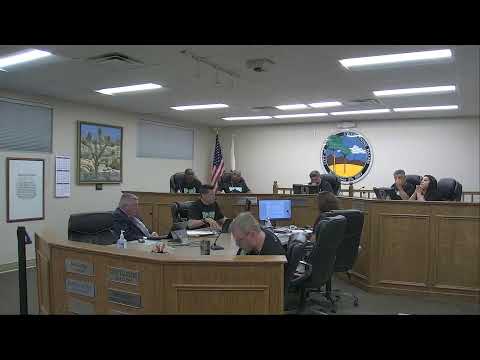
Council debates self-help housing proposal; asks staff for more due diligence and schedules community workshop
Summary
Twentynine Palms City Council members on April 22 debated a proposal for the city to acquire 10 vacant lots to support a self-help homeownership program, with staff and the city attorney warning that restricted housing funds require annual monitoring and that the nonprofit partner had not provided complete due-diligence materials.
Twentynine Palms City Council members spent more than an hour on April 22 discussing a proposed self-help homeownership program in which the city would acquire vacant lots and partner with a nonprofit builder to enable low- and moderate-income households to construct homes themselves.
City Attorney Patrick Munoz and staff outlined legal and administrative constraints the city must consider before acquiring lots, especially if the purchase uses restricted housing funds. Munoz told councilors that restricted funds typically carry monitoring obligations — the city must annually confirm that homes funded with restricted dollars remain occupied by income-qualified households and that resale restrictions are enforced. He cautioned that recent revisions to the Surplus Lands Act and related rules make it more difficult to resell restricted lots if a program fails to use them as intended.
Staff said they had engaged with two nonprofits, the Coachella Valley Housing Coalition (CVHC) and Habitat for Humanity, and noted CVHC has a long self-help track record in other regions but had been slow to provide requested due-diligence materials to city staff. Council members and public commenters expressed varying views: some urged the council to move quickly and buy lots now to spur housing construction; others urged more safeguards, argued the city should avoid assuming excessive land-ownership risk, and suggested alternatives (for example, the nonprofit acquiring lots itself and the city purchasing them later if conditions are met).
Councilmember Scott made a motion directing staff to inquire about acquiring 10 vacant residential lots for a self-help construction program and to begin related due diligence, including identifying candidate parcels for potential purchase and preparing materials for closed-session review if needed. Councilmembers discussed possible funding sources — restricted housing funds versus general-fund or other unrestricted funds — and noted that using restricted housing dollars increases administrative complexity and long-term monitoring obligations. Several council members asked staff to explore contract structures that would reduce city liability or shift initial land-acquisition risk to a nonprofit partner.
After council debate, city staff agreed to organize a public workshop with CVHC to present qualifications, program mechanics and recruitment criteria to the community. Several residents said they could recruit potential applicants locally and urged the council to schedule a recruitment event in Twentynine Palms so local residents could apply and be screened. Multiple residents urged prioritizing city residents for any local funding.
No formal ordinance or land purchase was approved at the April 22 meeting. The council’s immediate next steps recorded in the meeting were: staff will continue due diligence, attempt to obtain outstanding materials from CVHC, and hold a public workshop/presentation with the nonprofit to explain program eligibility and timeline. Councilmembers said that only after due diligence and clear contractual protections would they consider a formal land-acquisition vote.
Key factual points from the council discussion: - Staff reported past allocations: the city and staff have identified candidate parcels and estimated they would need 10 lots close together for the CVHC self-help model to proceed. - City Attorney Munoz said the nonprofit had been slow to respond to repeated requests for documents; he identified two prior lawsuits found in public records against CVHC — one dismissed and one settled with no admission of liability — and expressed concern about the lack of timely documentation from CVHC as a red flag for city due diligence. - Commenters and a local realtor said recruiting qualified buyers locally can be difficult because of current interest rates and loan underwriting; residents and proponents argued that even 10 homes would create generational wealth and should be pursued.
The matter remains in the discussion phase; staff will return with more documentation and a schedule for a public CVHC presentation and community outreach.