Get Full Government Meeting Transcripts, Videos, & Alerts Forever!
Get email alerts on the Land Use Campgrounds topic
No spam. Unsubscribe anytime.
Twentynine Palms council tables development-code changes for campgrounds, citing resident concerns
Summary
After extensive public comment about air quality, traffic, noise and wildlife impacts, the Twentynine Palms City Council voted to remove a proposed development-code amendment regarding commercial campgrounds and RV parks from the agenda (tabled off-calendar) for further study.
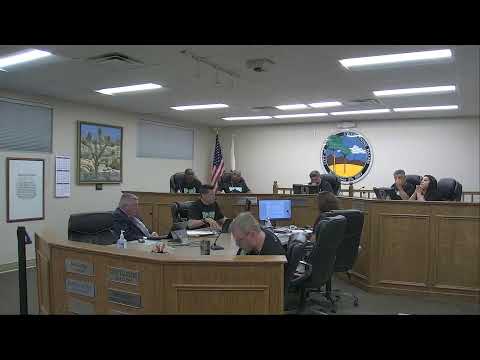
The Twentynine Palms City Council on April 22 tabled a proposed development-code amendment that would change how commercial campgrounds and RV parks are sited and regulated, after multiple residents raised concerns about traffic, dust, noise, wildlife impacts and neighborhood compatibility.
Supporters framed the item as a code “cleanup” to remove ambiguities between the city’s rules and state law, while several residents and letters submitted in advance urged caution and asked the council to limit campgrounds to commercial-tourism zones rather than residential or rural-living parcels.
The proposed changes discussed by staff would separate commercial campgrounds from RV parks in the code and establish numeric standards staff described as resolving “subject to interpretation” language. Public commenters and written submissions noted specific provisions in the draft amendment: a 5-acre minimum parcel size for both commercial campgrounds and RV parks, densities described in the record as 15 sites per acre for commercial campgrounds and 12 sites per acre for RV parks, and parking/restroom spacing requirements that commenters said would bring infrastructure and campers adjacent to existing homes.
Resident Pat Flanagan, whose written letter was read into the record, warned the council that on a hypothetical 5-acre parcel the proposed densities could equate to roughly 65 campsites or 45 RV spaces once parking and restrooms are accounted for, and listed air-quality, road-surfacing, code-enforcement and wildlife concerns. Susan Piplow and John Talley Jones told the council they supported tourism and campgrounds when sited in commercially zoned areas or public lands, but opposed allowing campgrounds in rural-living or residential zones.
Council members debated whether to approve the amendment or study it further. Councilmember Scott explicitly proposed further study; after public comment and council discussion, the council voted to table the item “off calendar” for now. At the hearing several council members said they would prefer more analysis before changing zoning that could make residential parcels available for tourism uses.
The council’s action halts the amendment’s progress and signals staff will return with additional analysis if and when requested. Staff told the council the amendment is not time-sensitive and can be re-noticed for future study. The planning commission previously reviewed versions of the amendment and the record includes at least two letters submitted late on the item.
Council members and several speakers emphasized that the city needs tourism options but urged careful siting and clearer development standards to protect neighboring homes and air quality.
The item was tabled off calendar; no ordinance was adopted at the April 22 meeting. Staff and planning commission materials and the letters read into the record remain part of the public file for the amendment.