Get Full Government Meeting Transcripts, Videos, & Alerts Forever!
Get email alerts on the Childcare Ncrc topic
No spam. Unsubscribe anytime.
Nevada R‑V board approves NCRC handbook as directors warn childcare program is operating at a deficit
Summary
The Nevada R‑V School Board approved the 2025–26 NCRC handbook after a presentation from center director Chris Burling. Board members and staff discussed recent DHS licensing, rising rates, an operational deficit in the Resource Center’s childcare fund and next steps to bring the program into compliance with state enterprise‑fund guidance.
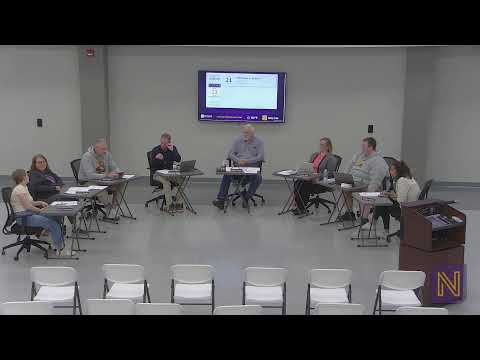
The Nevada R‑V School Board voted to approve the NCRC (Nevada Resource and Community Center) handbook for the 2025–26 school year after a presentation from NCRC director Chris Burling.
Burling told the board the center recently underwent an unannounced Department of Human Services (DHS) inspection and had “no violations” and is “licensed again until 2027.” She described enrollment fluctuation, staff adjustments and collaboration with other local childcare providers to keep families together. “We try to lead them to the best, you know, program for them,” Burling said, adding the center tries to phase in rate increases gradually so families can budget.
Board members spent most of the discussion on the center’s finances after the district’s fiscal‑year 2024 audit showed the childcare fund operating at a negative net position. A board member summarized the audit’s implication: the state wants the district to treat the Resource Center as an enterprise fund that must “carry its own weight.” The board discussed using interfund loans and adjusting rates and budget practices to address the deficit.
Business manager Tammy Ellis reviewed audit findings with the board, calling out recurring internal‑control issues such as segregation of duties on cash receipts and documentation gaps in the nutrition program’s eligibility certifications. Ellis said many audit recommendations have been or are being implemented, including tamper‑proof deposit bags and additional review steps for disbursements.
Burling also described program operations beyond childcare: the center maintains a donation room, coordinates with Head Start, runs an annual seasonal donation program (historically called “Angel Tree”), and conducts routine facility safety checks, including radon and water testing. Burling said the district was asked by a trademark holder to stop using the name “Angel Tree”; she said the center will change the program name and communicate that change to families.
On safety and facilities, Burling said the center has upgraded its secured door system and is seeking an additional hallway camera to improve monitoring. She said parents and staff have accepted the secured‑entry system and that district maintenance has addressed software glitches.
After questions, a board member moved approval of the NCRC handbook; the motion was seconded and approved by voice vote.
The board directed administration and finance staff to follow up on audit recommendations, investigate enterprise‑fund accounting steps and return with budget or rate proposals as needed. No additional substantive policy changes were adopted beyond handbook approval at the meeting.
What happened next: The board approved the handbook; staff will pursue corrective and compliance steps described during the audit presentation and NCRC briefing.