Get Full Government Meeting Transcripts, Videos, & Alerts Forever!
Get email alerts on the Municipal Finance Fees topic
No spam. Unsubscribe anytime.
Norwich council adopts higher commercial trash, building and fire‑marshal fees; schedules CSO hearing
Summary
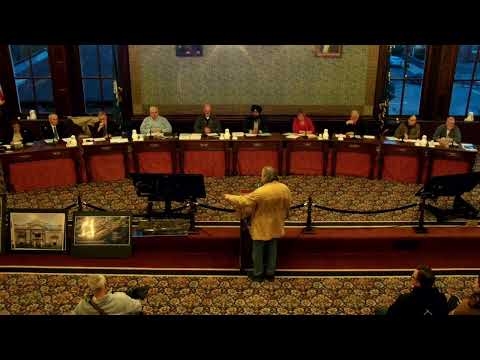
At its April 21 meeting the Norwich City Council approved three ordinances increasing fees for commercial haulers, building‑permit and plan‑review charges, and Fire Marshal plan‑review fees; approved several administrative resolutions; and set a public hearing for a $2 million combined‑sewer overflow bond.
The Norwich City Council on April 21 adopted three ordinances increasing fees the city charges businesses and contractors, approved multiple administrative resolutions and appointments, and scheduled a public hearing on a $2 million combined‑sewer overflow revenue bond.
The three ordinances drew limited public comment and were approved unanimously, 7‑0. Comptroller Josh Pothier told council the Southeastern Connecticut Regional Resource Recovery Authority raised its rates and the city must recover the added cost. "Starting in July 2025 they're going to go up about 10.7 or $7.25 per ton," Pothier said; the ordinance increases the city's commercial hauler fee by $8 per ton to pass that cost along.
Why it matters: the measures alter fees paid by commercial haulers and by contractors and developers for permits and plan review, changing the cost structure for local businesses and construction projects while increasing city revenue to cover higher vendor charges.
Most important votes and actions
- Solid‑waste commercial hauler fee (Norwich Code, section 9‑28): ordinance adopted to increase the fee by $8 per ton to recover higher regional disposal costs. Comptroller Josh Pothier explained the incinerator authority rate increase and the proposed $8/ton recovery. Vote: 7‑0.
- Building code fines and permit/plan‑review fees (chapter 4, sections 4‑2, 4‑3, 4‑5): council adopted changes to state building code violation fines and to fees for construction plan review, building permits and demolition permits. Alderman Singh asked that departments institute a periodic internal review of fees going forward. Vote: 7‑0.
- Fire Marshal plan‑review, permit and inspection fees (new Norwich Code section 8‑23): ordinance adding Fire Marshal fees adopted. Vote: 7‑0.
Other decisions and scheduling
- Sidewalk cost‑sharing program: council approved participation in a cost‑sharing program to construct concrete sidewalks and set a public hearing starting May 5, 2025. Vote: 7‑0.
- Golf Course Authority appointments and reappointments: council reappointed and appointed members to the Norwich Golf Authority as listed in the resolution. Vote: 7‑0.
- Capital reallocation: council voted to postpone action on a proposed reallocation in the Capital Improvement Fund until its first meeting in June (June 2). A council member cited emergent roof repairs at the Taffil Firehouse as a reason to hold reallocations until the budget is finalized. Motion to postpone adopted 7‑0.
- Stone wall preservation agreement: council authorized the city manager to enter a stone wall preservation agreement with Planning and Neighborhood Services signoff. Vote: 7‑0.
- Combined sewer overflow (CSO) bond ordinance: council voted to waive full reading and set the first reading and public hearing for an ordinance appropriating $2 million for the CSO long‑term control plan and to authorize sewer revenue bonds; the public hearing was scheduled for May 5. Vote: 7‑0.
What council members said: Alderman Singh recommended an internal five‑year fee review cycle to keep fees aligned with inflation and neighboring towns; the city manager and department heads were noted as available to work with council on timing and details.
What happens next: ordinances take effect per their stated timelines in city code; the public hearing on the CSO revenue bond is scheduled for May 5, and the council will consider the postponed capital reallocation at its June 2 meeting.
Ending: For the fee ordinances and most administrative items the council's votes were unanimous, reflecting a consensus to pass costs through to users and to address timing concerns for capital spending in the budget process.