Get Full Government Meeting Transcripts, Videos, & Alerts Forever!
Get email alerts on the Special Education Hearing Overview topic
No spam. Unsubscribe anytime.
State special‑education committee holds lengthy public hearing as lawmakers weigh funding, oversight and school options
Summary
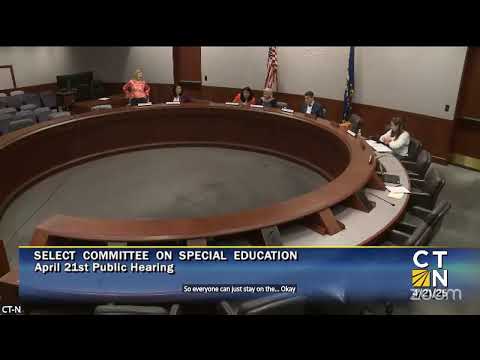
Lawmakers convened a full public hearing of the Select Committee on Special Education to take testimony on draft legislation that would reshape how Connecticut pays for special‑education services and how those services are overseen.
Lawmakers convened a full public hearing of the Select Committee on Special Education to take testimony on draft legislation that would reshape how Connecticut pays for special‑education services and how those services are overseen.
The hearing brought superintendents, mayors, parents, teachers’ union leaders and private‑school providers to the microphone. Speakers described sharply rising outplacement tuition and transportation costs, workforce shortages for special‑education teachers and paraprofessionals, and long waits for specialty placements. Committee co‑chairs and the ranking members said the bills are a first step toward funding more in‑district programs, tightening oversight of out‑of‑district placements and improving predictability for school budgets.
Why it matters: Several witnesses said the current funding mix is unsustainable for districts and families. Hartford Mayor Arunen Arun Limbalam and Hartford Public Schools officials said special education now consumes about one‑third of their school budget and that rapid tuition growth has created a structural budget shortfall. Superintendents and regional education service centers urged new state funding for in‑district program development and better data on tuition rates. Private providers warned that blunt rate caps could force program closures and reduce capacity for students who need intensive medical or behavioral supports.
Most urgent facts: Witnesses described three parallel problems—(1) steep, recent tuition and transportation increases that outpace district revenues; (2) staff shortages that limit districts’ ability to build in‑district options; and (3) lack of transparent, routinely available data on what school districts and families are being charged for private placements. Testimony spanned specific individual cases of delayed placements and months of lost instructional time to system‑level proposals for a special‑education offset grant and rate‑setting rules.
What happens next: Committee members said the draft is open to change after public testimony. They signaled plans for follow‑up staff work, additional hearings and targeted amendments that would try to preserve capacity for medically and behaviorally complex students while requiring more accountability and clearer data on rates and outcomes.
Ending: The hearing underscored the scale of the policy tradeoffs: how to preserve out‑of‑district options that families say are essential for some students, while creating predictable, auditable cost structures and stronger in‑district supports so fewer children must be placed far from home.