Get Full Government Meeting Transcripts, Videos, & Alerts Forever!
Get email alerts on the Agriculture Code Revisions topic
No spam. Unsubscribe anytime.
Grand Island board reviews broad revisions to agricultural rules, right-to-farm language
Summary
Members, the agriculture advisory board and planning staff discussed proposed edits to town code sections (407.144 and 407.145) meant to align local rules with New York State Ag & Markets guidance, change how animal densities are measured and reduce special-use permitting for certain farm practices.
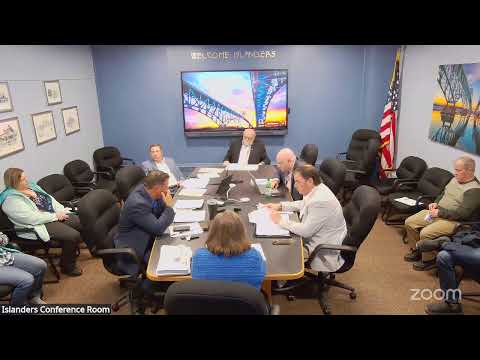
The Grand Island Town Board and members of the agriculture advisory board reviewed a package of proposed changes to local agricultural code at a recent meeting, focusing on two sections, cited in drafts as 407.144 and 407.145, and how the town’s rules intersect with New York State Ag & Markets guidance.
The proposed amendments would delete several prescriptive lines from 407.145 and replace them with a density-based approach aligned with agricultural management practice guidance, and would clarify that some protections and reduced scrutiny should apply to properties inside Ag Districts, officials said.
Sheila, identified at the meeting as the agriculture advisory board chair, said the revisions reflect work completed with county and state partners and a locally adopted resource guide. “The Grand Island Town Board previously approved the resource guide for farmland protection,” Sheila said, adding that the guide was approved twice and was used as a blueprint for the code changes. She told the board the draft seeks to remove duplicative acreage and income requirements and to make rules “reasonable density requirements versus you need 2 acres to have 1 animal.”
Ron, who spoke about inspections and setbacks, described technical elements the board must confirm before finalizing language, including how proposed setbacks and density tables would operate in practice; he emphasized the practical need to confirm setbacks and the locations of livestock structures when reviewing special permits. “I thought the planning board made a recommendation of 200 foot or something,” Ron said, describing the planning board’s role in reviewing distances from neighboring properties.
Multiple board members and advisors discussed whether special-use permits should remain for some residential lots. One board member said New York State Ag & Markets views special-use permits and inspections as potential overregulation for properties within designated agricultural districts. “Special use permits in their mind is over regulation. Inspections are overregulation and annual fees are overregulation for Ag District properties,” Sheila said she had been told by the state liaison, identified in the discussion as Jeff Kehoe.
Other speakers warned about one-acre residential lots that retain a suburban character and said special-use permits give the town an opportunity to anticipate conflicts before they arise; the board discussed keeping some discretionary review in place for such parcels. Several members also asked for clearer wording on how densities would be calculated when lots have non-pasture areas such as houses, driveways and front yards.
Board members asked staff to refine the draft to reconcile the Cornell-derived density table, explicit minimum lot sizes and the town’s existing zoning density table, and to confirm which provisions would apply townwide and which would be limited to Ag District properties. The draft language discussed would apply townwide but would explicitly treat Ag District properties differently in practice, participants said.
The discussion closed with the board asking staff and the planning board to continue work on the draft, collect additional technical clarifications (setbacks, density math, inspection triggers) and return with a revised draft for formal referral and public hearing steps.
The board did not take a final vote on the code amendments during the discussion; members asked that the planning board and staff provide additional refinements and supporting materials before moving to a public hearing.