Get Full Government Meeting Transcripts, Videos, & Alerts Forever!
Get email alerts on the Libya Politics topic
No spam. Unsubscribe anytime.
UN envoy urges unified institutions, budget and protections for migrants and women in Libya
Summary
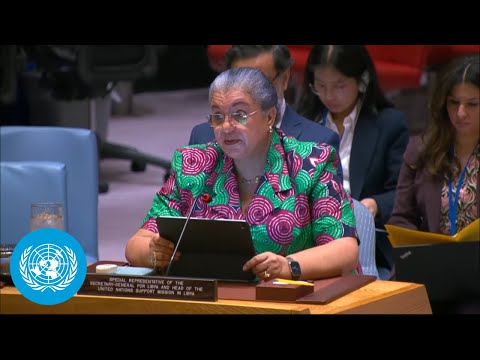
The Special Representative of the Secretary‑General for Libya told the United Nations Security Council that Libya’s ongoing political divisions, unilateral actions and competing claims on resources are deepening instability and risk economic collapse if not urgently addressed.
The Special Representative of the Secretary‑General for Libya told the United Nations Security Council that Libya’s ongoing political divisions, unilateral actions and competing claims on resources are deepening instability and risk economic collapse if not urgently addressed.
The representative said the United Nations Support Mission in Libya (UNSMIL) has engaged “in extensive consultations with Libyans from all walks of life” and urged an inclusive political process that unifies institutions, establishes a consensual roadmap for elections and secures a unified national budget.
UNSMIL’s role and immediate priorities
UNSMIL will support an advisory committee that has met in Benghazi and Tripoli and is finalizing options for resolving electoral disputes; the representative said the committee is expected to submit a report “by the month end” barring delays. "I have engaged in extensive consultations with Libyans from all walks of life," the representative said, adding that UNSMIL "will assess the options and use them as a foundation for forging consensus on the next steps of a Libyan‑led and owned political process." The envoy said UNSMIL is engaging economic experts to identify reforms for financial management and to help agree a unified budget.
Security, institutions and the economy
The envoy told the council that Libya’s fragmented institutions and unilateral actions have caused macroeconomic instability, including foreign‑exchange shortages, inflation and currency depreciation. Maintaining the independence of oversight bodies such as the National Audit Bureau must be prioritized, the representative said, and appointments and removals of leaders of those institutions should follow the provisions of the Libyan political agreement.
The representative noted the discontinuation of the National Oil Corporation’s crude‑for‑fuel transactions from March 1 as "a positive development that promotes greater transparency in oil sales," and said several Libyan stakeholders have suggested commissioning an audit of key state institutions by one of the top five international audit firms to clarify public‑finance management.
Security situation and human rights
While the 2020 ceasefire agreement is “largely holding,” the envoy warned the security environment remains volatile. The representative described recent armed mobilizations around Tripoli and heavy fighting in a locality recorded in the transcript as "Khatron," and said the situation would remain fragile until there is political will to unify security and military forces. UNSMIL is facilitating joint border security centers established by eastern and western security authorities in Tripoli and planning a similar center in Benghazi to improve communication and information sharing.
The representative raised urgent human‑rights concerns, reporting a surge in xenophobic and racist hate speech that has incited violence against migrants, asylum seekers, refugees and humanitarian organizations. The transcript states that "activities of some humanitarian organizations officially registered in Libya were suspended and their staff interrogated," and that three people have died in related incidents. The envoy urged that the targeting of humanitarian organizations and migrants stop and called for safe unhindered access for UN agencies and partners.
Arbitrary detention and rule of law
The representative described arbitrary detention as pervasive, including the detention of legal professionals and political opponents. While noting some recent releases in eastern and western Libya, the envoy said “hundreds of individuals still languish in illegal detention” and urged authorities to ensure arrests conform to law and that detainees receive due‑process rights and fair trials.
Women’s protection law and reconciliation
Libyan experts drafted a comprehensive law on protection of women against violence that, the representative said, "was endorsed by members of the House of Representatives in November 2023 and cleared by the legislative committee in January 2024." The envoy urged the House of Representatives to expedite adoption. On national reconciliation, the representative reiterated UNSMIL’s commitment to a rights‑based, victim‑centered reconciliation process in cooperation with Libyan stakeholders and the African Union.
Elections and local governance
The envoy said the second phase of local elections in 62 municipalities, including Tripoli and Benghazi, is proceeding after voter registration concluded on April 15. While the first phase was described as successful, the representative reported instances where winning municipal candidates were replaced by de facto authorities, where municipal boundaries were changed during the process, or where results were pending due to allegations of interference. Disputes over outcomes should be resolved through existing legal frameworks, the representative said, and these local polls should strengthen institutional readiness for national elections.
Next steps and recommendations
The representative emphasized urgency balanced with caution and called for support from regional and international partners for any political agreement. UNSMIL will assess advisory‑committee options and continue consultations; stakeholders suggested an international audit of state institutions and stressed the need for a unified budget to avert a looming economic crisis. The envoy also urged the immediate release of arbitrary detainees, protection of humanitarian operations, and expedited adoption of the draft law to protect women from violence.