Get Full Government Meeting Transcripts, Videos, & Alerts Forever!
Get email alerts on the Inclusive Practices topic
No spam. Unsubscribe anytime.
Title I principals highlight unified sports, co-teaching and classroom inclusion
Summary
Five Title I elementary principals and related-service staff described district-wide inclusive practices — unified sports, co-teaching models, AAC in preschool and vocational "tea cart" projects — and asked the school board for ongoing encouragement and local fundraising support.
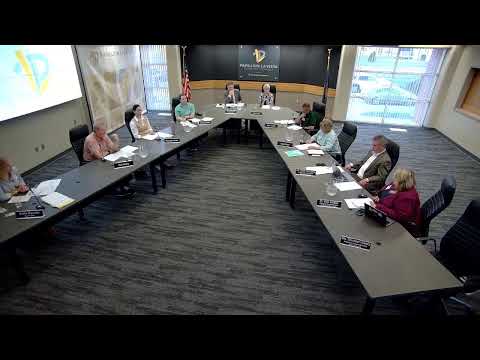
Five Title I elementary principals told the Papillion La Vista Community Schools Board of Education on April 28 that the district has expanded inclusive practices across multiple elementary buildings, citing unified athletics, coordinated co-teaching, augmentative and alternative communication work in preschool and hands-on vocational activities as ways the district promotes belonging and peer relationships.
The principals — Seth Heively (Carriage Hill Elementary), Jamie Boyer (G. Stanley Hall), Jen Noble (Golden Hills), Amy Nichols (La Vista West) and Randy (Parkview Heights) — introduced staff members who described school-level programs. Natalie Diaz, a special education teacher at G. Stanley Hall, said the school has developed unified sports teams that pair identified athletes with peer buddies and follow Special Olympics structure for tournaments.
"Over the last couple of years, we have done a lot to kinda change the way that we've done some of our unified recreation activities," Natalie Diaz said, adding the school plans a formal unified club next year and has run basketball and kickball tournaments against other district schools.
Why it matters: district leaders said these programs increase acceptance, build friendships and give students with disabilities more opportunities to participate in school events alongside peers. Board members said the efforts increased family and community engagement.
Details of programs presented
- Unified sports and tournaments: Several schools have run unified basketball and kickball events. District presenters said an arrays tournament is scheduled for May 16 from 5 to 7 p.m. at the All Play Field; some schools plan staff-vs.-athlete exhibition games and other quarter-long events next year. Diaz said schools are consulting with Special Olympics to expand activities such as bowling and a unified dance performance.
- "Tea cart" vocational practice: Kelsey Hollenbach described a scaled snack/tea cart program in which students take orders, practice money-handling and follow visual recipes in the teacher lounge; occupational therapists and speech-language pathologists assist. Students also practice hygiene and delivery, reinforcing communication and life-skills objectives.
- Co-teaching and instructional models: Jenny Yu, a learning-center teacher at Carriage Hill, said she and co-teacher Sherry Bailey plan instruction together and rotate through the six co-teaching models to meet diverse learner needs. Yu said co-taught classrooms emphasize shared responsibility for all students and flexible groupings.
- AAC and inclusion mindset: Katie Moon, Parkview Heights speech-language pathologist, said preschool students practice a weekly core word on communication devices so use becomes normalized across the class. Moon said the school emphasizes that "inclusion isn't just a place, it's a mindset," and noted district efforts such as a "word of the month," hope/kindness squads and school-wide inclusion week themes.
Board reaction and supports
Board members thanked staff and praised family engagement. District staff suggested starting schools work with existing leaders (several Title I schools already lead arrays) and exploring local sponsorships or foundation grants to cover equipment, shirts and tournament costs; presenters noted prior fundraising and community sponsorship examples including a district polar plunge and local business support.
"We have students who ask for play dates with classmates — that's relationships, not just kindness," one presenter said, summarizing the reported social impact.
Ending
Board members encouraged other buildings to contact Title I leaders for implementation support and to consider grant applications through the district foundation. Several board members attended recent unified events and urged continued community fundraising and volunteer support.