Get Full Government Meeting Transcripts, Videos, & Alerts Forever!
Get email alerts on the Mobile Food Vending topic
No spam. Unsubscribe anytime.
Nolensville adopts mobile food vending rules after months of edits; fees, seating and employee-restroom rules added
Summary
The Nolensville Board of Commissioners approved second reading of Ordinance 24-18 to create chapter 4 (mobile food vending) of the municipal code. The ordinance was amended to set fees, seating limits and employee restroom access; a proposed cap on repeat visits and a 100-foot parking setback were removed.
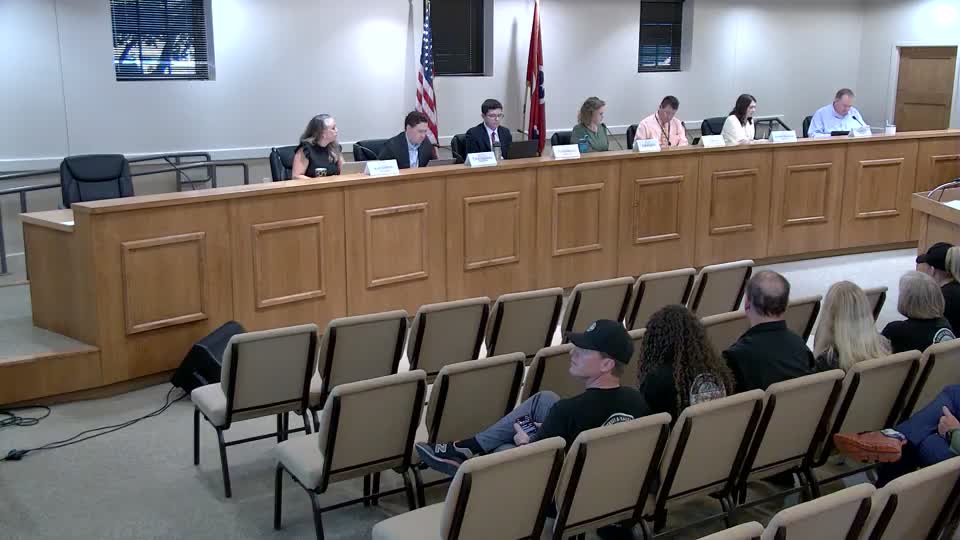
The Nolensville Board of Commissioners on May 1 adopted second reading of Ordinance 24‑18, establishing a chapter on mobile food vending in the Nolensville Municipal Code after a series of amendments that set permit fees, clarified operational limits and required written restroom access for employees during long shifts.
The ordinance, which passed unanimously, creates an annual food-vending permit and a temporary three‑day permit, restricts overnight visible parking on arterial corridors, sets a maximum of eight seats provided by a vendor, and requires a written agreement that allows vendor employees to use a permanent restroom facility within 150 feet when the vendor operates more than three hours.
The new rules are the result of several months of staff work, workshop discussion and revisions requested by commissioners and members of the public. Town staff proposed the permit structure and many of the operational clarifications; the commission voted to (1) change permit validity and fees, (2) remove a proposed restriction limiting vendors to 10 visits per calendar year at the same location, and (3) add conditions about proximity to brick-and-mortar restaurants and on-site parking standards.
The adopted fee structure sets a nonrefundable $250 annual mobile food vending permit and a nonrefundable $50 temporary three‑day permit; annual permits will run on a calendar-year basis (Jan. 1–Dec. 31). Staff also struck proposed language that would have limited a vendor to visiting the same location 10 times per year, citing enforceability concerns.
At the public‑comment portion of the meeting, Katie Allred, a food‑truck operator who gave her address as 2239 Dominic Drive, asked the board not to require public restrooms for patrons and said such a requirement would be difficult for truck operators. "Typically people are not staying at food truck establishments long enough to need a public restroom," Allred said. Staff and commissioners clarified and amended the ordinance so that the written restroom-access agreement applies only to vendor employees when a vendor is on site more than three hours, not to patrons.
Other amendments adopted by the board include: - A prohibition on mobile food vehicles parking overnight where they can be seen from the edge of a public arterial street (the ordinance ties the definition to the town's adopted major thoroughfare plan). - A rule that a mobile food vendor must not locate within 300 feet of a permanent brick‑and‑mortar restaurant unless the vendor carries written, notarized permission from the affected restaurant(s). - A requirement that the vendor have on‑site parking that does not create building‑ or municipal‑code or zoning violations. - Clarification that seating provided separately by a retail host does not count toward the vendor’s eight‑person seating limit.
Discussion and staff recommendations framed the adopted rules as an attempt to balance neighborhood events and private business operations with public safety and enforceability. Staff noted concerns about enforcement of a strict visit‑count limit and recommended removing that clause; the commission agreed.
The ordinance text references several specific code sections as amended: permit requirements in the newly created section 9‑403, operational requirements in 9‑404, and related defined terms. The board approved the amended ordinance on second reading unanimously; the ordinance will be codified into the Nolensville Municipal Code and enforced by the town.
Implementation notes: vendors must maintain the written restroom agreement on site for inspection; temporary and annual permit fee language and the new calendar validity were adopted as recorded.
Ending: The board’s action resolves a months‑long drafting process and sets local standards for food trucks, aiming to preserve neighborhood events while creating enforceable rules for vendors and businesses.