Get Full Government Meeting Transcripts, Videos, & Alerts Forever!
Get email alerts on the County Budget topic
No spam. Unsubscribe anytime.
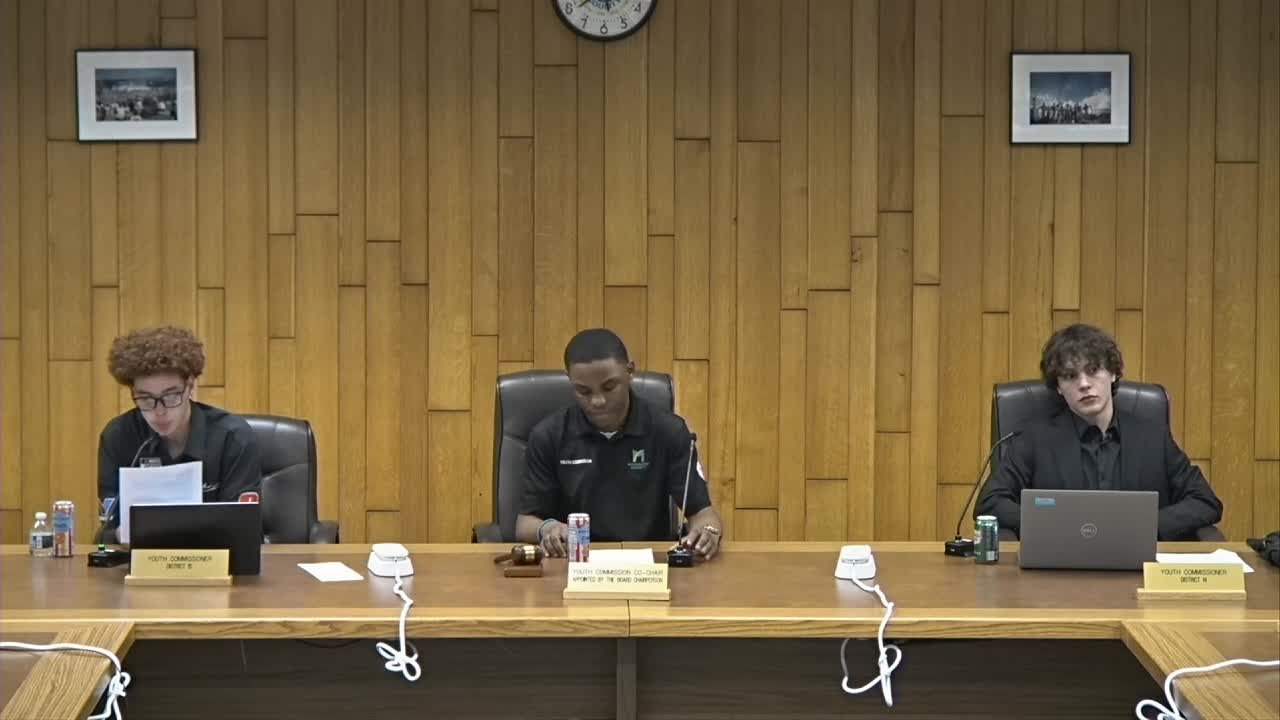
Milwaukee County budget director briefs Youth Commission on $1.4 billion budget, structural deficit
Summary
Joe Lamers, Milwaukee County budget director, told the Youth Commission the county operates on a roughly $1.4 billion budget, described a structural deficit driven by flat state aids and limited local revenue growth, and outlined major spending on behavioral health and housing.
Joe Lamers, director of the Milwaukee County Office of Strategy, Budget and Performance, told the Milwaukee County Youth Commission on April 23 that the county operates with a roughly $1,400,000,000 budget and is facing a structural deficit driven by limited revenue growth and rising costs.
Lamers said the county’s funding mix includes direct enterprise revenue (for the airport, zoo and similar operations), federal and state reimbursements, a county share of sales tax receipts and property tax. “We have a budget of about $1,400,000,000,” he said. He told commissioners property tax is the single largest source of revenue, “just under $300,000,000,” and that state-mandated services account for the majority of levy spending.
The structural deficit Lamers described reflects slow revenue growth compared with faster cost increases. He said the county’s independently elected comptroller projects a $46,000,000 deficit entering 2026 that could grow substantially by 2030 unless trends change. “We do operate with what's referred to as a structural deficit,” Lamers said. He and his slides blamed the gap on constrained local revenue authority, state limits on property tax growth and largely flat state aid.
Lamers provided departmental breakdowns: Health and Human Services, including behavioral health and housing, comprises roughly a third of the county’s budget. The county’s housing division employs about 75 staff, has a budget near $45,000,000, and requires roughly $11,000,000 in local tax levy support, he said. Lamers said the county has invested more than $45,000,000 in affordable housing since 2020 and is focusing on expanding affordable units not only in the City of Milwaukee but also in suburban municipalities such as South Milwaukee, Wauwatosa and Whitefish Bay.
Behavioral health services is a major expense, Lamers said, with a total budget near $233,000,000 and roughly $59,000,000 funded by the county’s property tax levy. He said the behavioral health system has a governance structure separate from other county departments and includes recent investments such as a mental health emergency center and crisis intervention services.
Lamers described a 0.4% sales tax, authorized under Act 12 (2023), that raises about $84,000,000 annually and is dedicated by law to pension obligations. He said the revenue freed up approximately $50,000,000 in property-tax relief in prior budgets but that the one-time or limited-term effect has been absorbed by ongoing structural pressures. “It did free up about $50,000,000 of savings or property tax savings in our budget,” he said.
During questions, Commissioner Kaminski asked whether the county was seeing reductions in federal funding. Lamers said Milwaukee County had not experienced major federal cuts to date, though some COVID-era grants had wound down and the state had filed litigation over certain funding flows. When asked about youth programs, Lamers said the county plans to continue funding youth mental health, family services, youth justice programming and parks activities available to youth.
Why it matters: Lamers’ presentation frames Milwaukee County’s budget choices for the coming year — including constrained options for new recurring investments — and explains why departments are being asked to find reductions as part of the budget-development process. The county executive proposes a budget in mid-July and the Milwaukee County Board reviews and amends it in the fall; Lamers said departments were already preparing requests with guidance to identify potential savings.
Lamers closed by noting that limitations on county revenue authority and growth in mandated spending make balancing recurring services difficult without either revenue changes or program reductions. He said the budget office would continue working with departments, the county executive and the board through the annual cycle and invited further questions from the commission.