Get Full Government Meeting Transcripts, Videos, & Alerts Forever!
Get email alerts on the Public Safety Police Budget topic
No spam. Unsubscribe anytime.
LAPD warns proposed civilian cuts, overtime reductions would slow investigations and patrol support
Summary
The City Council Budget Committee heard Friday that the Los Angeles Police Department’s proposed elimination of 403 civilian positions and a $36 million cut in sworn overtime would delay forensic work, reduce vehicle and evidence support, and force sworn officers into administrative tasks that could thin patrol coverage.
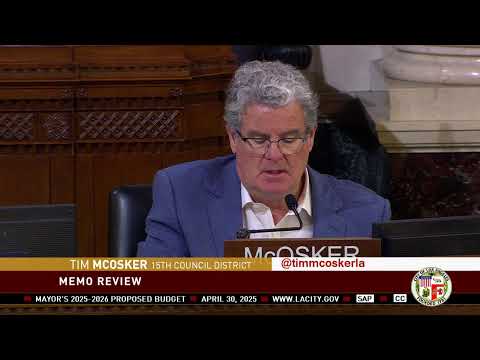
The City Council Budget, Finance and Innovation Committee on Wednesday heard the Los Angeles Police Department warn that the mayor’s proposed budget would cause immediate and widespread operational impacts if enacted.
LAPD leadership told the committee the proposed elimination of 403 civilian positions would sharply reduce the department’s investigative and support capacity, and a $36,000,000 reduction in sworn overtime would remove about 317,000 hours used for patrol and special deployments. “Eliminating or slowing this work will delay justice for victims and allow dangerous offenders to remain on the streets longer than they should,” the LAPD chief said. “These are not faceless numbers. They’re men and women who’ve devoted their lives to public service.”
The department said the civilian cuts would hit crime-scene photographers, forensic print specialists and criminalists, among other roles. LAPD officials said the proposed deletions would include about a 43 percent reduction in crime‑scene photographers and a 22 percent reduction in criminalists —cuts that the chief warned could jeopardize the department’s forensic lab accreditation and slow DNA, ballistics and sexual‑assault testing. The department also said proposed cuts to vehicle mechanics (about 13 percent) would increase vehicle down time, and a roughly 20 percent proposed cut for property‑evidence staff could risk improper handling of evidence that would affect prosecutions.
LAPD financial staff said the department has built cash reserves from prior years of operating income, and they noted long‑term guarantees tied to container revenue at the Port provide a revenue cushion for other city discussions. But LAPD emphasized its budget is overwhelmingly personnel‑driven — roughly 94 percent — and that many community programs and enforcement details are funded through overtime. “When you cut overtime, we cannot sustain CARE, CARE Plus, the RV Task Force, Venice Beach detail, MacArthur Park operations … and our violent crime task force,” the chief told the committee.
Council members pressed LAPD on options, including redeploying sworn officers into some administrative roles and restoring specialized civilian positions. LAPD said roughly 270 of the 403 positions could be backfilled by sworn staff in the short term, but emphasized many technical roles require specific certifications and cannot be readily replaced by officers. LAPD fiscal staff provided an approximate cost to restore 133 technically specialized civilian positions at about $14,250,000 for 12 months (the budget assumes eight months of funding, approximately $9,900,000).
Committee members requested several follow‑up items, including budget memos on restoring critical civilian positions, monthly reporting from the Port on federal trade impacts that could affect city revenues, and analyses of how overtime reductions would affect homeless‑related operations and other community deployments. Council members also asked for a memo analyzing whether shifting certain enforcement or parking functions (from other departments) into LAPD would be feasible and at what cost.
LAPD representatives said they would provide detailed cost estimates and work with the Controller, CAO and personnel department on potential offsets and redeployments. The department also said it would supply additional data on the operational impacts of shutting area jails and on contracting alternatives where civilian positions are removed.
The committee did not take a vote on the department’s budget items at the hearing; members requested multiple memos and follow‑ups before final decisions.