Get Full Government Meeting Transcripts, Videos, & Alerts Forever!
Get email alerts on the Gaza Humanitarian Crisis topic
No spam. Unsubscribe anytime.
U.N. warns Gaza faces widespread shortages as blockade nears two months
Summary
At a U.N. briefing, officials said more than 2 million people in Gaza face severe shortages of food, water, shelter and medicine as supplies run low and humanitarian access is restricted.
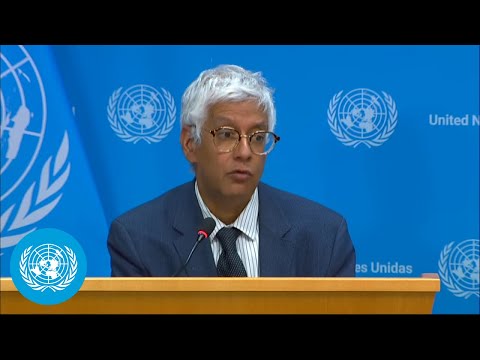
At a U.N. briefing, Farhan, a U.N. staff member, said the Office for the Coordination of Humanitarian Affairs warned that Israeli forces continue to bombard areas across the Gaza Strip, hitting tents and residential buildings and causing civilian casualties and infrastructure damage.
The briefing said more than 2,000,000 people in Gaza are now facing severe shortages of food, water, shelter, medicine and other essential supplies as the effective blockade of supplies approaches two months. U.N. partners reported that community kitchens have closed this week, tents are no longer available for distribution and the last five dozen emergency shelter kits (which do not include tents) are due to be distributed in the coming days.
The U.N. said distribution efforts are being hampered by a lack of generators, solar panels and pipes, and that fuel needed for the response has been repeatedly denied by Israeli authorities. Partners working on gender-based violence reported they lacked fuel to operate safe spaces or conduct community outreach, constraining emergency case management.
The U.N. Population Fund told the briefing that its protection supplies, including shelter materials, hygiene items and menstrual hygiene kits, have been completely depleted. The briefing added that only seven hospitals and four field hospitals across Gaza continue to provide obstetric and newborn care and are only partially functioning. Hospitals reported a sharp rise in malnourished pregnant and breastfeeding women, and most newborns are now born underweight.
Farhan also reported that people in Gaza described living near raw sewage — in some cases as close as about 10 metres — after hostilities destroyed trucks used to collect and dispose of sewage. The combination of destroyed infrastructure and lack of fuel and spare parts is reducing the ability of responders to maintain water and sanitation services.
During the question-and-answer period, Farhan reiterated that U.N. agencies and partners have reported that food stocks inside Gaza ran out over the previous weekend and that World Food Programme operations were no longer able to get food stocks into the territory, a situation the U.N. has been reporting for days.