Get Full Government Meeting Transcripts, Videos, & Alerts Forever!
Sacramento council workshop advances ‘micro‑community’ interim housing, seeks funding and public‑private partners
Summary
City staff outlined a multi‑pronged plan to reduce unsheltered homelessness that would slowly shift congregate shelters to smaller interim "micro‑communities," expand prevention, pursue safe‑parking sites and seek contract savings and new revenue offsets. Council directed staff to return with an implementation plan; no ordinance vote was taken.
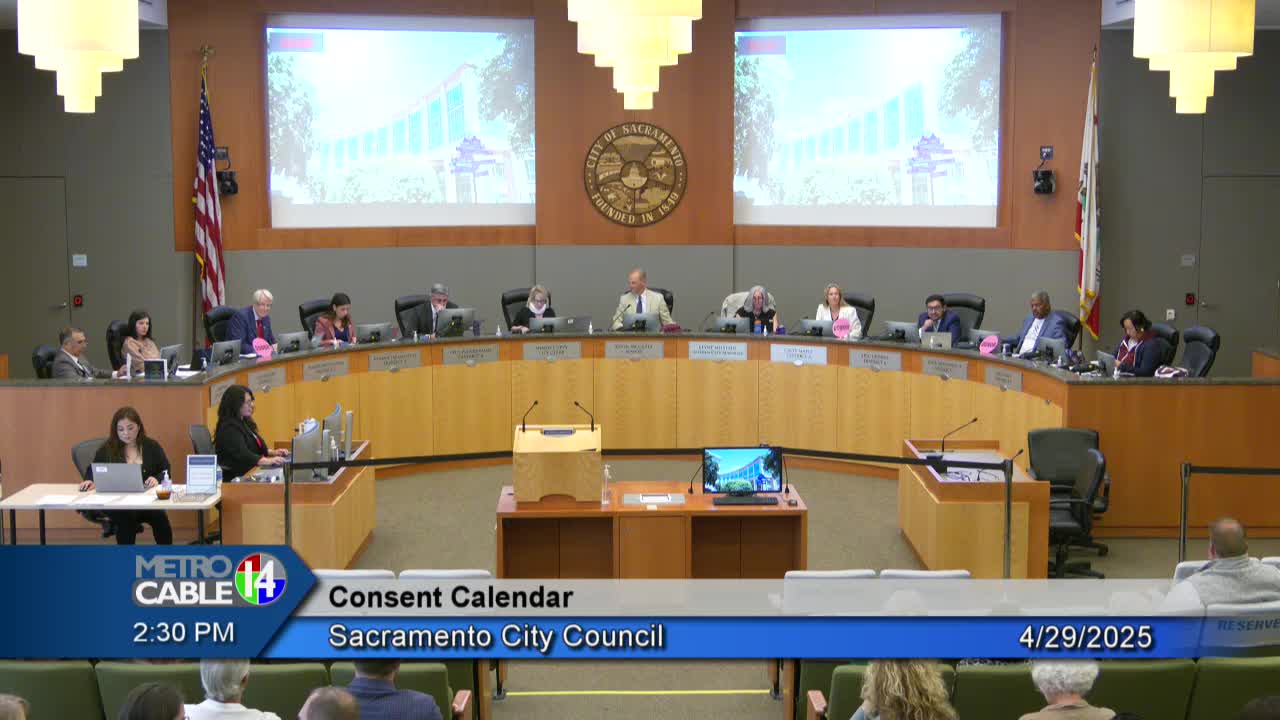
Sacramento city staff on Tuesday presented the City Council with a data‑driven workshop recommending a set of interim strategies to reduce the number of people living on the city’s streets, including building small “micro‑communities” for seniors and other cohorts, expanding prevention and diversion funding, and pursuing safe‑parking sites for people living in vehicles.
The proposal — delivered by Brian Pedro, director of the Department of Community Response — asked the council to direct staff to develop a plan to stand up three pilot micro‑communities using city property and public‑private partnerships, renegotiate contracts to capture savings, apply for encampment grants and return with an implementation plan that includes fee policy and good‑neighbor protections.
Pedro told the council the city has spent about $115,000,000 on homeless response over the last five years, of which roughly $81,000,000 was one‑time funding such as HAP, ARPA and FEMA grants. He said the city’s system currently has about 1,375 beds and last year spent roughly $34,500,000 serving 4,240 people. "We spent over the last 5 years a hundred and 15,000,000," Pedro said. "81,000,000 of that was 1 time funding so that was either HAP, ARPA, FEMA grants and that was directly towards homeless projects or programs."
Why it matters
Pedro argued that a long runway for permanent supportive housing (PSH) — both because of funding cycles and complex funding paperwork — means PSH alone will not return people to stable housing fast enough to address the city’s unsheltered population. He recommended interim housing options that the city can build faster and operate more cheaply than large congregate shelters while still offering on‑site management and voluntary services.
Key elements and costs
- Micro‑communities: Pedro proposed small, fenced clusters of tiny units with individual doors, plumbing and on‑site…
Already have an account? Log in
Subscribe to keep reading
Unlock the rest of this article — and every article on Citizen Portal.
- Unlimited articles
- AI-powered breakdowns of topics, speakers, decisions, and budgets
- Instant alerts when your location has a new meeting
- Follow topics and more locations
- 1,000 AI Insights / month, plus AI Chat