Get Full Government Meeting Transcripts, Videos, & Alerts Forever!
Get email alerts on the Procurement Disparity topic
No spam. Unsubscribe anytime.
Houston public comments split over 2023 MWBE disparity study as council prepares vote
Summary
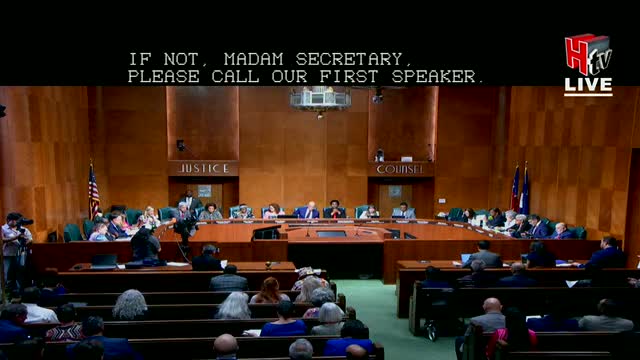
Dozens of business owners and advocates addressed the Houston City Council on April 29 over the city's 2023 MWBE disparity study and a proposed Office of Business Opportunity ordinance that would reclassify some firms into a Small Business Enterprise category.
Dozens of business owners, civil-rights advocates and trade groups pressed the Houston City Council on April 29 over the city's 2023 minority/women-owned business (MWBE) disparity study and proposed Office of Business Opportunity (OBO) ordinance changes that would reclassify some firms into a Small Business Enterprise (SBE) category and adjust which groups remain in race- or gender-conscious MWBE goals.
The debate matters because the council faces litigation tied to the city's contracting rules and officials said a formal vote on OBO's recommendations was expected the next day. Supporters of the study said failing to act risks losing the city's legally protected MWBE program; opponents said the study's methodology and community outreach were flawed and asked the council to pause and seek further review.
At a public-comment session that drew speakers representing trade groups and community organizations, advocates for adopting the OBO recommendations cited data from the 2023 study and warned of legal exposure if the city did not follow experts' findings. "The findings of the 2023 disparity study are clear," said Melanie Miles Basil of the Black Women of Greater Houston PAC. "Black owned businesses face statistically significant disparities in every major procurement category." Miles Basil urged the council to "adopt the 2023 disparity study and all of its recommendations without delay."
Other speakers stressed practical reforms in the proposed ordinance, including expansion of the SBE pathway and adjustments to the program's graduation rules. Casey Chrisman of the Houston Contractors Association urged eliminating a 4% cap that applies to SBE participation in the construction category; he said expanding an SBE pathway would give the city more flexibility on large infrastructure projects.
By contrast, multiple Hispanic- and Asian-led business groups and small business owners told council members the study did not sufficiently capture community input and relied on data categories that obscured the experiences of minority women and many newly certified firms. "The study is fundamentally flawed," said Claudia Ortega Hogue, majority partner at SSP Engineering and Innovative Construction. "It ignores large amounts of critical data and does not accurately reflect the challenges small and minority owned businesses continue to face."
Several speakers asked the council to hold a fresh or peer review of the study's methodology or to delay action while the city supplements community engagement. Dr. Laura Murillo, speaking for the Houston Hispanic Chamber of Commerce and area entrepreneurs, urged the council to create an advisory board and to ensure affected businesses get a meaningful opportunity to review and respond.
Some speakers described personal experience with city contracting and warned that a transition to SBE without careful rules could harm small firms that rely on MWBE contracting to grow. Elizabeth Trujillo, a Hispanic small-business owner with one employee, told the council she did not expect to meet revenue thresholds that apply in some construction graduations and feared being forced into a program where larger SBE-certified firms would outcompete micro-businesses.
Others argued the proposed changes were an inclusive path forward, not an exclusion. Argentina James, who worked on earlier MWBE policy and helped organize petitions supporting adoption, said the recommendations "represent the most inclusive program in the history" and stressed the changes do not remove firms from participation but reclassify them so the program can survive legal challenges and broaden opportunities.
Council members who questioned speakers referred repeatedly to legal risk: several commenters and council members said litigation that prompted the study forced the city to act. Council members also pressed for operational fixes, including improving OBO staffing, speeding certification and prompt payment, and creating programs to help firms graduate without losing access to municipal contracts.
No formal council decision on the ordinance was recorded during the public comments; council members indicated a vote was planned the following day. The council heard dozens of other public-comment items that day, and multiple council members asked staff for follow-up proposals that would try to preserve program goals while addressing complaints about the study's outreach and data categories.
The public comment record included a range of concrete proposals offered by speakers: a peer review of the 2023 study; separate analysis of minority women (Hispanic and Asian women) rather than grouping them with non-minority women; targeted micro-programs for businesses that have not reached construction revenue thresholds; creation of an advisory body with broad community representation; and procurement-level changes such as rotating subcontract awards, prompt-pay requirements and contractual credit for primes who recruit and develop small subcontractors.
Council members and city staff will now weigh the competing recommendations ahead of the scheduled vote and in the event of continuing litigation.
Ending: The exchange left clear differences about next steps: some advocates urged the council to adopt the OBO recommendations to defend the program in court and to target help at underrepresented groups; others urged delay, additional study, and new community engagement so businesses that fear being reclassified can be heard and supported. The council scheduled consideration of the ordinance for the following day.