Get Full Government Meeting Transcripts, Videos, & Alerts Forever!
Get email alerts on the Library Funding topic
No spam. Unsubscribe anytime.
Cochise County library district presents FY26 budget, seeks board guidance on contingency and long‑range plans
Summary
The Cochise County Library District told the board it expects a roughly 3% increase in property tax revenue for FY26, outlined staffing and service levels across six locations and raised questions about using its contingency fund and possible endowment strategies to secure long‑term funding.
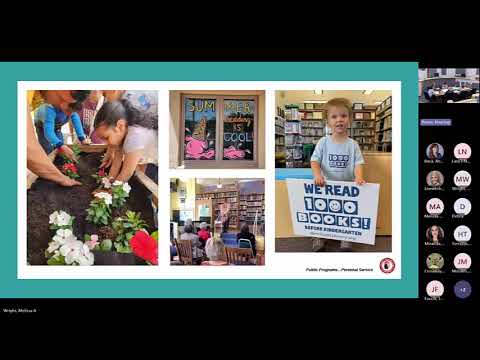
Britney, a staff member with the Cochise County Library District, told the county board during a presentation Oct. 25 that the district expects property tax revenue to rise to $1,695,086 for fiscal year 2026, up about 3% from $1,638,029 in FY25. "The library district is a small department, but we provide countywide service," Britney said, summarizing services and staffing.
The district operates five rural branch libraries plus a headquarters in Bisbee and provides software and delivery support to seven municipal libraries across the county. Britney said the district employs 13 people, which equates to just under 10 full‑time equivalents across six locations; one position is dedicated entirely to deliveries between libraries and another mostly to home delivery to patrons in residences and assisted‑living facilities.
Why this matters: the presentation signaled that countywide library services hinge on a narrow budget and a rebuilt contingency fund while demand for broadband and digital resources in rural areas remains high. The district asked the board for direction on long‑range planning and how to use its contingency carryforward.
Budget details and major expense lines Britney presented line items the district sees as large drivers of cost in FY26. Employee salaries and employee‑related expenses (EREs) were listed at $705,853 for FY25 and projected at $777,818 for FY26, reflecting higher personnel costs. Collection expenses (print books, ebooks and other materials) are "just under $300,000," and operating leases and rentals include the shared library software system the district uses to manage cataloging, inventory and patron records.
Property tax revenue and contingency history The library district is financed as a secondary property taxing district. Britney said the FY25 property tax revenue was $1,638,029 and that the FY26 projection of $1,695,086 assumes the tax rate remains flat. She reviewed the contingency (cash carryforward) history: following the 2008–2010 recession the contingency fell from nearly $800,000 in 2013–14 to about $350,000; recent years of austerity and service changes rebuilt the contingency. The district currently aims to maintain a contingency around $850,000, she said.
Service changes and staffing Britney recounted earlier measures taken to restore fiscal health, including discontinuing an expensive bookmobile that had become underused and costly. She said the district still operates with three fewer full‑time equivalent positions than before the recession. The district has recently faced retirements and expects more, prompting attention to recruitment and retention as part of salary and ERE planning.
Rural broadband, public Wi‑Fi and digital collections Britney emphasized the role branch libraries play as local broadband access points where household service is scarce. "Every library in the county does have broadband," she said, and noted that some surrounding residential areas lack broadband and reliable cell coverage. She said rural branches logged more than 38,000 computer/Wi‑Fi sessions at rural locations last fiscal year. Wi‑Fi at many branches is accessible from outside the buildings, typically from about 6 a.m. to 8 p.m.
The district has invested in digital collections and partnerships to reduce wait times for ebooks and other digital materials. Britney said cardholders can access digital materials from about 10 other Arizona library systems (an arrangement that is "almost statewide," she said, but does not include Maricopa County).
Intergovernmental and reciprocal services The district supplies the shared software platform and courier service used by municipal libraries in Cochise County; municipal libraries retain their own staffing and collections. Britney said rural patrons checked out over 40,000 physical items at rural libraries last year and about 5,000 items when visiting city libraries under reciprocal use arrangements.
Contingency and possible endowment discussion Board members asked about using interest and contingency funds in long‑term ways, including a discussion of creating an endowment or separate trust to grow non‑tax revenue. A board member noted Arizona law allowing endowment trust funds (referencing ARS provisions on endowments) and discussed how a perpetual trust could be structured outside county control, with a separate board of trustees, to accept donations and invest for long‑term support. Britney said such strategic options are the sort of guidance the library board would like from the county board as part of long‑range planning.
Fiscal details and investment revenue Board members and Britney discussed interest revenue earned on district funds held by the county treasurer. Britney said the treasurer's office has returned interest revenue; one speaker noted the district received $48,535 in interest revenue this year.
Next steps and board direction Britney asked the county board for guidance on long‑range planning, including community needs analysis and growth pattern studies to align library services with future demand. No formal action or vote took place on funding changes during the presentation. The county board noted the district's presentation and invited follow‑up discussion as part of broader budget season work.
","sections":{"lede":"Britney, a staff member with the Cochise County Library District, told the county board during a presentation Oct. 25 that the district expects property tax revenue to rise to $1,695,086 for fiscal year 2026, up about 3% from $1,638,029 in FY25.","nut_graf":"The district operates five rural branches and a Bisbee headquarters with just under 10 full‑time equivalents; officials highlighted pressures from personnel costs, contingency rebuilding and demand for broadband and digital services in rural areas, and asked the board for strategic direction on long‑range planning and contingency use.","ending":"No formal votes were taken. The district requested board guidance on long‑range planning and use of contingency funds; the county's budget season continues with further hearings."},