Get Full Government Meeting Transcripts, Videos, & Alerts Forever!
Get email alerts on the Holocaust Remembrance topic
No spam. Unsubscribe anytime.
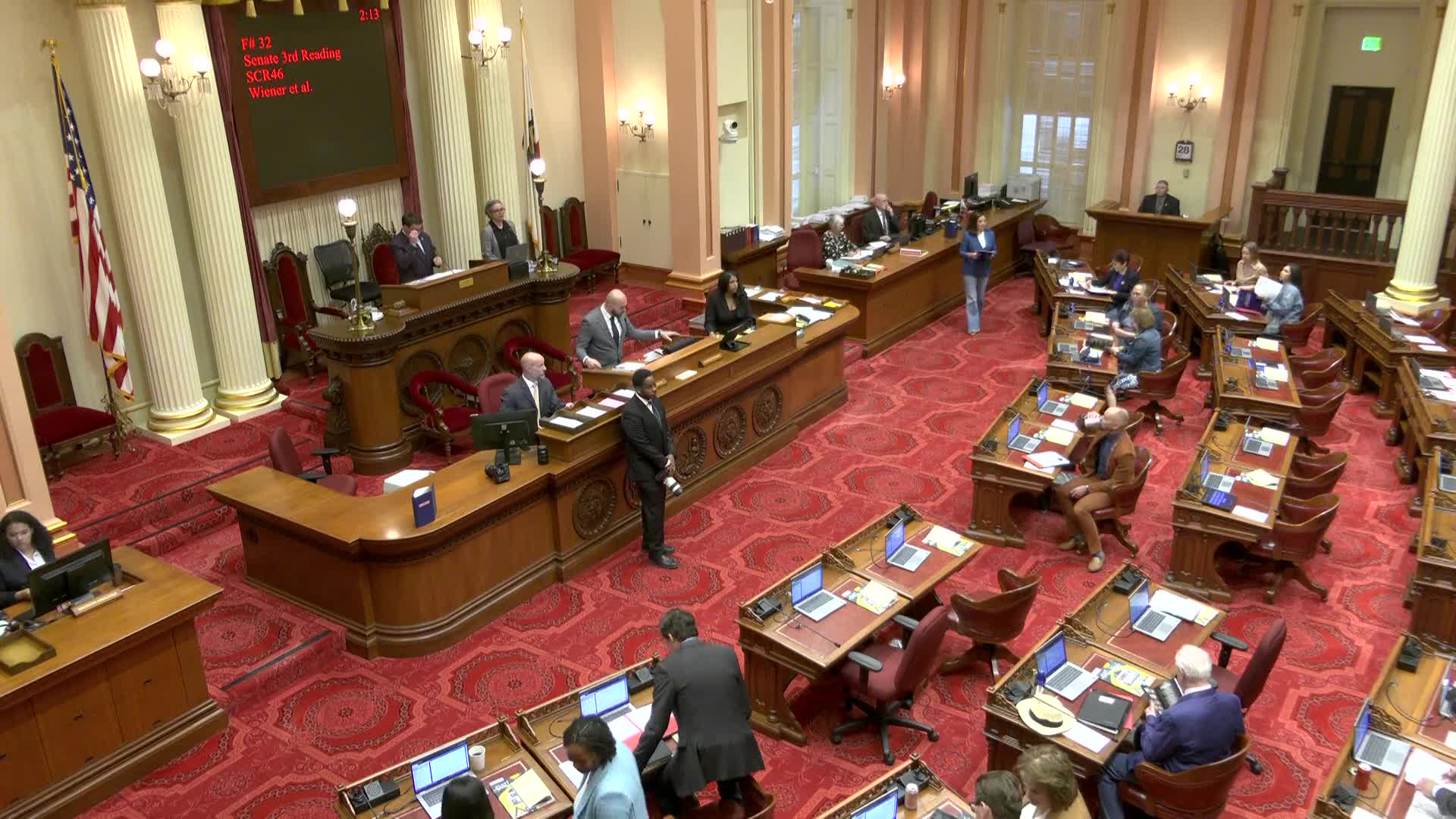
Senate adopts resolution designating California Holocaust Memorial Day; survivors honored on floor
Summary
The California State Senate adopted SCR 46 recognizing a California Holocaust Memorial Day, heard extended remarks on Holocaust remembrance and antisemitism, and invited survivors and descendants to the chamber for introductions and photos. The resolution passed by roll call, Ayes 37, No 0.
The California State Senate on Wednesday adopted Senate Concurrent Resolution 46, designating a California Holocaust Memorial Day and bringing Holocaust survivors and their descendants to the floor for public recognition and remarks. Senator Wiener presented the resolution; the Senate voted to adopt it, Ayes 37, No 0.
The resolution and accompanying floor presentations were framed as both a memorial and a call to action. "Only 26% of school districts in California, that were surveyed had holocaust or genocide education in their classrooms," Senator Wiener said as he urged colleagues to prioritize remembrance and education. He and other speakers linked the remembrance to concerns about rising antisemitism and broader threats to democratic institutions.
Wiener, speaking as co-chair of the California Legislative Jewish Caucus, reviewed the scale of the Holocaust and said the caucus brought survivors and descendants to the chamber so lawmakers and the public could hear their stories directly. "We do this to fulfill our sacred obligation to remember and to mourn those who lost their lives," he said.
Other senators from both parties spoke in support. Senator Becker, vice chair of the Legislative Jewish Caucus, said hatred is contagious and urged colleagues to recommit to "never forget and never again." Senator Wahab, speaking for the Asian American Pacific Islander Legislative Caucus, said the AAPI community stands with Jewish Californians against hate. Senators from multiple demographic caucuses offered remarks underscoring that Holocaust remembrance is also a moment to reflect on other groups persecuted by the Nazi regime, including Roma, LGBTQ people and people with disabilities.
After debate and remarks, the Senate recorded a roll call that produced 37 affirmative votes and no negatives. The clerk announced, "Ayes, 37. No 0. The resolution is adopted." The body then moved to privileges of the floor, where members introduced survivors and honorees for photographs and brief tributes.
Among those introduced on the floor were George Elbaum, described by Senator Wiener as a Warsaw Ghetto survivor who later earned a Ph.D. from MIT and has written about his childhood; Jeanette Ringgold, a survivor who spent her early childhood hidden in the Netherlands and later settled in California; and Ava Bretler, a survivor who immigrated after wartime persecution and became a social worker and public educator. Senator Stern also presented the resolution’s honoree Ben Lesser, who was unable to attend in person; Stern noted Lesser’s testimony at wartime trials and recent honors from Germany.
Why this matters: supporters said the resolution is intended to preserve first‑hand testimony, urge broader Holocaust and genocide education in schools and counter what several speakers called a modern rise in antisemitic rhetoric. Wiener cited the June report from the governor’s council on Holocaust and genocide education showing that Holocaust instruction is limited in many districts.
The resolution is ceremonial and does not create new regulatory obligations; it directs recognition and memorial observances and acknowledges survivors and community organizations. Senators requested and scheduled photographs with the honorees after the floor introductions.
Actions and implementation: SCR 46 was presented by Senator Wiener and carried to adoption by roll call. No amendments were recorded on the floor. The resolution’s immediate follow-up was a series of privileges-of-the-floor introductions and photo opportunities with survivors and descendants.
Ending: The Senate concluded the item by thanking surviving witnesses and their families for attending and moved on to other ceremonial resolutions on the day’s calendar.