Get Full Government Meeting Transcripts, Videos, & Alerts Forever!
Get email alerts on the Land Use Transitional Housing topic
No spam. Unsubscribe anytime.
Richmond council rejects two proposed Garland Avenue recovery facilities after neighborhood objections
Summary
The Richmond City Council voted not to adopt two special-use ordinances to allow a locked transitional residence at 2701 Garland Avenue and an outpatient professional office at 2700 North Avenue, following neighborhood opposition, planning staff concerns and a planning commission recommendation to deny both applications.
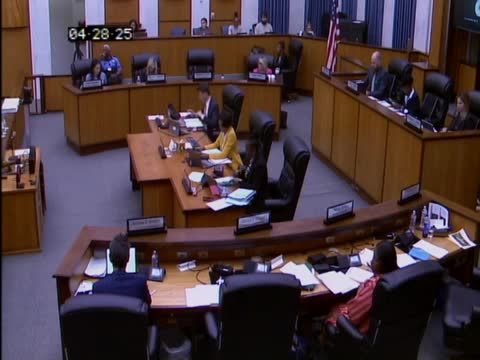
Richmond City Council on Monday declined to adopt two ordinances that would have allowed special uses at nearby properties on Garland and North avenues, rejecting a locked adult transitional housing proposal at 2701 Garland Avenue and an outpatient professional office proposal at 2700 North Avenue.
The planning department told council the two applications expanded and changed during the review period and that the ordinances as presented did not adequately address potential negative impacts to the health, safety and welfare of residents. Kevin J. Bonk, planning director, told the council staff supports the planning commission’s recommendation to deny ordinance 20-25-48, citing Section 30.10.500.1 of the city code and insufficient conditions to mitigate negative impacts.
Neighbors and community members urged the council to reject the proposals. Mariah White, a resident who said she lives in the Second District, told council the neighborhood was becoming saturated with similar facilities, and said she had questions about the proposed program model and the lack of community input. Michelle Brown Harris, joining virtually and identifying herself as a Garland Avenue neighbor, told council she opposed ordinances 20-25-48 and 20-25-55 and asked members to treat the petitioner as a business seeking a commercial allowance rather than as a charitable entity.
Other neighborhood speakers raised security concerns about a facility described as a locked site and questioned whether licensed clinical staff would be present. Andrew Green, who also lives nearby, said the application provided “no security parameters” for what was described as a lockdown facility and argued that allowing residents to leave without clear controls could worsen local drug- and alcohol-related problems. Rachel Hefner, a social worker who testified in favor of having rehabilitation capacity in Richmond, said people need safe places to recover and that some facilities are placed near transportation and jobs to improve client outcomes.
Council member Kenya Gibson, citing residents’ organizing and the planning commission’s recommendation, said the proposed locked facility differs from traditional halfway houses and announced she would vote no. At the roll call, the council recorded no votes on both ordinances; neither paper was adopted.
The votes followed the planning commission’s recommendation and a multi-speaker public hearing in which neighbors pointed to past experiences with group homes on nearby corridors and pressed for clearer staffing, security and community engagement plans. The council did not adopt either ordinance and the items remain not adopted.
The discussion occurred during the regular agenda and planning staff emphasized they had been prepared to offer conditions but concluded the paperwork before council did not meet the city code standard for protecting public health, safety and welfare.