Get Full Government Meeting Transcripts, Videos, & Alerts Forever!
Get email alerts on the Curriculum topic
No spam. Unsubscribe anytime.
District delays ReadyGen re‑adoption, plans small UFLI phonics purchase
Summary
Camas staff told the board they will continue using ReadyGen as core K‑5 curriculum for now and add UFLI phonics resources under an exception to procedure to strengthen early‑grade word recognition.
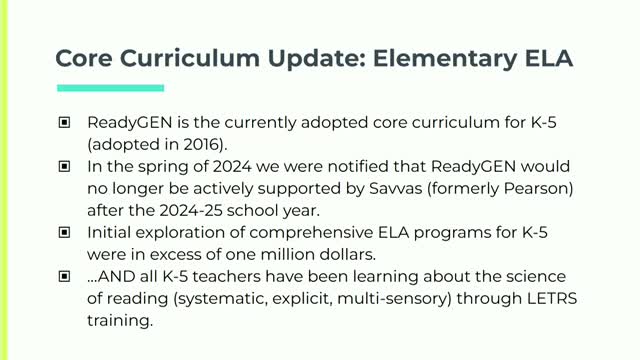
The Camas School District presented a curriculum update to the board on April 28 and said the district will continue with ReadyGen as its core K‑5 English language arts program for now, while adding a phonics‑focused resource to address word recognition.
Lisa, a curriculum staff member, told the board vendors are moving to align materials with the science of reading and that a full ReadyGen re‑adoption would exceed available budget. Instead, the district will use Procedure 2020 (exceptional needs / rapidly changing circumstances) to add one targeted resource: UFLI (University of Florida Literacy Institute) phonics materials.
According to the update, the UFLI teacher manuals and materials cost about $10,000; additional copying and materials were estimated at roughly $7,000. Staff said teachers have been engaged in LETRS professional learning and that adding UFLI will strengthen instruction on the word‑recognition portion of the reading development framework often called the "reading rope." The board received the update; no adoption vote was required at this meeting.
Why it matters: district staff said improving early‑grade word recognition is critical to long‑term student outcomes and that this targeted purchase is intended to be a cost‑conscious step while larger adoptions remain fiscally infeasible. The board was briefed on the plan and the district will continue to evaluate resources as vendors respond to evidence on the science of reading.
Ending: staff said the approach allows the district to extend current core materials with focused phonics resources without a full curriculum adoption expense.