
Bill would streamline licensure‑by‑endorsement for marriage and family therapists and clinical professional counselors
Get AI-powered insights, summaries, and transcripts
Sign Up Free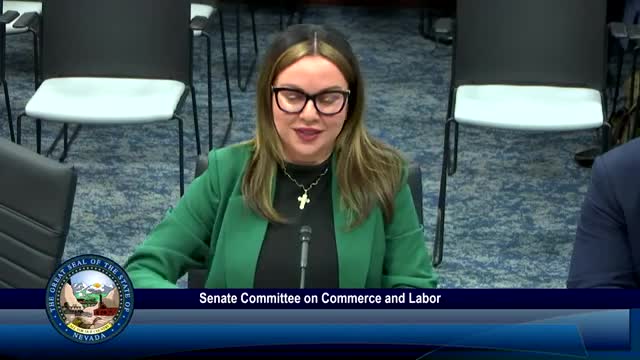
Summary
Assembly Bill 450 would require the Board of Examiners for Marriage and Family Therapists and Clinical Professional Counselors to grant licenses by endorsement when statutory criteria are met and would remove a statutory barrier that disqualified applicants based on prior investigations that produced no discipline.
Assembly Bill 450 would revise Nevada’s licensure‑by‑endorsement rules for marriage and family therapists (MFTs) and clinical professional counselors, requiring the Board of Examiners to issue an endorsement license when an applicant meets the statutory criteria and narrowing the board's discretion to request additional unspecified documents, proponents said.
Patricia Barton, speaking for the American Association for Marriage and Family Therapy (AAMFT), told the Senate Commerce and Labor Committee that the change is intended to reduce duplicative document requests and make Nevada more attractive to out‑of‑state clinicians. "AB 4 50 helps address the behavioral health workforce shortage in Nevada by removing unnecessary barriers to licensure by endorsement, which would encourage more experienced MFTs to work across state lines, either in person or through telehealth," Barton said.
Under current Nevada statute (NRS 641A.242 as cited in testimony), applicants seeking licensure by endorsement must show they have not been disciplined or investigated by the corresponding licensing authority of another jurisdiction. AB 450 would eliminate the requirement that an applicant prove they were never investigated — a change the presenters said is needed because some applicants had been the subject of investigations that produced no findings and were therefore blocked from endorsement despite being in good standing elsewhere.
Bobby Earnhardt and other presenters said the bill preserves safeguards: applicants must still hold an unrestricted license in another jurisdiction, submit to background checks and pay Nevada licensure fees; the Nevada board will retain disciplinary authority for clinical practice within the state. AAMFT representatives described broad national consistency in MFT education, supervised experience and examination standards and said the streamlined endorsement would rely on primary‑source verification already performed by other states to avoid duplicative work.
Senators asked whether removing investigation language might reduce the board's ability to verify training equivalency. Barton and counsel said MFT requirements are highly similar across states (degree, supervised experience and national exam) and that the board keeps authority to discipline licensees for competency or ethics violations once licensed in Nevada.
There was no recorded opposition at the hearing. The Board of Marriage and Family Therapists and Clinical Professional Counselors and the University of Nevada, Reno, gave supportive testimony. Committee members asked technical questions about the statute's cross‑references; presenters said they will work with staff to ensure the change is limited to endorsement procedures and preserves public‑safety safeguards.