Get Full Government Meeting Transcripts, Videos, & Alerts Forever!
Get email alerts on the Privacy topic
No spam. Unsubscribe anytime.
Senate advances measure criminalizing nonconsensual intimate digital depictions after multiple amendments and vetoed private-rights attempt
Summary
Senate Bill 2-88, adding criminal and civil provisions for nonconsensual disclosure of intimate digital depictions (including 'deepfakes'), was adopted on second reading after multiple amendments narrowed language, aligned juvenile provisions and preserved civil remedies despite efforts to remove them.
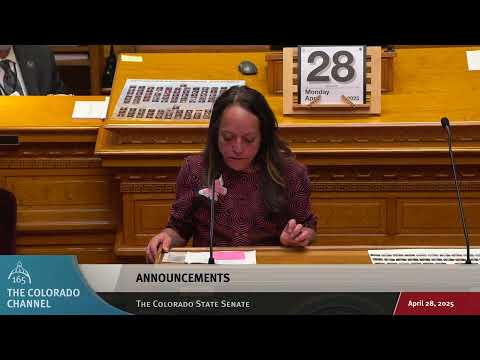
Senate Bill 2-88, which creates a statutory cause of action and criminal prohibitions for nonconsensual disclosure of intimate digital depictions and addresses computer-generated 'deep fakes,' was adopted on second reading in the Colorado Senate on April 28 after floor amendments and extended debate over enforcement mechanisms.
The bill initially included both criminal penalties and a private civil cause of action. Sponsor and proponents described multiple technical fixes and negotiated amendments with stakeholders including broadcasters, defense attorneys and child-advocacy groups. Floor amendments L4, L5, L6 and L7 were adopted to add alignment for juvenile sexting statutes, limit the criminalized image types to specified sexual acts, remove confusing “stored data” language and protect motion-picture uses, among other clarifications.
An amendment (L8) that would have struck the bill’s private civil cause of action failed after a contested floor vote. Minority Leader Lundin and others argued enforcement should remain with government prosecutors and regulators; supporters including Senator Weisman said private causes of action are necessary to vindicate harm. The amendment failed on a recorded voice vote and the bill was adopted on second reading following the debate.
The floor record shows careful negotiation on definitions and enforcement. Sponsors said adopted amendments narrowed scope to avoid overbroad prosecution and to ensure juveniles who trade images are treated under sexting-specific statutes rather than adult revenge-porn statutes. Opponents raised concerns about opening civil litigation and potential private-enforcement costs. The committee and floor record show the bill advanced with amendments but preserves both criminal and private civil remedies.