
Legislature approves Core.NV funding, limits new hires and requires regular reports
Get AI-powered insights, summaries, and transcripts
Subscribe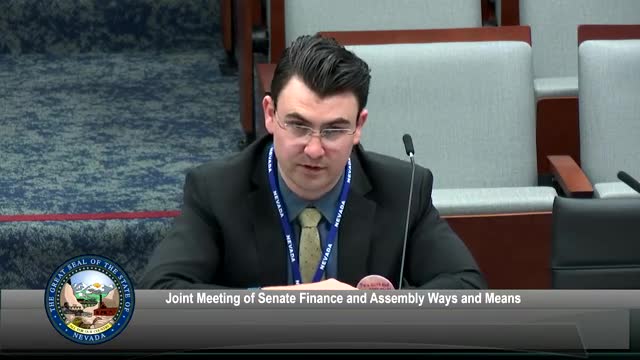
Summary
The joint money committees approved $63.5 million in funding for the state's Core.NV enterprise resource planning project, directed most implementation dollars through the Interim Finance Committee contingency account, authorized several limited hires to support the system and required semiannual reports on progress and change orders.
The Nevada Joint Senate Finance and Assembly Ways and Means Committee on Saturday approved funding and oversight steps for the Core.NV enterprise resource planning project, the state's multiyear effort to replace financial and human-resources systems.
The committees voted to appropriate $63,500,000 for the CoreDOT (Core.NV) project for the 2025–27 biennium — $50,140,000 in general fund and $12,100,000 in highway fund — and to place the funds in the Interim Finance Committee's contingency account, with a letter of intent requiring semiannual reports to the IFC on implementation status and expenditures.
Why it matters: Core.NV is the statewide ERP intended to replace legacy financial and HR systems; the project carries large vendor contracts and previously approved contingency funding. Lawmakers said they wanted added legislative oversight, clearer cost tracking and staged funding authority rather than moving the project entirely into ongoing agency operating budgets.
Committee discussion and key actions James Malone, fiscal analyst for the Legislative Counsel Bureau, presented the project's cost overview and options the committee could approve. He summarized prior appropriations, remaining contingency (change-control) balances, and a revised project timeline. Malone also described an $8.3 million unobligated change-control balance and an agency request to carry forward $25,000,000 in planned work that will not be performed in FY2025.
The committees approved three connected decisions: (1) $63.5 million in project funding for 2025–27, (2) routing that funding through the IFC contingency account so the Office of Project Management must request allocations during the interim, and (3) issuing a letter of intent that requires semiannual reports to the IFC covering activities, timelines, change orders, vendor deliverables and staffing updates.
On staffing for the system’s production support, the committee debated an 18-position operations team proposed to support post-go-live stabilization. After questioning the Office of Project Management for workload data and position justifications, Assemblymember Pamela Monroe Moreno moved an alternative that the committee approve only five IT professional positions plus one IT manager, beginning in FY2027, with the funding put in the IFC contingency account so the agency must return with detailed justification before using the money. That motion carried.
The committees also approved a staff-recommended integration of NeoGov recruitment and learning-management services through CGI Technologies for a total of $2,500,000 over the biennium. Committee members noted the Office of Project Management signed a related change-order before legislative approval; the committees approved funding and retained the change-control balance accounting in legislative oversight.
Other enhancements: The committees approved limited additional items by separate motions, including $609,000 (FY2026) for a replacement cash-management system for the State Treasurer, and $583,565 over 2025–27 to fund four additional contractors for the OCIO HR help desk. By contrast, the committee declined authorization for larger items the agency requested without supporting workload documentation, specifically the full 18-position production team and a broad $5 million request described by staff as an "alignment" to extend the implementation window.
Directives and reporting requirements The committee required semiannual reporting to the IFC that must include: implementation activity, projected deployment timelines, summary of change-control use, vendor deliverables received and anticipated, staffing and contractor levels, and findings from the independent verification and validation vendor.
Outcome and next steps The committee's vote establishes the project funding level for the 2025–27 biennium but routes most of it through the IFC contingency account, which gives the IFC and the money committees additional opportunity to review specifics before funds are released. The Office of Project Management and the Office of the Chief Information Officer are expected to return to the IFC with requests and more detailed schedules for phase‑2 rollouts and any change-control allocations.